Significant Progress in Water Infrastructure Recovery in North Carolina
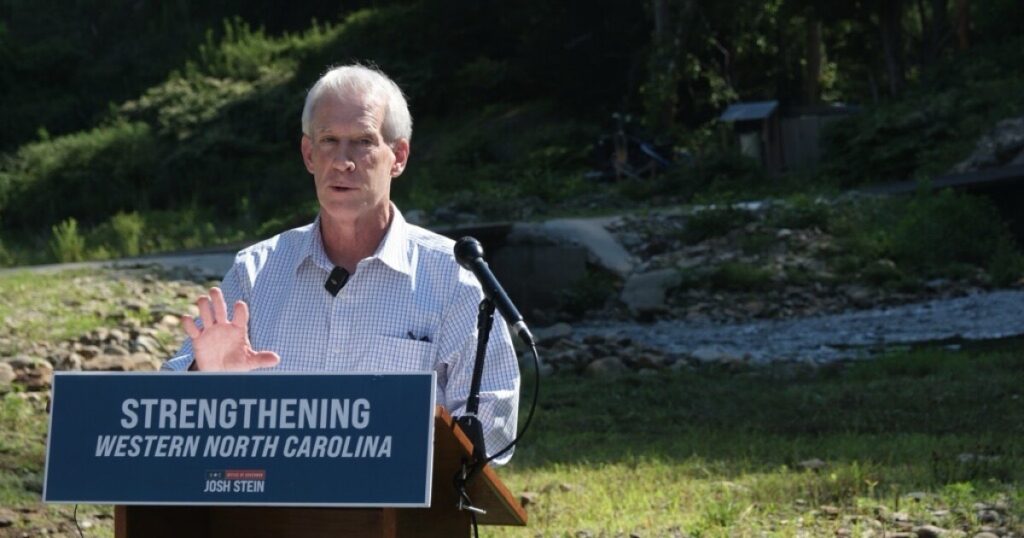
The North Carolina Department of Environmental Quality has reached a pivotal achievement, having allocated over $1 billion in grants for water and wastewater infrastructure improvements in areas affected by Hurricane Helene. This milestone was highlighted during Governor Josh Stein’s visit to Burnsville, where the city is set to receive $18 million for enhancements such as a new pump system, wells, and a sewer line.
According to the governor’s office, 98% of water systems in western North Carolina that were damaged by Hurricane Helene have been restored. However, there remains a substantial need for over $750 million in additional repairs to water infrastructure.
Governor Stein, alongside DEQ Secretary Reid Wilson, emphasized the necessity of federal support to complete these efforts. “We know as a state government we can’t do it alone,” Stein stated. “We know as towns and communities that Burnsville and Yancey County can’t do it alone. We know as people, residents of this county and region cannot do it alone. We need federal support.”
Gerard Albert III
/
BPR News
Stein has called upon Congress to approve an additional $10 billion in federal funding as part of the recovery efforts. He pointed out that a recent supplemental spending request from the White House, detailed in a letter to Congress, includes financial provisions for the Iran war but lacks additional funding for Helene recovery.
“We need the government not to forget western North Carolina, and I will do everything in my power to make sure they do not,” Stein asserted.
Reid Wilson highlighted the department’s achievements, noting that over 90% of the funds have been directed towards repairing local wastewater, drinking water, and septic systems. The projects aim to build infrastructure that is more resilient to future storms. A total of 222 projects across 28 counties have been completed so far.
“We have been very busy all across mountain communities,” Wilson remarked. “And we all saw in the wake of the storm, and we’ve heard this morning, how bad the damage was. And it’s just a reminder how critical it is and how one of the most urgent needs there is after a storm like this is to ensure that people have a safe drinking water supply and that wastewater systems function so we don’t have pollution going into our streams, rivers and lakes.”