The Long Road to Recovery: NCORR’s Push to Rebuild Eastern North Carolina Homes
In the aftermath of Hurricane Matthew, the journey to restore homes in eastern North Carolina has been a lengthy and challenging one. Now, nearly a decade later, the N.C. Office of Recovery and Resiliency (NCORR) is nearing the completion of its mission to rebuild homes affected by both Hurricane Matthew and Hurricane Florence.
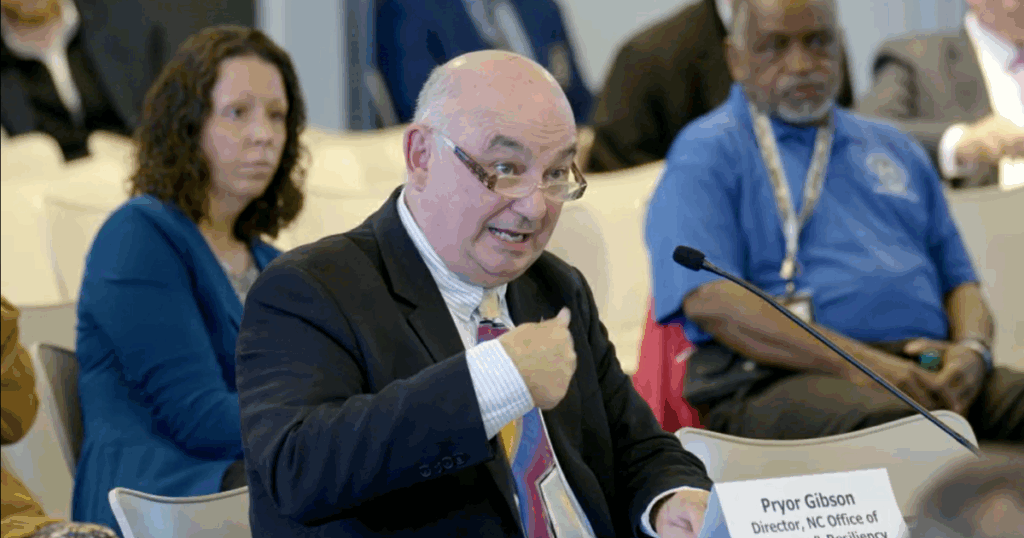
During a recent session with a subcommittee of the Joint Legislative Commission on Government Operations, NCORR Director Pryor Gibson reported that 328 homes remain to be renovated. The agency aims to commence work on all these properties by the year’s end and anticipates completion long before the October 2026 deadline set by the state legislature. This timeline is part of legislation that allocated an additional $217 million to the recovery program. “We’re on target, on budget,” Gibson assured. “We will be done by then and we will have enough money.”
Established in response to the destruction caused by Hurricane Florence in 2018, NCORR was entrusted with the task of rebuilding homes damaged by both Florence and Matthew. With over $708 million in federal funds, the agency was charged with repairing residences for low-income families throughout the region.
However, NCORR faced financial hurdles, requiring further funds from the N.C. General Assembly to continue its work. A recent audit, conducted by State Auditor Dave Boliek, highlighted significant financial mismanagement within the agency, leading to extended wait times for homeowners. The audit revealed that NCORR did not realize the extent of its financial needs until after applications closed in April 2023. Discrepancies existed due to the use of three different accounting systems, each providing varied figures.
The audit also pointed out the inefficiency of the rebuilding process, which involved eight steps, each averaging over 100 days. The grant determination phase alone took approximately two-and-a-half years. By now, NCORR has completed work on 3,924 homes out of the 10,348 applications it received.
Despite receiving federal HUD funds, NCORR did not establish a clear timeline or budget for the allocation of these resources. “Budgeting decisions were driven by available federal funds and preliminary applicant data, not by comprehensive needs assessment or performance-based targets,” the report stated. Contracts worth hundreds of millions were issued without performance metrics, and vendor expenditure monitoring was inadequate.
Boliek commented on the situation, stating, “We did bring in outside experts, and they say it’s the worst government accounting system they had ever run into.” His team is now working with vendors to ascertain the spending of NCORR’s funds.
The atmosphere in the recent hearing was notably more optimistic compared to previous sessions with NCORR officials. Lawmakers, including Rep. Karl Gillespie, R-Macon, expressed cautious optimism and support for the agency’s efforts. Gillespie urged Gibson to maintain momentum, saying, “I just can’t thank the people enough who have patiently endured what they’ve endured waiting on assistance from the government. I just would encourage you to take back one simple message: Don’t take your foot off the gas, and let’s get this thing done.”