In the rapidly evolving landscape of modern warfare, traditional strategies are being challenged. The once critical “Golden Hour” for delivering surgical care to wounded troops is now being reevaluated as drones increasingly dominate the battlefield.
Recent data indicates that drones are responsible for over 80% of casualties in the Ukraine conflict, with millions being produced and destroyed annually by both sides. This shift in warfare has prompted significant changes in military medical strategies.
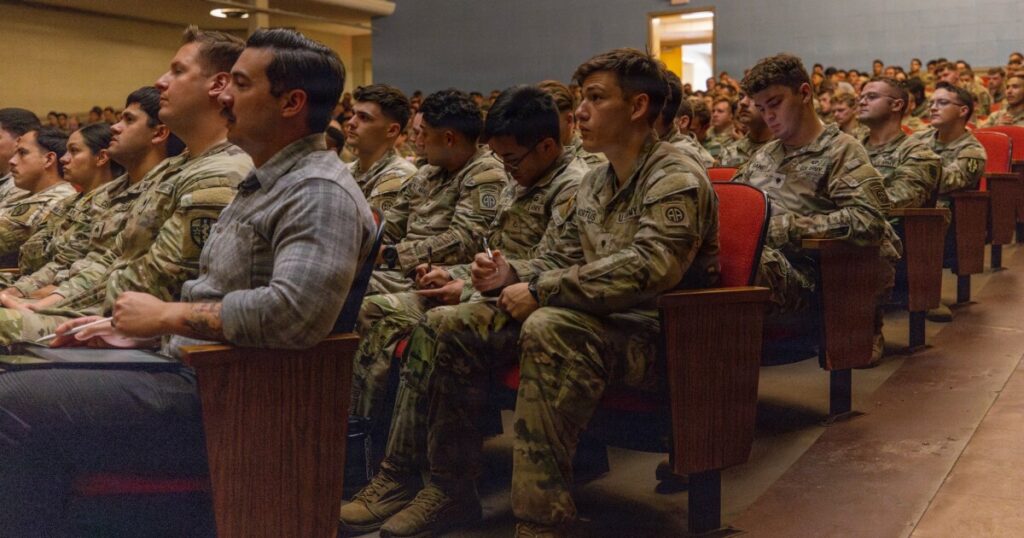
At Fort Bragg, a special session organized by UNC Health brought Ukrainian combat surgeons to share their firsthand experiences with American military medical personnel. These insights highlighted the challenges faced in providing timely medical aid due to drone surveillance and attacks.
Ukrainian military surgeon Taras, who wished to remain anonymous for security reasons, explained, “We’d be more than happy to have the golden hour, but we’re more happy sometimes to have a golden day.” In some instances, wounded soldiers can go without aid for up to a week.
During a seminar attended by over 400 military medics and personnel, Taras and his team detailed the harsh realities of delayed evacuations. One case involved a soldier whose evacuation was delayed by 12 days, resulting in severe frostbite and eventual amputation due to gangrene.
The U.S. military is preparing for potential conflicts with technologically advanced adversaries, such as China. This preparation involves training medics to sustain injured troops for extended periods, possibly days, until evacuation can be safely conducted.
Sgt. Major Clark Hitchcock, senior medic of the 18th Airborne Corps, noted, “It’s very encouraging to hear the practices that we’re looking at are actually in play in Ukraine right now,” reflecting on the alignment of U.S. military strategies with real-world applications.
Attack drones frequently cause major limb injuries, necessitating the use of tourniquets. Taras described instances where tourniquets, ideally removed within two hours, remained on for as long as seven days due to ongoing drone threats.
As drones pose new challenges, they also offer potential solutions. In Ukraine, drones are being utilized to deliver medical supplies and, in some cases, armored drones are assisting in evacuating the wounded.
Nate Stokes, manager of the UNC program, emphasized the importance of adapting to these challenges. “We have to get better at providing better care closer to the front line for longer periods of time,” he stated, suggesting underground medical facilities as a potential strategy.
The collaboration between Ukrainian surgeons and U.S. military personnel was part of a broader initiative by Carolina MEdiC to enhance military medical training. This initiative also includes developing a program in Ukraine to train surgical teams.
The Fort Bragg event was part of a larger training exercise for the 44th Medical Brigade, where soldiers practiced using drones for medical missions. This exercise highlighted the critical role of drones in modern medical care on the battlefield.
Hitchcock, reflecting on the insights gained from the Ukrainian experience, acknowledged, “The Golden Window is in, the Golden Hour is out,” underscoring the shift in battlefield medical care priorities.
This story was produced by the American Homefront Project, a public media collaboration that reports on American military life and veterans.