Controversy Surrounds Early Voting Site Decision in Jackson County
Tensions have escalated in Jackson County, North Carolina, regarding the location of an early voting site. Text messages acquired by BPR reveal accusations of undue influence by the North Carolina Republican Party and state auditor’s office on local election officials. At the heart of the issue is whether to maintain a voting site at Western Carolina University (WCU) or relocate it to the Jackson County Recreation Center.
In a message to Jackson County Board of Elections members Jay Pavey and Wes Hanemayer, GOP Chairman Justin Castle expressed disapproval of the alleged pressure tactics. “We also want you to know that we did not like the NCGOP or the auditor’s office trying to strong arm you guys,” Castle wrote. However, he also mentioned, “This was by no means impacted by the NCGOP or the auditor’s office,” acknowledging the board members’ responsibilities and urging them to uphold their commitments.
The North Carolina State Auditor’s office, which appoints election board members, did not comment directly on the pressure allegations but emphasized regular communication with local board chairs. A spokesperson mentioned concerns about potentially eliminating the long-utilized recreation center site, stressing that final decisions are made by local boards and the State Board.
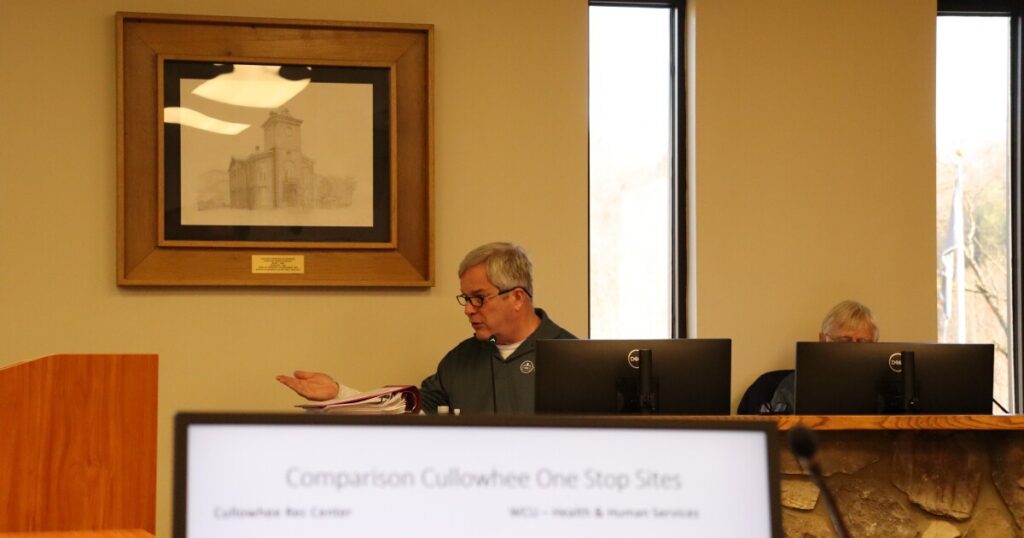
The debate focuses on a proposed site at WCU’s Health and Human Services building for the upcoming November election. Castle argued that relocating the site could disrupt established voting habits and complicate logistics. “Changing locations would disrupt many longtime voters,” he noted, highlighting the convenience and accessibility of the county-owned Recreation Center.
Hanemayer has since resigned, citing his “moral position” being questioned by external entities. The News & Observer reported his resignation, which came shortly after the board voted to keep the WCU site.
Jay Pavey, who supported the WCU site, recounted indirect warnings of removal from the board if he didn’t align with certain preferences. He clarified that Castle did not threaten him but shared what he had heard from higher authorities. “My oath was to the residents of Jackson County to carry out my duties in the most unbiased way possible,” Pavey emphasized.
Despite internal disagreements, the State Board of Elections now holds the authority to finalize the decision. The board’s spokesperson reassured that their employees do not influence county boards’ voting decisions, maintaining that the county boards vote on plans, and non-unanimous votes are reviewed by the State Board, as per state law.
The issue of early voting sites is not new in North Carolina. In January, the State Board voted to close the WCU site for the 2026 primaries, following a similar 3-2 vote by the Jackson County Board. The WCU site, which has been a polling location since 2016, has notably served a diverse and youthful voter demographic, averaging 8,417 early voters per election.
Under state law, any county board failing to reach a unanimous decision on voting plans must submit them to the State Board by July 24, with a decision expected in August.
For more details, read the full report on BPR.