This story was published in partnership with The Assembly. It was produced as a project for USC Annenberg’s Center for Health Journalism and Center for Climate Journalism and Communication 2025 Health and Climate Change Reporting Fellowship.
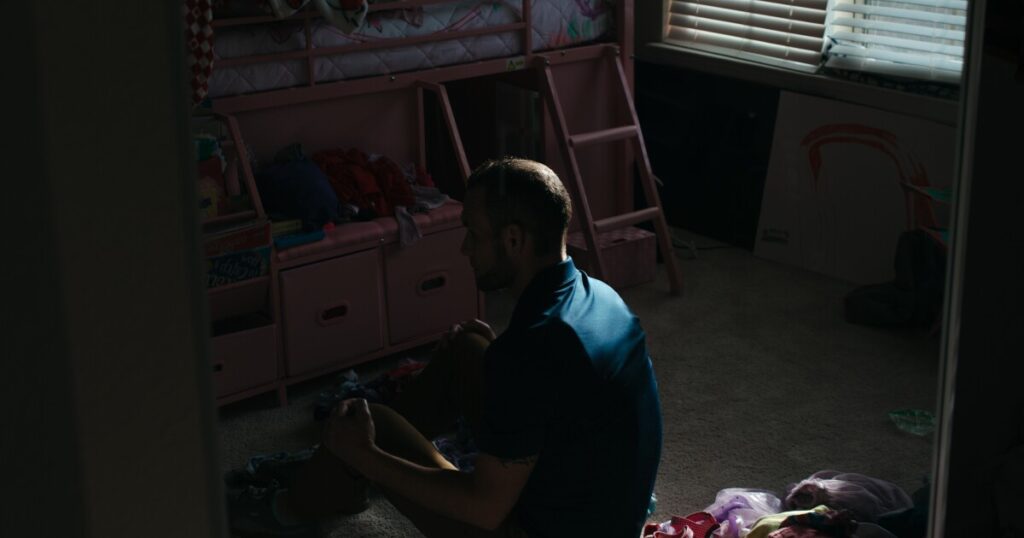
On a fateful September night in 2024, Hurricane Helene tore through Asheville, North Carolina, leaving a trail of devastation in its wake. Devon, a resident, ran frantically through his house as the winds howled and trees snapped like twigs, destroying parts of his home. Meanwhile, inside, his wife and young daughter took refuge in a closet, their fear palpable as the storm raged on.
For Devon, a 41-year-old Iraq war veteran, the storm was more than just a natural disaster. “For me, it was very triggering,” he said, likening the experience to being in a war zone. Having battled post-traumatic stress disorder and substance addiction since returning from the Middle East in 2006, the storm threatened the stability he had painstakingly built since moving to Asheville in 2019.
Struggles Amidst the Storm
Natural disasters like Hurricane Helene can fracture lives, especially for those in recovery from substance addiction. The storm not only damaged physical infrastructure but also disrupted essential support systems like 12-step meetings and therapy sessions, increasing the risk of relapse. Kristina Brant, a sociologist from Penn State University, notes that such disasters can have long-lasting impacts on communities, including increased overdose deaths.
The Appalachian region, already grappling with a severe drug crisis, is particularly vulnerable. Despite a slight decline in overdose death rates, the region’s mortality rate remains significantly higher than the national average. In western North Carolina counties, overdose mortality exceeded 36 per 100,000 residents as of 2022.
A Community Stretched Thin
For those in recovery, stability is key. Routine provides a lifeline, offering connections to vital relationships and services. However, in rural Appalachia, access to support systems is limited by long travel distances and high poverty rates. Disasters like Hurricane Helene exacerbate these challenges, causing a 30% increase in hospitalizations for substance use disorders, as seen after Hurricane Katrina.
Erin Major, a doctoral candidate at Boston University, emphasized the impact on access to care, stating, “It became genuinely impossible for quite a few of these patients to access their care.” Devon’s carefully constructed routine was disrupted as he found himself consumed by the demands of repairing his home and dealing with financial strain.
Community support played a crucial role in Devon’s recovery. He engaged in service work, helping neighbors rebuild and organizing disaster supplies. Yet, as the months wore on, the initial spirit of cooperation faded, and the financial burden of repairs took its toll. Devon and his wife eventually decided to sell their home, a decision that led to their separation.
The Road Ahead
Despite the challenges, Devon managed to avoid relapse, thanks in part to his support network. He continues to attend weekly Narcotics Anonymous meetings and individual therapy sessions, drawing strength from his daughter and the community. “I try to focus on my daughter,” Devon said. “I’m just doing the best I can.”
Devon’s story highlights the resilience required to navigate recovery in the face of natural disasters. As the region continues to rebuild, the importance of community connections and support systems remains paramount in helping individuals like Devon move forward.
—–
This coverage is made possible through a partnership between BPR and Grist, a nonprofit environmental media organization.