Innovative Healthcare Initiative Benefits Migrant Farmworkers in North Carolina
In North Carolina, where the farmworker population exceeds 150,000, healthcare accessibility remains a challenge. A pioneering healthcare program is now offering a solution to this issue, benefiting individuals like Cirlo Castillo, who is among the few with healthcare access.
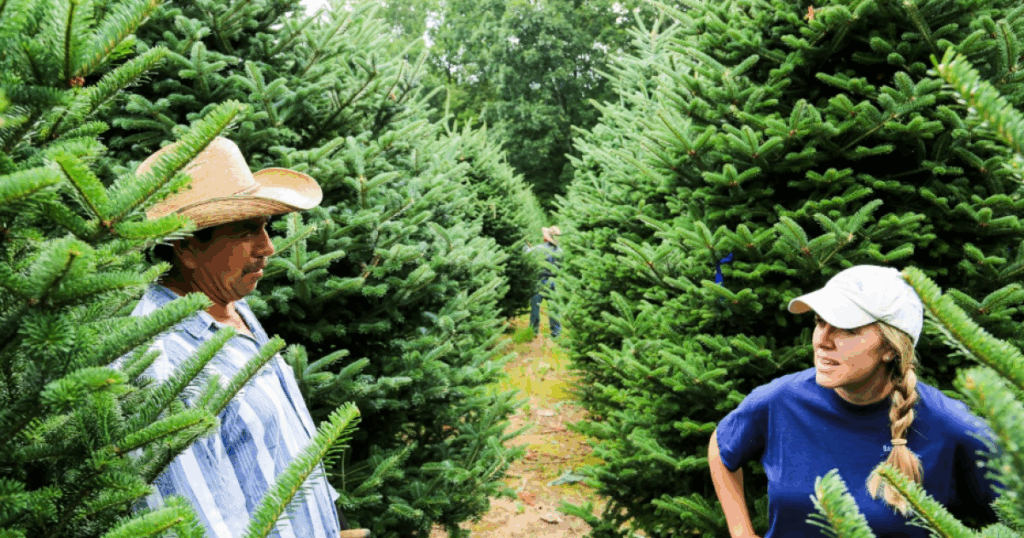
Castillo, currently in his 24th season at Hart-T-Tree Farms near the Virginia border, oversees tree maintenance and worker management. He participates in a unique healthcare collaboration between the farm’s proprietors and a local Ashe County healthcare provider.
“To be part of the program is to know what one has, to know if I am really sick or have some sort of illness and to know what I need to be healthy,” Castillo remarked.
The $55 membership cost to join Elevation Health, a primary care practice, is covered by the farm for its workers. Entering its second year, this partnership affords the predominantly Mexican migrant workers, who are in North Carolina on temporary visas, access to consistent healthcare services.
Hart-T-Tree Farms is owned by Carrie McClain, who has long sought ways to extend healthcare to her employees. “I’ve always been trying to figure out how we as a small business can offer healthcare to people,” McClain stated.
While migrant farmworkers can technically acquire their own insurance, the intricacies of the U.S. healthcare system pose significant barriers. Approximately 85% of farmworkers in the U.S. remain uninsured.
Previously, Castillo and his colleagues relied on urgent care facilities or hospitals in emergencies, often facing language barriers since many workers primarily speak Spanish. McClain aspired for a more integrated healthcare solution.
“I just really wanted a partner which we could call when there were issues that came up with these guys,” McClain explained. “They don’t know who to go to either.”
Elevation Health’s co-founder, dietician Maggi Birdsell, and her team initiated the program by visiting the farm, educating workers about their services, and conducting health screenings.
“Care can happen– doesn’t have to happen within our four walls,” Birdsell emphasized.
This season, 29 workers are present at the farm, with 17 participating in the healthcare program. The McClains have also opted to experience the program firsthand.
Jeff McClain shared, “[We joined] to have our own personal experience of what it’s like as a patient, so that we can know from our own experience, not just what guys are saying.”
Castillo has observed a noticeable improvement in the quality of care at Elevation Health. “It’s a lot better to have the clinic,” he noted. “I can trust the clinic and it’s a lot better because if someone goes to the hospital, it’s not the same, and here, the people are very kind and they take very good care of you.”
Raul, a Mexican worker in his third season at the farm, is experiencing healthcare access for the first time. “Us as workers we almost never go to a doctor,” he mentioned. “When the clinic came in, it made it a lot easier to go there or to let them know that something is bothering us. They give us medicine and they check what it is we have.”
The Charlotte-based Camino Research Institute recently highlighted the significant healthcare barriers faced by Latinos in North Carolina, emphasizing the need for Spanish-speaking healthcare providers.
Elevation Health’s practitioners utilize interpreters for non-English speaking patients but still face challenges. Birdsell noted, “The difference is you have two parties willing to work through them to find us a small solution for our scenario.”
The McClains are dedicated to maintaining the program, covering additional costs like lab fees themselves. Despite uncertainties regarding the renewal of the USDA grant funding the partnership, they are committed to continuing the initiative.
“Overall, the cost of participating in this healthcare program is less than like a payroll for us,” McClain said. “So I think it’s worth it.”
Looking forward to his annual check-up, Raul feels reassured about his health. “I consider it to be something very good for us, for the workers, that they are concerned about our health so that we can be healthy.”
While Castillo, Raul, and their colleagues are among the fortunate farmworkers with healthcare, widespread access to preventative care and language-appropriate services remains an ongoing challenge in North Carolina.
“We believe every person, regardless of where they’re coming from, should have access to good quality healthcare,” Birdsell concluded.