Election Board Declines Request for Recount Process Changes Amid Close Senate Race
In a tightly contested race, Senate leader Phil Berger’s campaign sought adjustments to the recount methods, but the State Board of Elections opted to maintain the established procedures. Berger, trailing by 23 votes behind Rockingham County Sheriff Sam Page, initiated a recount but requested additional scrutiny for certain ballots.
Berger’s campaign highlighted discrepancies, suggesting that some voters marked multiple candidates or left the selection blank. They advocated for these ballots to undergo individual inspection during the machine recount. “By counting the overvotes and undervotes by hand during the first machine recount process, the candidates and the public can have confidence in the accuracy of the vote count in this very close race without the need to conduct a full hand-to-eye recount of all votes cast,” Berger emphasized in his recount request letter.
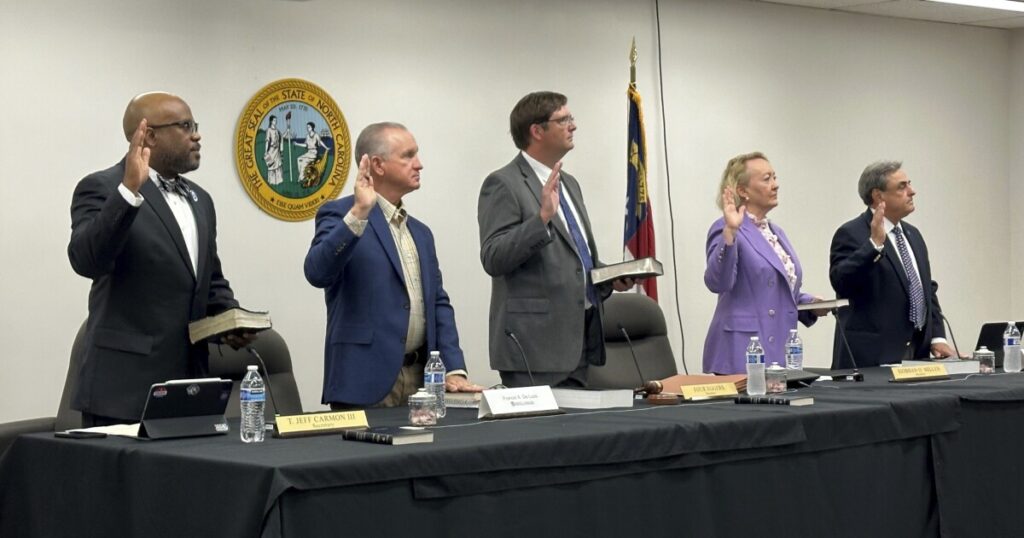
The elections board, however, decided against altering the recount process at their recent meeting, as counties had already commenced the recount under previously given instructions. Post the machine recount, Berger may request a hand recount of a random sample of ballots, although this will not specifically focus on ballots with “overvotes” and “undervotes.” “We’re going to let the normal process play itself out and not do anything special,” stated board member Siobhan Millen.
Meanwhile, Page’s campaign welcomed the board’s decision and urged Berger to concede. “Sen. Berger resorted to asking the board to ignore state law in his attempt to cling to power after losing more than two weeks ago,” remarked Patrick Sebastian, a “post-election advisor” for Page. “That’s not how elections work in North Carolina — and the board made that clear today.”
In other matters, the board dismissed a proposal to increase personal information requirements on forms for voters lacking photo ID. This suggestion was made by Jay DeLancy of the Voter Integrity Project, who aimed to include driver’s license numbers and social security digits on the “reasonable impediment” forms. The board unanimously voted against the proposal, as the issue is currently under legal consideration, according to Executive Director Sam Hayes.
Additionally, action on a debated plan to utilize a federal database for identifying potential non-citizen voters was deferred. Public commentary has expressed concern that inaccuracies in the database could lead to erroneous voter registration cancellations.