The Remarkable Resurgence of Black Bears in North Carolina
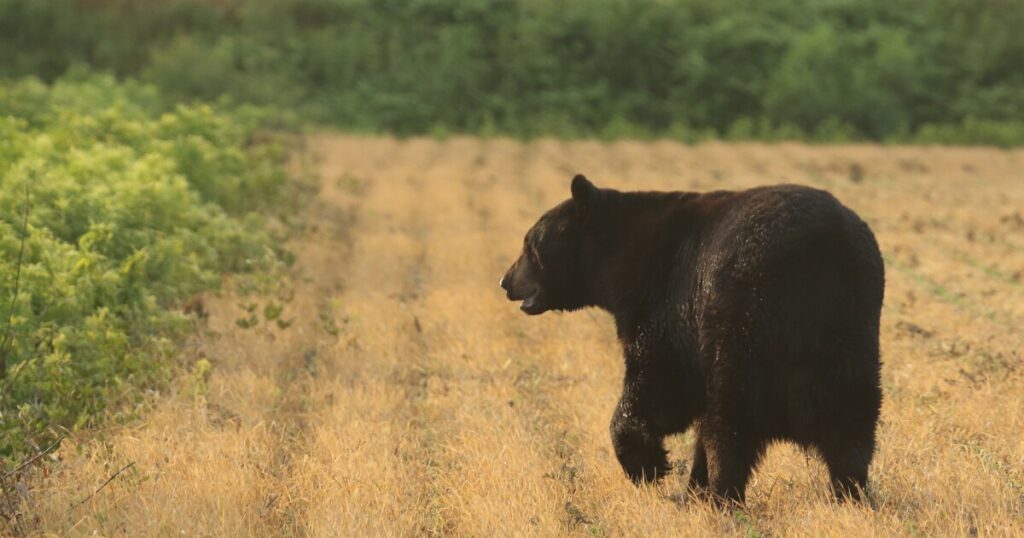
In a striking recovery over the past 50 years, North Carolina’s black bear population has soared from fewer than 1,000 to an estimated 20,000. Once confined to remote areas, these bears are now reclaiming habitats across the Piedmont region, thriving in places they haven’t inhabited for decades.
Jay Price from WUNC engaged with Joe Falta, a biologist with the N.C. State Wildlife Resources Commission, to delve into the factors behind this resurgence, the challenges of coexisting with bears, and even the unexpected impact of scented candles on these majestic animals.
Understanding Black Bear Distribution in North Carolina
Joe Falta, the district five wildlife biologist, outlines his area: “So district five is northern Piedmont. My district extends from Rockingham County across the northern tier to Granville, down through Durham, Chatham Lee, and then over to Randolph County. So 11 counties in total.”
Historically, black bears roamed widely across North America. However, by the late 1900s, their range had diminished by about 62%. This decline was primarily due to unregulated hunting, human development, and persecution. In recent years, their numbers have rebounded, particularly in North Carolina.
Factors Behind the Black Bear Comeback
The resurgence of black bears can be attributed to increased protection and conservation efforts. “Back in 1972, we established 28 bear sanctuaries covering about 800,000 acres, designed to protect a nucleus of breeding females,” Falta explains. The establishment of these sanctuaries has been pivotal in allowing the bear population to expand.
In eastern North Carolina, the population is remarkably dense. While the exact number is still under study, it’s estimated to be around 12,000 bears. This region boasts one of the densest black bear populations globally, with around 8,000 bears in the western part of the state.
The Expansion of Black Bear Habitats
Black bears are expanding their habitats, moving from eastern and western regions into the Piedmont at a rate of 2.5 to 5 miles per year. Additionally, bears from Virginia are migrating into northern North Carolina counties, such as Caswell, Rockingham, and Person.
Despite this expansion, not all North Carolina counties will host permanent bear populations. “No,” Falta states, explaining that urban areas like Raleigh, Durham, and Charlotte are too densely populated for bears to establish stable populations. However, transient bears do wander through these areas, often young males seeking new territories.
Coexisting with Black Bears
With the bear population growing, encounters with humans are inevitable, particularly in urban settings. Programs like BearWise educate residents on how to manage these interactions. Key points include not approaching bears and securing food sources, such as trash and bird feeders, to deter them from residential areas.
Interestingly, even scented candles can attract bears from miles away. Falta warns, “Scented candles … You know, if it smells like fruit or smells like cinnamon … It’s a great way to attract them.”
Overall, black bears are generally not aggressive towards humans unless provoked or in accidental encounters. Although rare, understanding and respecting these animals is crucial for coexistence.