As communities face increasing threats from natural disasters, Asheville is pioneering a new approach to emergency preparedness by investing heavily in resilience hubs. These centers aim to provide essential resources during crises like Hurricane Helene, which saw locals flocking to these makeshift sanctuaries in search of food, water, and other necessities.
The city has earmarked $2.1 million from federal recovery funds to bolster these hubs, with an additional $10 million proposed by city manager D.K. Wesley. “What I heard loud and clear, even before this meeting, was that a great majority of the Council members actually want to reserve some funding for resilience hubs,” Wesley stated, though details on funding sources remain unspecified.
Resilience hubs are places of refuge that communities can rely on in emergencies, according to Bridget Herring, Asheville’s Helene Recovery Coordinator. “It’s not about creating something new. It’s about bolstering the spaces that the community already has established,” she explained. These hubs could be equipped with solar power, water filtration, and satellite internet, making them vital during diverse emergencies.
City Council member Sheneika Smith, who initially proposed the concept in 2022, emphasized the necessity of these hubs following the devastation caused by Helene. Smith noted, “I started to feel this internal nudge, like Asheville needs to begin preparing for climate related disasters.” Her vision is that these hubs will promote community cooperation beyond emergencies.
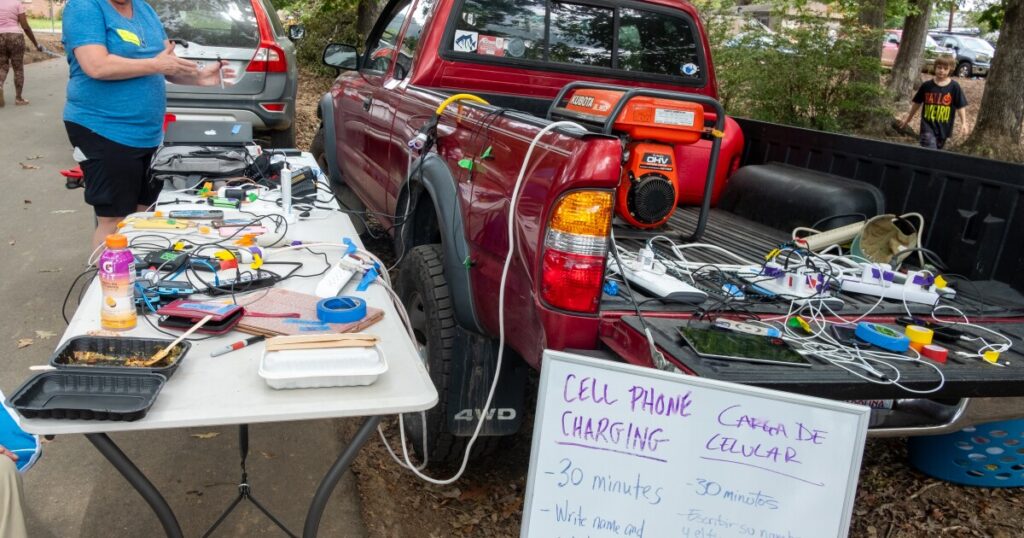
Following Hurricane Helene, Asheville experienced a communications blackout and water crisis, prompting residents to turn to mutual aid hubs at local venues like bookstores and churches. These locations became crucial for charging devices, accessing clean water, and finding aid information.
Gerard Albert III
/
BPR News
Smith remarked, “It saved the day,” highlighting the community’s swift response. The city also allocated $70,000 to Thrive Asheville to map the hubs’ locations and identify service gaps during Helene. Thrive aims to provide recommendations by July to enhance existing infrastructure.
Elsewhere in the U.S., cities like Cambridge, MA, and San Leandro, CA, are also establishing resilience hubs. San Leandro, for instance, has five sites that serve dual purposes: community events during normal times and emergency resources during crises.
Asheville Council members Maggie Ullman and Kim Roney support the initiative, suggesting investments in durable infrastructure and a micro-grant system for neighborhoods. Ullman noted, “I’d like to see investments in durable, one-time infrastructure in the places people already turned to for safety.” Meanwhile, Roney envisions a program allowing communities to document needs and apply for resources.