As wildfires continue to scorch the western United States, firefighting resources are being stretched thin. Over a dozen wildfires, each surpassing 100,000 acres, are currently burning, as reported by the National Interagency Fire Center.
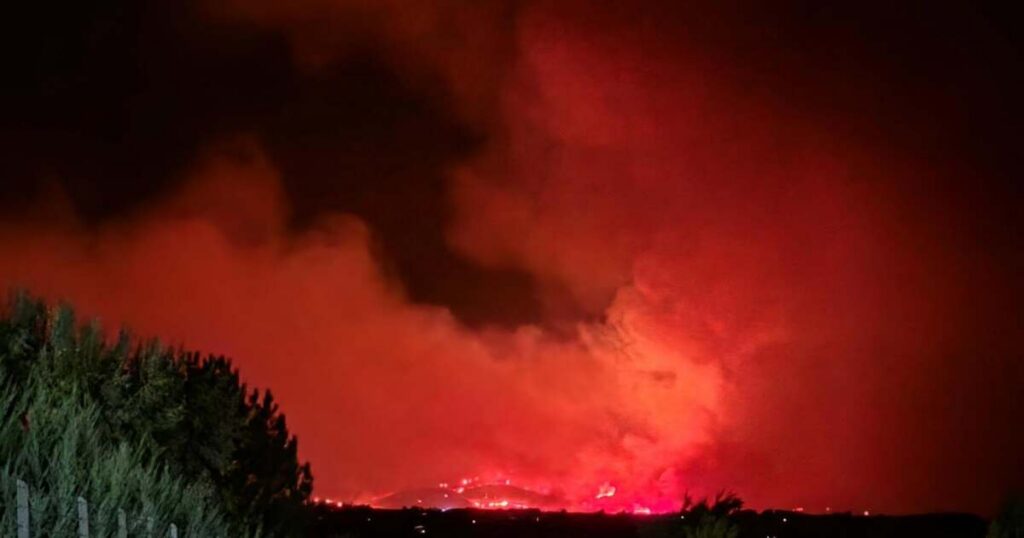
Two new blazes erupted over the weekend near Reno, Nevada — the Bug Fire and the Fred Mountain Fire — displacing thousands from their homes.
Concentration of Wildfires
The majority of the active wildfires are concentrated in the Pacific Northwest, with Oregon and Washington accounting for over 50 fires combined. In Idaho, another 10 fires are raging, and one more is burning in Northern California, collectively affecting over 3 million acres.
Across the border in southwest Canada, 98 wildfires have been reported, with most classified as “out of control” according to the British Columbia Wildfire Service. Tragically, several firefighters have lost their lives in these efforts, including in Colorado and Utah.
Firefighting Resources and Evacuations
The Federal Preparedness Level stands at 5, the highest for wildland firefighters, as declared by the NIFC. The Northwest Interagency Coordination Center and the Great Basin Geographic Area Coordination Center are both at this level, with the Northern Rockies Coordination Center at PL4 and others at varying lower levels.

National Interagency Coordinating Center
Approximately 29,000 personnel are currently engaged in firefighting operations nationwide, with 18,120 dedicated to efforts managed by the Northwest Interagency Coordination Center. In the Spokane area, fires have led to the evacuation of over 60,000 people and the loss of more than 700 structures.
Tragic Losses Among Firefighters
In Utah, two pilots lost their lives when a helicopter crashed while combating the Widemouth 2 Fire in Fishlake National Forest. The aircraft was flying in steep terrain, and although conditions were suitable, the crash proved fatal for the crew.
Earlier in the fire season, three firefighters from the Rifle Interagency Helitack Crew died during operations on the Colorado-Utah border. Those individuals were Helitack Squad Leader Emily Barker, 38, and crew members Nicholas Hutcherson and Sydney Watson, both 27.
U.S. Wildland Fire Service Chief Brian Fennessy said they “represent the very best the wildland fire community has to offer,” during their memorial service.

Later, another member of the same team, Nathan Matthews, succumbed to injuries sustained in the line of duty. Additionally, pilot Nicholas Dale from British Columbia died in July when his helicopter crashed while fighting fires near Gold Mountain, Colorado.
Evacuations in Reno
In Reno, Nevada, the Bug Fire and Fred Mountain Fire have necessitated the evacuation of over 5,000 residents. The fires expanded rapidly over the weekend, with the Bug Fire growing from 6,500 to 17,000 acres and the Fred Mountain Fire from 40 to 1,400 acres.
Evacuation shelters are nearing their capacity, with the Reno Livestock Event Center hosting over 300 animals. Local hotel-casinos have begun offering discounted rates for evacuees.
This report was produced by the Mountain West News Bureau, a collaboration of regional public media outlets and NPR, with support from the Corporation for Public Broadcasting and Eric and Wendy Schmidt.