Street Vendors in Nevada Navigate New Licensing Law
As the enticing aromas of birria and tortillas waft through the air one October night, patrons gather at Las Skinny Chicks, a popular food cart beneath the glow of an auto shop sign. The Sanchez family, led by Martha Sánchez Hernandez, is busy serving customers, showcasing the latest menu specials.
Martha Sánchez Hernandez embarked on her culinary venture a few months ago, transitioning from catering to owning a food cart after securing a street vending license. This became possible thanks to the Street Vendor Protection Act passed in 2023. However, the licensing process remains complex, prompting organizations like Make the Road Nevada to assist vendors.
Make the Road Nevada conducts bi-weekly meetings, allowing the Latino community to discuss financial challenges. It was during these gatherings that a legislative solution was conceived to simplify the licensing process for street vendors. Collaboration with state senators Edgar Flores and Fabian Doñate led to the bill’s drafting.
Jose Rivera, a representative from Make the Road, highlights the struggles vendors faced prior to the law. “What vendors would notice is that they would be followed, either by unmarked vehicles, by vehicles from the city, regardless of what entity, they would get cited,” Rivera explained. Vendors often lacked resources to address citations, sometimes leading to severe consequences like deportation.
Even with the new law, challenges persist. Many vendors operate mobile carts without standardized specifications, leading to cost-inducing modifications. Rivera notes, “What they’re doing right now is applying with whatever cart they have, whatever equipment they have.”
Anthony de la Paz, co-owner of El Patio, shares the hurdles of navigating the licensing process, having operated his food truck for two months. “It was just kind of us on our own. We’re just kind of figuring out as we went,” de la Paz said. The lack of communication between departments adds to the challenge, as does the $500 quarterly fee for a liquor license, which can create financial strain.
Improvements have been made in language accessibility following the act’s passage. Permit applications are now available in multiple languages, with Northern Nevada Public Health offering translations for mobile food vendor applications online.
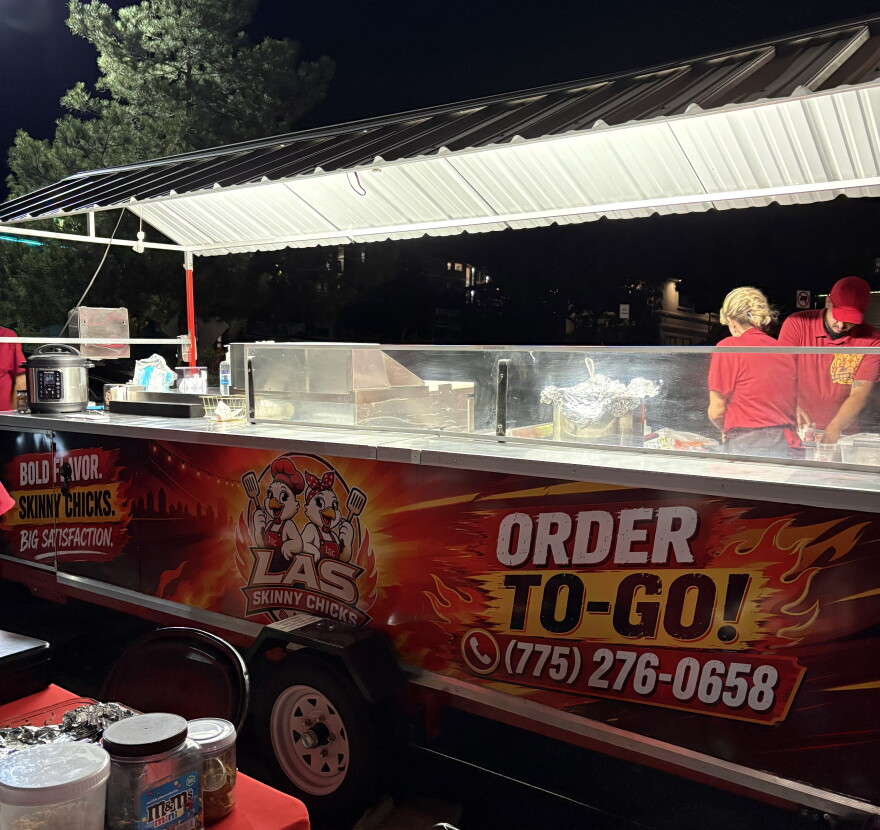
Make the Road Nevada’s support extends beyond guidance, providing mobile carts to vendors like Las Skinny Chicks. Sánchez Hernandez expressed gratitude, saying, “They gave five of us a cart, one each. They explained to us a little about what it was about, that they were going to help all of us. They were there every day, if we needed something, they were right there with us.”