Reno’s Struggle with Homelessness: New Policies and Their Impact
On a warm afternoon at Virginia Lake, many enjoy leisure activities, but for Christian Thomas, the park evokes a different memory. He once called it home. “If I was to stay here, I’d leave early, even though it’s a park. Seems weird, but I’d just go to another park,” Thomas shared with KUNR.
Thomas, who currently resides in his SUV, keeps a low profile by concealing his possessions and frequently relocating. His current lifestyle contrasts sharply with his past, where he worked demanding hours in the medical sales industry. Dissatisfied, he left that life behind and began traveling, intending to briefly stop in Reno before continuing to Las Vegas. That brief stop turned into two years.
While he engages in gig work through services like DoorDash and Instacart, vehicle and phone troubles have posed setbacks. Previously, he stayed with friends near a park by the lake, but increased visibility forced them to relocate. “It’s harder now, for sure,” Thomas remarked. “There’s really very few places to go, especially if you are not smart about what you’re doing.”
This challenge is exacerbated by new measures enacted last year by Reno, Sparks, and Washoe County to address homelessness. These policies aim to transition the unhoused into shelters, though records indicate a rise in incarcerations. The link between rising housing costs and homelessness is evident in Reno-Sparks, where average rents surged from $1,341 in early 2020 to $1,681 in 2025, according to Johnson Perkins Griffin.
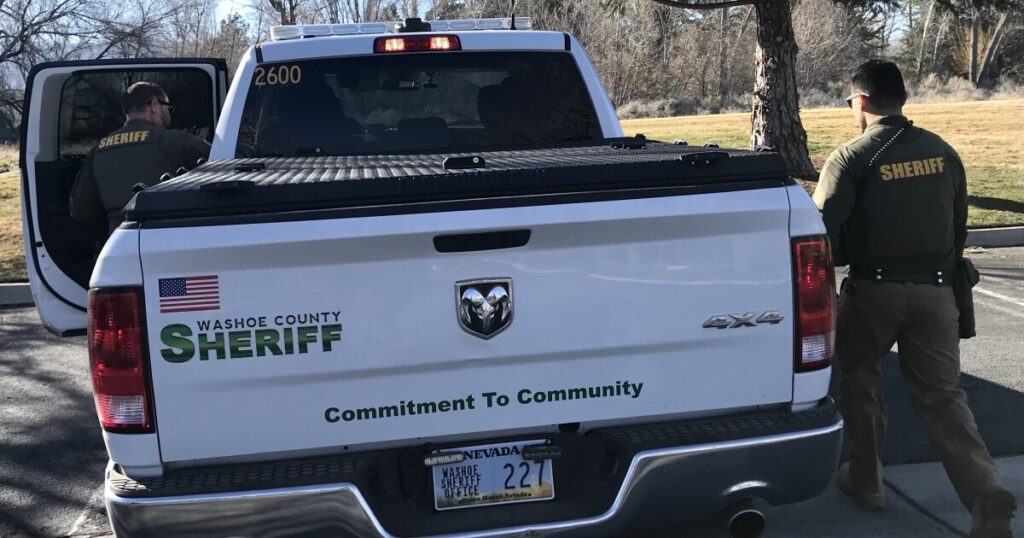
Washoe County’s 2024 Point in Time count recorded 1,760 homeless individuals, a number that climbed to 2,187 by last month’s report, as shown on their public dashboard. In March 2024, Washoe County Sheriff Darin Balaam pushed for a camping ban near the Truckee River and on vehicle living.
Balaam explained, “The way the ordinance is written and how the team operates is, we make contact, they establish that rapport… and then they say, ‘Okay, let’s take you to wherever those resources are.’” Although the new ordinance led to just one citation, many were referred to Reno’s community court for services. However, the court’s closure was announced recently, prompting Sheriff Balaam to express concern over losing this valuable resource.
While the community court aimed to connect people to essential services, the jail population with unknown addresses has increased, from 2,159 bookings in 2020 to 3,049 last year. Although Balaam’s office doesn’t specifically track homelessness at booking, Leah Wang from the Prison Policy Initiative suggests that many facilities avoid acknowledging the extent of jailing unhoused individuals.
“I think ultimately, jail authorities don’t really want to admit how much they are jailing unhoused people,” Wang stated. Her research highlights that unhoused people often face repeated and longer incarcerations. Wang noted, “Unfortunately, most jails just aren’t recording it. And they probably won’t for some time.”
Community advocate Alanah Fanning highlights a growing reluctance among the homeless to accept services due to fear of incarceration. Having previously run warming centers in Reno, she understands their apprehension. “I think that maybe there’s this fear, probably, that they’re going to go to jail, and that everything, it might be kind of a trick,” Fanning said. She suggests focusing on rent control and affordable housing as more effective solutions.