New Mapping Tool Highlights Nevada’s Reliance on Groundwater
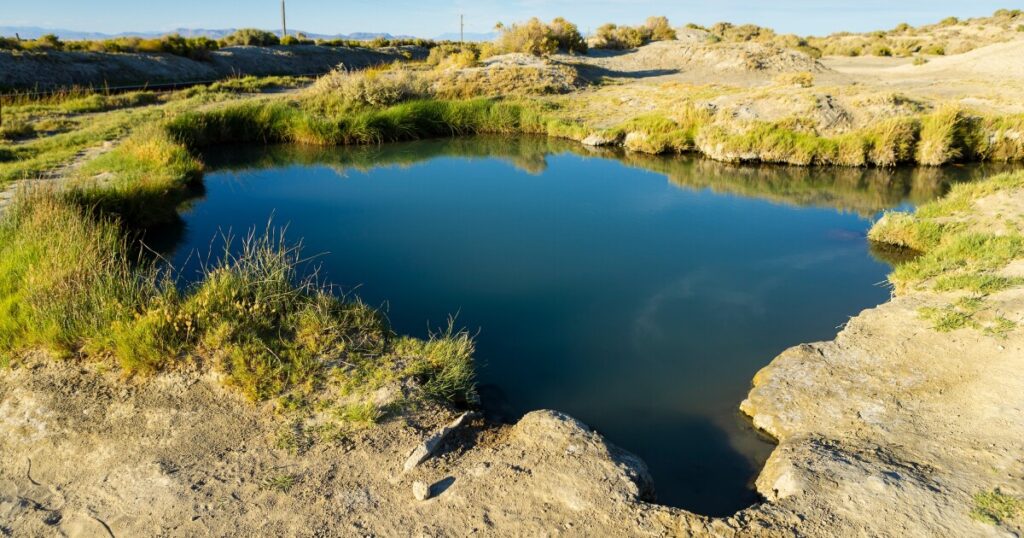
A groundbreaking tool has been introduced to illustrate the crucial role of groundwater in sustaining Nevada’s ecosystems. This initiative is the result of a collaboration among the Nature Conservancy, the Desert Research Institute, and the University of Wisconsin-Madison. By pinpointing areas where vegetation is most dependent on groundwater, the tool aims to shed light on environmental threats posed by drought, urban development, and decreasing water levels.
According to the researchers, the tool serves as a resource for water managers, land planners, and the general public to gain insights into the interplay between subterranean water sources and surface ecosystems. Laurel Saito, the water strategy director for the Nature Conservancy in Nevada, expressed the team’s objective to “understand better how climate variability, how different soil types, how different groundwater depths might affect how well a plant does in different parts of Nevada.”
Designed with accessibility in mind, the tool allows users to explore specific regions within Nevada to assess groundwater dependency. This information is critical for making informed decisions related to conservation, water management, and development.
Groundwater is a lifeline for Nevada’s agriculture, wildlife habitats, and expanding communities, especially in rural and arid regions where surface water is limited. With climate change leading to increased temperatures and more frequent droughts, the demand on these underground reservoirs is anticipated to rise.
While the tool is specifically tailored for Nevada, conservationists suggest its methodology could benefit other states in the Mountain West region, where similar challenges in balancing water usage and ecosystem health prevail.
Disclosure: The Nature Conservancy provides financial support to KUNR.
This article is part of a collaborative effort by the Mountain West News Bureau, which includes KUNR, Wyoming Public Media, Nevada Public Radio, Boise State Public Radio in Idaho, KUNC in Northern Colorado, KANW in New Mexico, Colorado Public Radio, KJZZ in Arizona, and NPR, with support from regional affiliates. Funding for the Mountain West News Bureau comes partly from the Corporation for Public Broadcasting and Eric and Wendy Schmidt.