Challenges of Federal Land Ownership in Nevada’s Housing Development
In 1864, when Nevada’s constitution was crafted, the state relinquished any claim to lands not settled by colonists. This decision seemed wise at the time, offering vast federal lands for grazing, mining, and recreation. However, this arrangement is now seen by many as a barrier to development, particularly in building affordable housing.
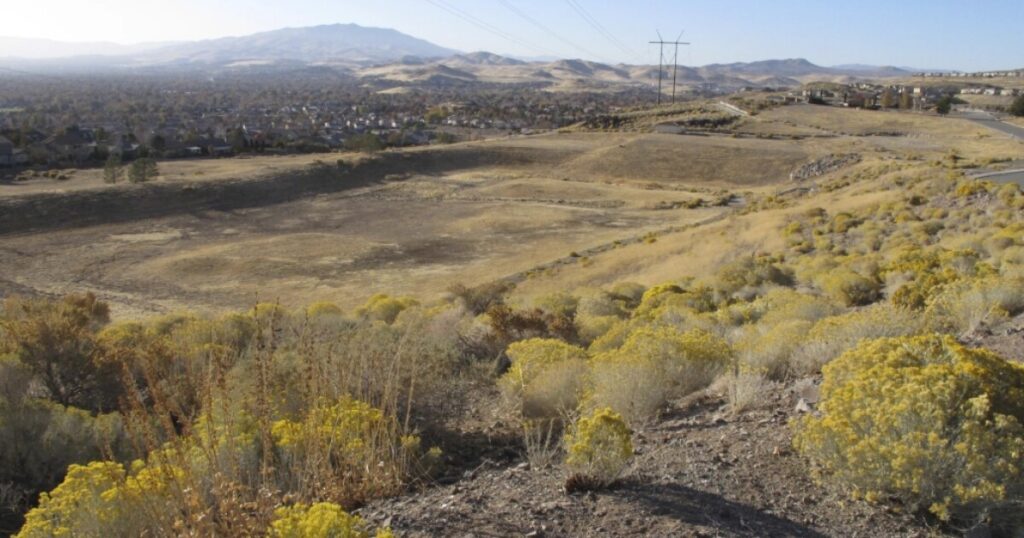
Sparks, a city nestled between Reno and the Virginia Range, is home to over 100,000 residents. Traditionally a Reno suburb, it now accommodates workers from the nearby Tahoe Reno Industrial Center. This shift has spurred growth tensions, with Mayor Ed Lawson noting, “Parece que en unos 10 años no podremos construir otra casa sin construir hacia arriba.”
Similar to other Nevada communities, Sparks faces territorial limitations. A 2021 study by the Western Nevada Economic Development Authority warned that Northern Nevada could soon run out of residential development land. This issue has caught the attention of national leaders.
During a Las Vegas event, President Trump stated, “Tenemos tanta tierra y queremos ponerla en uso.” He emphasized plans to release federal lands for housing development, potentially benefiting Nevada and other regions. His administration began assessing federal lands within 10 miles of communities with over 5,000 residents to determine their suitability for housing.
Selling these lands, however, requires congressional approval, and skepticism remains about whether Western communities truly need federal lands. Aaron Weiss from the Center for Western Priorities argues that federal lands are often unsuitable for affordable housing due to distance from urban infrastructure.
Nonetheless, Weiss acknowledges that areas in Nevada might benefit from initiatives like the Southern Nevada Public Land Management Act (SNPLMA), passed in 1998 under Senator Harry Reid. This act opened thousands of acres for development and conservation, allocating proceeds to local communities.
Representative Mark Amodei, Nevada’s sole Republican in Congress, champions the Northern Nevada Economic Development and Conservation Act to replicate SNPLMA’s success in rural areas. This is one of three land bills Congress is considering, aiming to sell lands near Truckee Meadows and Clark County.
Opponents, however, see no need for such laws. A report by the Southern Nevada Regional Transportation Commission highlighted over 82,000 acres of vacant and underutilized land in the Las Vegas metro area, suggesting ample space for urban development.
Olvia Tangaer from the Sierra Club’s Toiyabe Chapter advocates for rezoning to increase housing density, noting that much of Nevada’s land is zoned for single-family homes, hindering affordable housing development.
Despite differing views, politicians like Amodei assert that public land legislation is essential for community growth. He emphasizes the need for laws allowing local planning and zoning, stating, “Ya sea Las Vegas, Winnemucca, Ely o Fallon, si se quiere que las comunidades tengan la capacidad de evolucionar, siempre ha sido así: hay que aprobar una ley sobre tierras públicas para sacar partes del patrimonio federal.”
This story was originally published by Nevada Public Radio and produced by Paul Boger.