Understanding the Hidden Perils of Avalanche Terrain
In the serene landscape of Mount Rose near Reno, Nevada, the tranquility of a snowshoe trail belies the complex and often unpredictable nature of the snowpack. Wendy Antibus from the Sierra Avalanche Center recently inspected the local snow conditions, noting a low avalanche risk due to cooler temperatures and wind that had solidified the snow’s surface.
Antibus emphasized that even on days with a low avalanche hazard, the snowpack can be deceptively complex. “There can be cues in the snowpack, like sounds that the snowpack makes — like a ‘wompfing’ sound, cracking of the snowpack under your skis,” she explained, indicating potential instability beneath the surface.
Courtesy Nevada County Sheriff’s Office
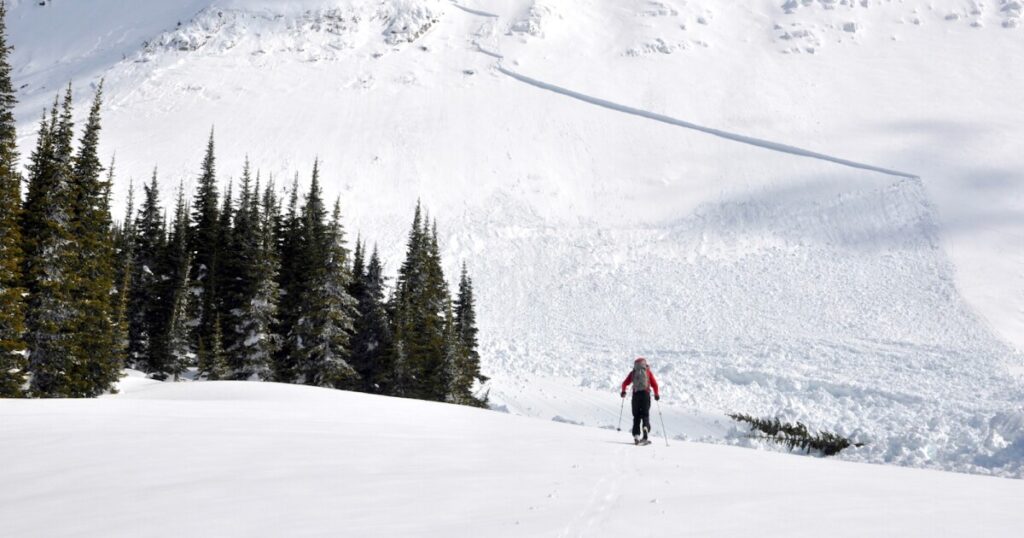
Earlier in February, the situation was starkly different on a nearby peak, where an avalanche of high danger struck. A group of 15 skiers venturing close to Lake Tahoe was engulfed in a slide, tragically killing nine, including six mothers who were friends.
The Human Factor in Avalanches
Avalanche risks are not solely dictated by snow conditions; human decisions are crucial. Sara Boilen, a psychologist and backcountry skier, highlights how people tend to underestimate the dangers despite being aware of them. “There are very few people who go out in the backcountry unaware of the fact that they’re in avalanche terrain or at risk,” she notes. Yet, the allure of fresh snow often blinds individuals to the potential hazards.

The psychology of group dynamics also plays a role. Studies suggest that larger groups, especially those exceeding six people, are prone to increased avalanche risks. The comfort of numbers can lead to overconfidence and social pressures that prompt riskier behavior. “We don’t have human-related or human-caused avalanches without humans,” Boilen highlights, stressing the importance of self-awareness in decision-making.
Environmental Changes and Snowpack Complexity
As climate patterns evolve, so do the conditions that contribute to avalanches. Erich Peitzsch from the U.S. Geological Survey’s Northern Rocky Mountain Science Center explains that while the essential elements for avalanches—steep slopes, weak snow layers, and a triggering event—remain unchanged, the weather patterns fostering these conditions have become more erratic.
Peitzsch describes a cycle of storms followed by dry spells, which can form “persistent weak layers” in the snowpack, enduring long periods and increasing instability. These shifting patterns are becoming more frequent in the Mountain West, making avalanche prediction more challenging.

Kaleb Roedel / Mountain West News Bureau
Forecasting and Future Implications
Antibus underscores that these evolving weather conditions complicate avalanche forecasting. “It makes it harder for forecasters to anticipate conditions as we see different scenarios in the climate,” she said. With warming temperatures and increased rainfall, wet snow avalanches, which are less understood, could become more prevalent.
Such unpredictable changes have already affected the avalanche risk levels on Mount Rose, which have risen from low to moderate since Antibus’s last assessment. The need for vigilant monitoring and understanding of these dynamics is critical as conditions continue to shift.