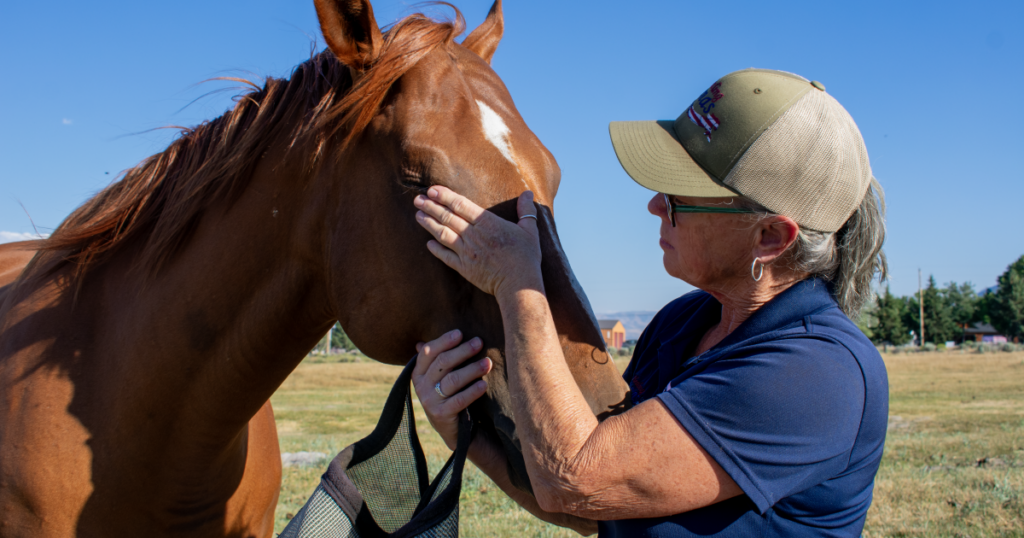
In the serene glow of a sunset-lit field, five former racehorses stand against the horizon, providing a unique setting for Healing Arenas’ innovative resiliency program. Nestled under the shade of towering sequoias, Julie Baker, the program’s founder and director, guides participants through a journey to better handle stress.
Central to the program are thought-provoking questions such as, “I tend to bounce back quickly after hard times,” as Baker reads aloud from a prompt sheet. This approach is designed to help first responders like firefighters, police officers, and emergency room personnel navigate the trauma inherent in their professions.
Lucia Starbuck
/
KUNR Public Radio
These sessions aim to enhance the participants’ ability to manage work-related stress and improve their home life. “That’s going to be what helps you retain your career and help your home life as well,” Baker explained.
Unique therapy sessions involve interactions with horses, which Baker believes facilitate more open communication than traditional environments. “You’re hearing the wind blow through the trees, you’re out in nature, you have these giant God-created beings that you can identify with,” she detailed. The horses’ individual personalities also help participants relate them to figures in their own lives, like a non-responsive chief.
The program also includes family days, offering a space for loved ones to learn about coping mechanisms for stressful work periods. Baker emphasizes the camaraderie built as participants share experiences with fellow first responders.
Drawing from her 15-year experience as an EMT, Baker understands the transformation the job can impose. “It made me crabby. Made me not want to go to work. It made me be a person I never was. It’s amazing what an environment can do to your soul,” she recalled.

Lucia Starbuck
/
KUNR Public Radio
While similar programs have been successful with veterans, Baker now aims to address the challenges faced by first responders, particularly the stigma surrounding mental health. “A lot of it stems from the stigma of superiors wondering if you’re still good to go. They don’t want their badge taken away,” Baker said. “That’s what we’re trying to do here: to help people discover that peace. You can do something about it.”
The program offers flexibility, allowing participants to engage in up to five weeks of classes or attend single sessions for continuing education credit. Participation is free and voluntary.