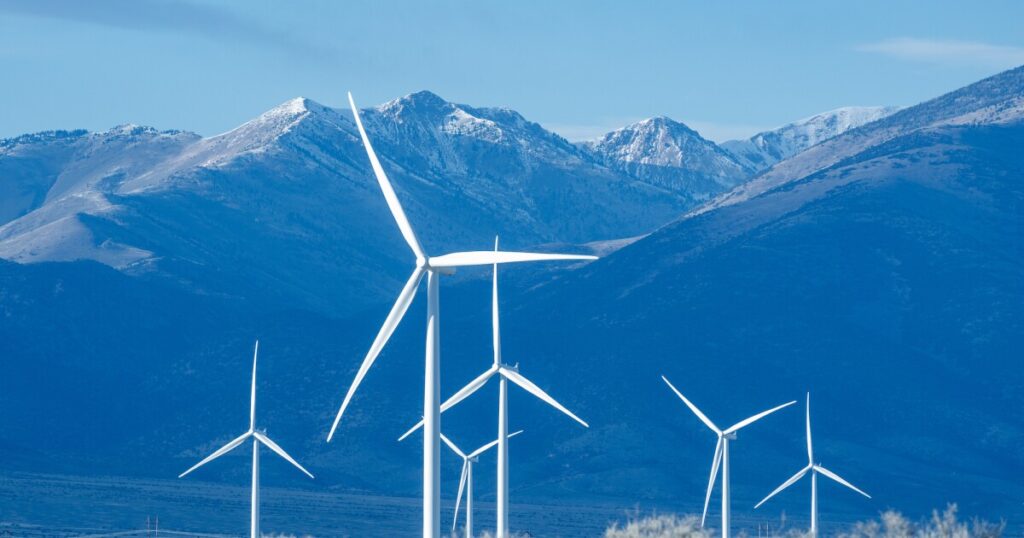
As the United States continues its transition to cleaner energy sources, the Mountain West states are showing varied levels of adoption for wind and solar energy. New Mexico leads the pack, with these renewable sources contributing about half of the state’s electricity. Meanwhile, Colorado sees around 40% from wind and solar, and Nevada follows with approximately a third.
Wyoming, Idaho, Arizona, and Utah are also embracing renewables, with wind and solar accounting for about 30%, a quarter, and 20% respectively of their electricity generation. A significant factor driving this shift is the declining cost of renewable energy.
In the last decade, solar power costs have plummeted by approximately 75%, while wind energy costs have decreased by about 50%. Kaitlyn Trudeau from Climate Central highlights, “These are really cheap sources of energy, and they’re abundant. We’ve got them — we’ve got wind, we’ve got sun.”
According to a recent report, wind and solar power generated enough electricity last year to supply over 79 million homes nationwide.
Courtesy Of Climate Central
The rising demand for electricity, fueled by the proliferation of data centers, advancements in artificial intelligence, and increased use of heating and cooling systems, places extra pressure on electrical grids.
“Data centers are becoming a really big deal, and they’re putting pressure on electricity systems and on everyday Americans,” noted Trudeau. This growing demand challenges utility providers to expand their capacity while navigating constraints in transmission and storage infrastructure.
Such challenges, alongside policy uncertainties and grid infrastructure limitations, are factors that will influence the pace of renewable energy growth in the Mountain West, according to Trudeau.
This article is a product of the Mountain West News Bureau, supported by KUNR, Wyoming Public Media, Nevada Public Radio, Boise State Public Radio, KUNC, KANW, Colorado Public Radio, KJZZ, and NPR, with additional contributions from regional newsrooms. Funding is partially provided by the Corporation for Public Broadcasting and Eric and Wendy Schmidt.