Rising Debate Over Data Centers Sparks Reaction in Nevada
The construction of data centers is becoming a hot topic across the United States, as discussions around their placement and regulation intensify. This issue recently surfaced in Maine with a proposed statewide moratorium, which was eventually vetoed by Governor Janet Mills, highlighting the growing concern over these facilities. Meanwhile, Northern Nevada finds itself in the midst of this debate.
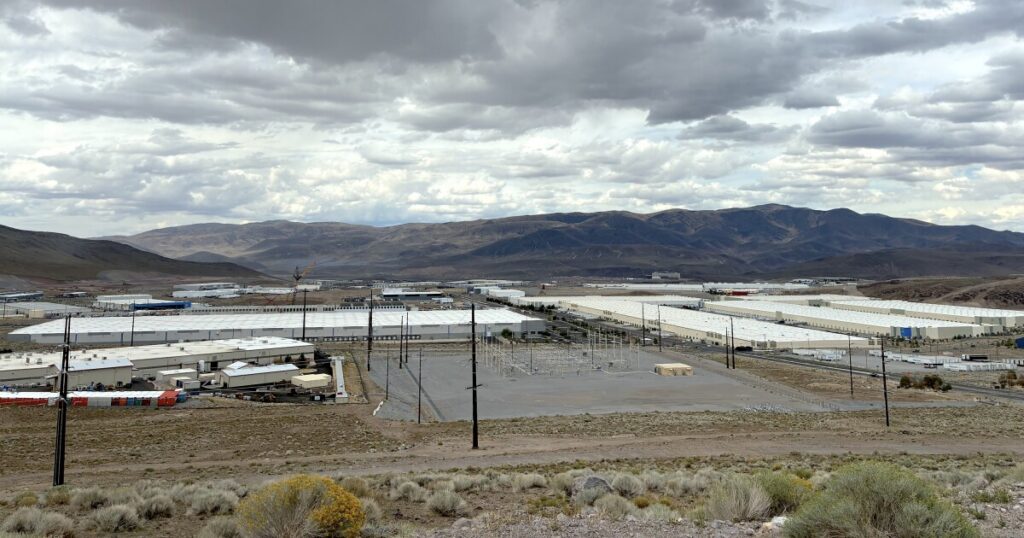
The Keystone Data Center in Reno, whose construction began in November 2025, has raised questions about the impact of large-scale developments near residential areas. As more data centers are planned, the focus has shifted towards establishing regulatory frameworks and assessing long-term impacts.
Manny Becerra, co-founder of the Truckee Meadows Data Center Policy Consortium, emphasized the current lack of guidance in data center development. “Currently, there are no thresholds. There are no benchmarks. There’s absolutely just no framework. And that’s the big gap,” he stated.
In early 2025, Becerra proposed a temporary halt on new data center permits in Reno. While the planning commission approved this measure, it failed to pass at the city council level. Becerra believes this outcome underscores the prioritization of economic interests over community concerns. “That delay in response and that inaction is telling as far as what’s a priority and what hasn’t been, but no better time than the present to pivot,” he noted.
Contrasting views exist regarding the perceived risks of these developments. Brian Bonnefant from UNR’s Center for Regional Studies mentioned that existing state and local oversight already limits development. “The three data centers we have in Reno and Sparks, right now, use an annual use of water of 24 homes, 24, that’s it,” he explained.
Bonnefant highlighted that while water use garners attention, energy demand poses a greater challenge. Nevada’s expansive land and infrastructure are seen as beneficial compared to more urbanized regions. Additionally, data centers contribute tax revenue while demanding minimal public services.
Erik Henzl and Sean McKenna from the Desert Research Institute have been observing Nevada’s rapid data center growth. Their findings suggest that new cooling technologies can decrease direct water use. “So the water is used directly on site through cooling, but indirect water use remains a challenge, and that is the water consumed off-site via electricity generation,” Henzl remarked.
They also noted that the increasing number of data centers could strain the state’s power grid, especially during high demand periods or extreme weather events. McKenna added that this pressure intensifies when multiple facilities are located nearby, stressing local infrastructure.
The Keystone project’s proximity to residential neighborhoods has led to criticism, raising concerns about the location of future developments. Bonnefant suggested that future projects might move further from urban centers as communities resist nearby construction, proposing Nevada’s open land as a viable alternative.
Becerra emphasized that beyond location, the decision-making process must improve, particularly in utilizing public feedback. “We say we listen, but we don’t say how it’s influenced or shaped us, if at all, and we need to be better about that. Otherwise, that’s where frustration or friction happens, and understandably,” he observed.
As states contemplate restrictions or temporary halts on new data centers, Nevada continues to balance the economic advantages with potential long-term effects on its power grid, water resources, and communities.