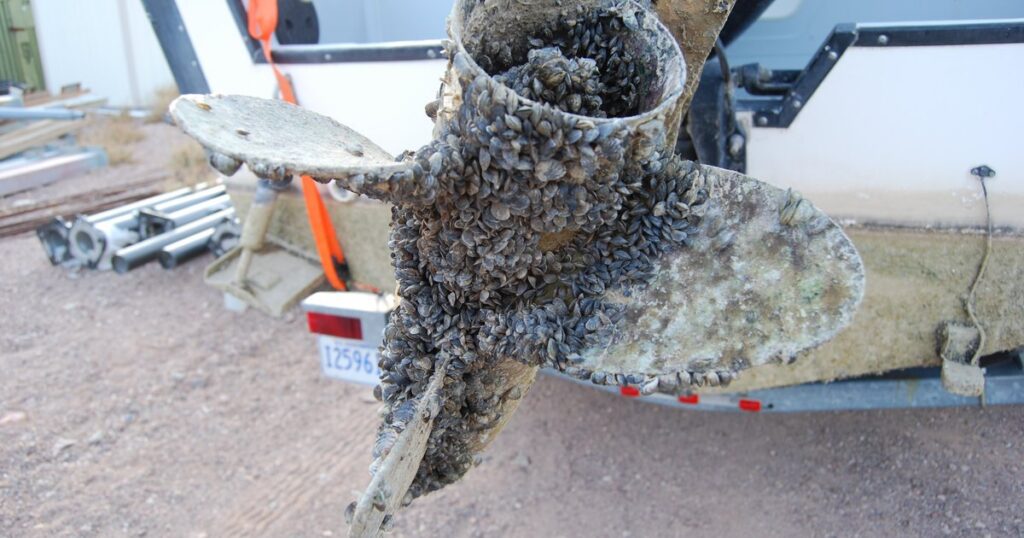
Zebra Mussels: An Unrelenting Threat to Aquatic Ecosystems
Zebra mussels, a small but impactful invasive species, continue to pose significant challenges to aquatic ecosystems and infrastructure. These mollusks filter about a liter of water daily, which, when multiplied by thousands, significantly depletes plankton and essential nutrients that native species depend on for survival.
According to Kristopher Stahr, aquatic invasive species program manager for the Nebraska Game and Parks Commission, this process essentially starves the ecosystem from the foundational levels. While their filtering activity results in clearer water, Stahr warns that such clarity can indicate deeper ecological issues.
Greater sunlight penetration due to clear water can lead to toxic blue-green algae blooms and facilitate the growth of invasive weeds in deeper waters. Research from the Institute for Sustainable Development indicates that native mussel populations typically experience a drastic 90% decline within a decade following a zebra mussel invasion.
Besides ecological impacts, zebra mussels also pose physical hazards. Stahr points out, “Zebra mussel shells are extraordinarily sharp,” which can injure swimmers and waders when washed ashore. Once established, these mussels are notoriously difficult to remove. “Getting rid of them is basically impossible,” Stahr stated.
Eradication is only successful in isolated incidents involving small, contained water bodies. Nebraska’s Zorinsky and Cunningham lakes are among the few where successful eradication occurred by draining and freezing the mussels. According to Stahr, these cases are rare successes in the nation.
In contrast, chemical treatments at Offutt Base Lake in 2008 and 2009, involving copper sulfate, were unsuccessful, as adult mussels eventually resurfaced. “The stars have to align for that,” Stahr remarked on the difficulty of eradication.
Nebraska remains relatively free from widespread zebra mussel infestations compared to other states in the region. However, the state’s capacity to monitor public waters is limited, increasing risks for agricultural and municipal infrastructure, where mussels can clog pipes and obstruct water flow. “Anything that inhibits the ability for that water to move can cause a really, really big problem,” Stahr emphasized.
Despite the looming threat, the staff dedicated to managing invasive species in Nebraska remains small, posing challenges to effectively combat the spread of zebra mussels.