The global trade landscape is evolving, and businesses are grappling with the complexities of tariffs and their implications. Companies must navigate not only the current tariffs but also the looming uncertainty of potential new ones. This economic environment presents a challenge for businesses as they strategize for the future.
“In other words, it’s not just you’ve got tariffs, you’ve got the uncertainty of other tariffs being implemented,” he said.
The Trump administration, throughout 2025, introduced tariffs as part of its economic policy and as a means to address international issues. Tariffs were imposed on Nicaragua due to its human rights practices and on Brazil concerning its treatment of former leader Jair Bolsonaro, who is aligned with Trump. Additionally, countries like China and Mexico, known for exporting fentanyl, are subjected to similar tariff measures.
Goss highlighted the concerns of supply managers, stating they are uncertain whether additional tariffs will affect their inputs. This unpredictability has left them questioning, “Will we have tariffs added on, or will we not have tariffs added on to the input?”
Staying sweet
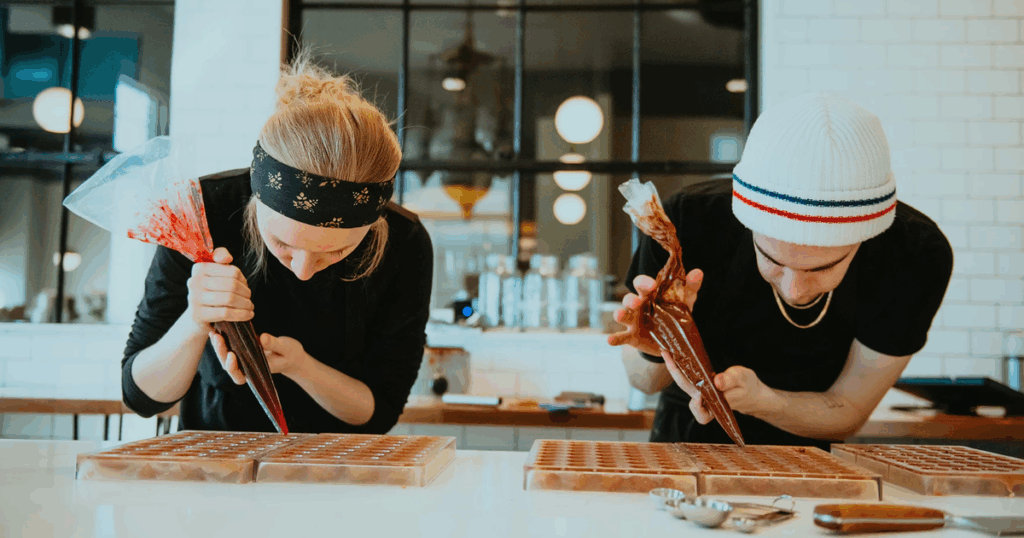
Jensen, from The Chocolate Season, emphasizes the importance of offering a variety of price points both online and in the Lincoln store. Customers can find treats ranging from $2 to premium chocolate bars and boxes priced between $10 and $80.
“We don’t want you to come in with your kids and say, ‘Sorry kids, we can’t get anything here, let’s go to McDonald’s,’” she explained.
The tariffs, however, pose significant challenges. To mitigate costs, The Chocolate Season has reduced the frequency of sales and discounts and introduced a credit card fee for corporate clients with large orders. Despite these adjustments, Jensen remains committed to using imported ingredients.
“Because the minute you compromise on your brand, then 20 years of work is done because you tried to save 5%,” Jensen noted.