Challenges and Controversies Surrounding the U.S. Postal Service’s Future
The U.S. Postal Service (USPS) continues to garner widespread public approval, with a 72% favorable rating reported by the Pew Research Center. Despite its popularity, the USPS faces a $9.5 billion deficit in 2024, a financial burden that taxpayers are not directly responsible for due to its limited reliance on tax revenue, apart from some select services and a $50 billion relief package passed in 2022.
Patel, a prominent advocate for the Postal Service, argues for potential taxpayer support, stating, “The Postal Service is there to facilitate voting. It is there to deliver us legal documents from the federal government to citizens. People receive essential services through the post office.” He suggests that some level of public funding could support the USPS in its essential functions, as operating like a private business is not feasible when core services, such as letter mail, are inherently unprofitable.
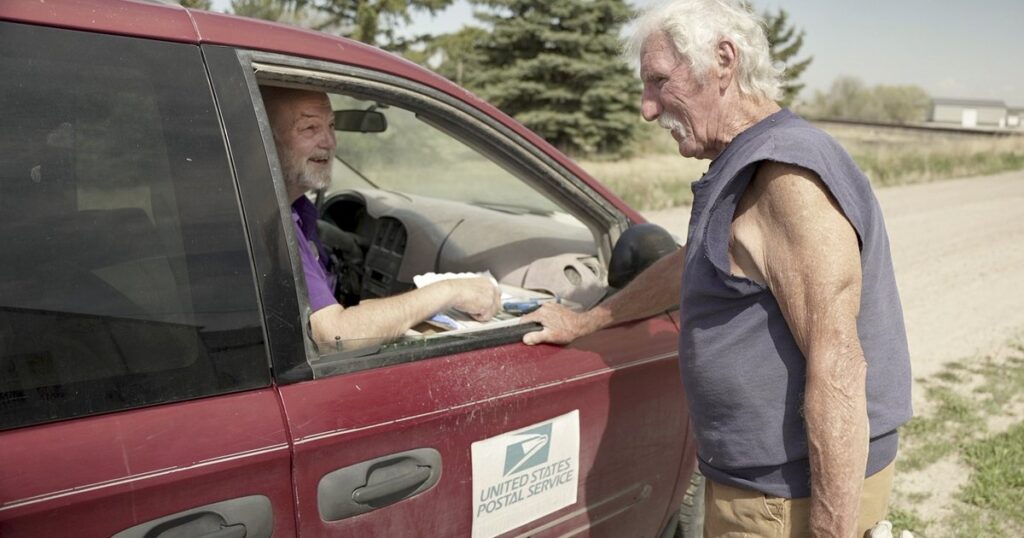
In rural areas, improved service quality remains a significant concern. A retired firefighter from Scottsbluff, Wallace, expressed openness to public subsidies for the USPS. Kyla Estes from southeastern Missouri, as reported by Harvest Public Media, is not in favor of privatization unless it enhances rural service, emphasizing the importance of timely mail delivery.
Compounding these issues, The Midwest Newsroom highlighted that poultry farmers frequently receive birds dead upon arrival through the USPS, underscoring service inadequacies.
These challenges align with the implementation of the Delivering for America plan, initiated by DeJoy in 2021, during which the USPS reported a $4.9 billion operating loss. This cost-cutting strategy has altered service standards and reduced the workforce by approximately 30,000 positions.
In April, Iowa Senator Joni Ernst urged the Board of Governors to halt the Delivering for America plan and appoint a new postmaster general to reassess national needs. Her colleague, Senator Chuck Grassley, later called for improvements in rural delivery and addressing budget deficits, urging incoming Postmaster General Steiner to innovate and adapt when reforms are ineffective.
Despite their criticisms, both Ernst and Grassley declined to further elaborate on their positions. Additionally, U.S. Rep. Ashley Hinson echoed Grassley’s views but also declined interview requests. Her 2nd Congressional District of Iowa is expected to be significantly impacted by the Delivering for America plan, according to data from Hutkins for Save the Post Office.
The Regional Transportation Optimization initiative, if fully implemented, is projected to eliminate afternoon collections at most post offices and extend delivery times by at least a day to rural areas. This would result in service downgrades for 97% of residents in Nebraska’s 3rd District and all residents in Iowa’s 2nd District, as reported by Hutkins.