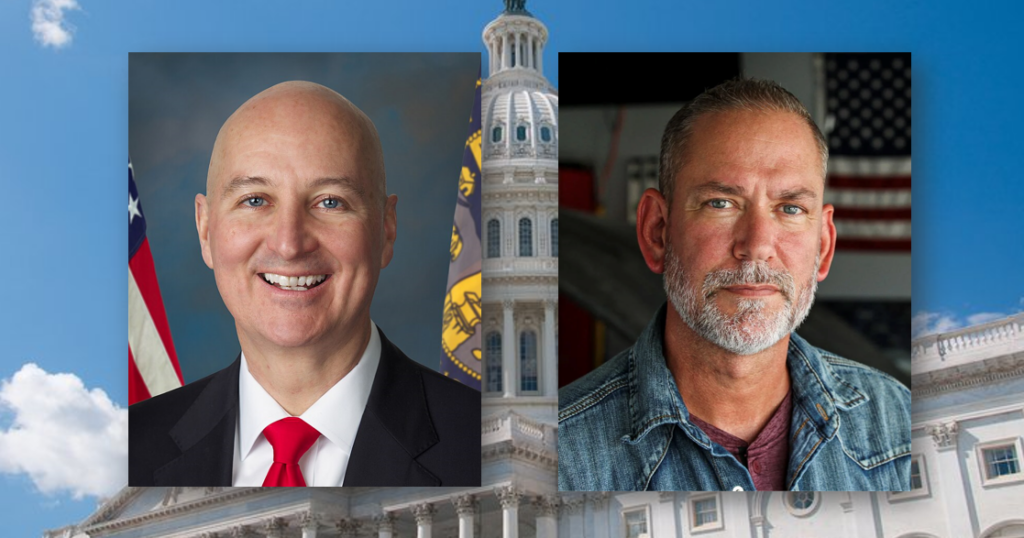
In Nebraska’s fiercely contested Senate race, political action committees (PACs) have already funneled over $15 million into independent expenditures, spotlighting the intense battle between incumbent Republican Sen. Pete Ricketts and independent Dan Osborn. The significant financial involvement underscores the race’s national significance, with substantial funds directed towards influencing the outcome.
According to the Federal Election Commission’s records up to October 1, PACs have allocated $7.9 million to either oppose Osborn or support Ricketts, while $7.3 million has been spent opposing Ricketts or supporting Osborn. This vast spending primarily fuels negative advertising campaigns.
The FEC defines independent expenditures as communications advocating for the election or defeat of a clearly identified candidate without coordination with any candidate or their campaign. This financial strategy has become a crucial aspect of the Nebraska Senate race.
Established PACs, such as Win It Back PAC, have taken a notable stance by spending approximately $2 million to oppose Osborn. Primarily funded by billionaire Jeff Yass, this Super PAC has disbursed over $11 million in this cycle against Democratic candidates.
Emerging super PACs also play a significant role, often lacking clear funding sources. The Cornhusker Majority PAC and Nebraska Values PAC are the biggest spenders, with $4.7 million against Osborn and $3.4 million against Ricketts, respectively. Both were established this year, listing only P.O. boxes as addresses and focusing solely on this race.
The United Futures PAC, formed in late August, began spending late September and has invested over $500,000 to support Osborn and oppose Ricketts. It has also supported progressive candidates in Senate races across several states.
With historical precedents of surging October expenditures, spending is anticipated to escalate further. Osborn’s previous bid against Sen. Deb Fischer in 2024 saw nearly $24 million in PAC spending during October alone.
PACs pull out of ad time in CD2
In another heated race, PACs have also poured finances into the contest between Democrat Denise Powell and Republican Brinker Harding, aiming to sway Nebraska’s 2nd Congressional District. However, major PACs from both parties have recently scaled back their advertising commitments.
FCC filings show that House Majority PAC and Congressional Leadership Fund have reduced or canceled their ad buys in Omaha. Initially, House Majority PAC had reserved significant airtime for October, which has now been considerably reduced. Similarly, the Congressional Leadership Fund initially reserved multiple spots on KETV Channel 7, which have since been canceled.
Despite these cancellations, both PACs have invested over a million dollars each in the race. The Congressional Leadership Fund spent about $1.4 million against Powell, while House Majority PAC invested approximately $1.3 million to oppose Harding.
Additional PACs are contributing to the race. The newly formed No Going Back PAC, aligned with Trump’s MAGA Inc., spent around $161,000 on direct mail and text campaigns opposing Powell and supporting Harding. Meanwhile, Rolling Sea Action Fund, backed by a non-disclosing nonprofit, invested $150,000 in media to support Powell.
As of mid-week, the total PAC expenditure in the Powell-Harding race is about $4 million, according to FEC data.