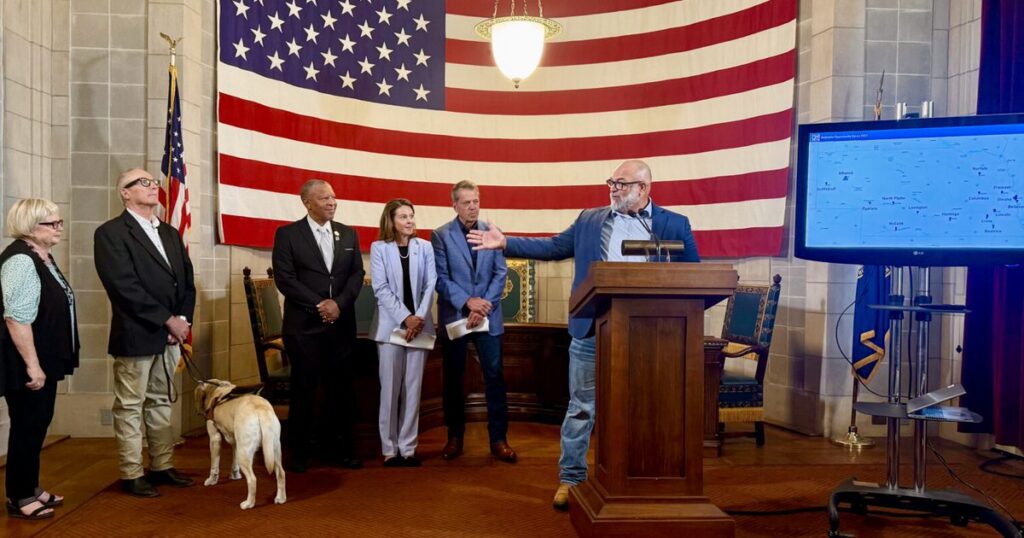
In a move hailed as a “significant upgrade,” the Opportunity Zones 2.0 program, introduced under the 2025 law praised by President Donald Trump, will be permanently extended starting in 2027. The initiative aims to spur investment in designated areas with enhanced provisions that focus on rural development and accountability.
Governor Pillen and Larsen highlighted the program’s new features, which include more stringent eligibility criteria, detailed reporting requirements, and a revised capital gains deferral provision. Investors can defer or reduce existing capital gains taxes by rolling them into a qualified opportunity zone fund. Investments held for over ten years will benefit from tax-free capital appreciation.
In an effort to encourage investment, U.S. Housing and Urban Development Secretary Scott Turner visited Omaha in May. His visit was part of a promotional push for opportunity zones, alongside Governor Pillen and other officials.
Nebraska had the opportunity to nominate a quarter of the areas eligible under federal guidelines. According to Larsen, 112 regions met the criteria, and 28 were selected by Governor Pillen for certification by the U.S. Treasury.
Interest in the zones was described as “extraordinary,” with cities submitting applications for 107 out of the 112 eligible areas. The selected zones include 10 in Omaha and five in Lincoln, the state’s largest urban centers, along with others in cities such as Alliance, Ogallala, and North Platte, among others.
State officials, including Larsen, evaluated candidates based on investment readiness, economic needs, and potential community benefits before presenting their recommendations to the governor. Governor Pillen noted that Nebraska aimed to be proactive in making nominations, although at least one other state had already advanced further in the process.