Understanding the Complexity of Ballot Faces in Nebraska’s Primary Elections
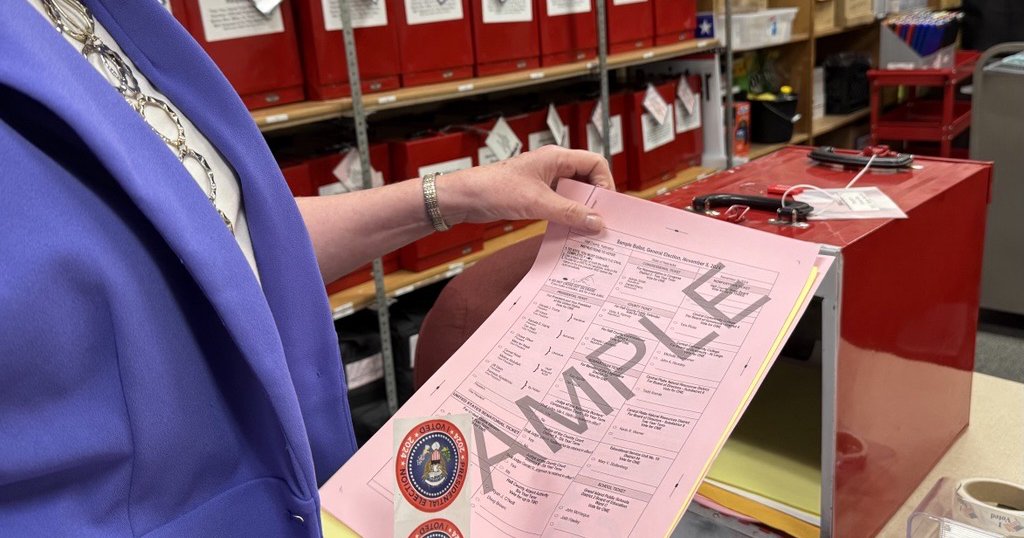
In Nebraska’s primary elections, the variety of ballot faces can be quite complex, with up to 120 different ballots for each political party. This complexity arises from both statewide and local races, leading to a myriad of options for voters depending on their party affiliation.
According to election official Overstreet, statewide races such as those for governor, secretary of state, and attorney general are consistent across the county. However, local races introduce variations that result in numerous ballot faces.
Here’s how the ballot distribution works across different voter registrations:
Registered voters receive ballots aligned with their party. For instance, Republicans receive a Republican ballot. Those not affiliated with a political party receive a nonpartisan ballot, which includes nonpartisan races like the State Board of Education and state Legislature. Additionally, independent voters have the option to request a “nonpartisan partisan” ballot, allowing them to participate in select partisan races, an option many are unaware of, according to Overstreet.
“You would have to request the second ballot. It’s not something that they say, ‘Hey, do you want a second ballot?’” Overstreet explained. “You have to know it. You have to know that you can ask for it so you can weigh in on your Senate and House seat.”
Both the Democratic and Libertarian parties allow other voters to participate in their primaries. However, this is not the case for the Republican and Legal Marijuana NOW parties. Nonpartisan voters can request these ballots, but they will only include races for the U.S. Senate and House of Representatives, as mandated by law.
Mary Jane Truemper, the Nebraska Republican Party chairman, stated that while the GOP has occasionally opted for open primaries, they currently remain closed to ensure that Republican candidates are chosen by party members. This policy has impacted voter affiliation changes in the state ahead of primaries.
“We just chose not to at this point, but we want Republicans choosing the Republican candidates, and that’s just the way we’ve decided it was best for us,” Truemper said.
Conversely, Jane Kleeb, chair of the Nebraska Democratic Party, emphasized the importance of open primaries, noting the collaborative potential between Democrats and nonpartisan voters to effectively compete with Republicans.
“We even endorse and support independent candidates,” Kleeb revealed. “We make sure that they have access to party resources. We just really want to create a coalition, not only of supporting independent candidates, but also supporting independent voters.”
Preparing for Future Elections: Strategic Moves by Political Parties
Political parties in Nebraska begin strategizing for upcoming elections as soon as the previous ones conclude. Truemper highlighted the Republican party’s ongoing efforts to evaluate potential candidates and competition for various seats.
“One of our goals is always to put Republicans in seats,” she said. “We try to identify districts where maybe there’s a Democrat now that we see an opportunity for us to have a Republican in there and focus on those districts.”
As part of these preparations, Truemper is actively involved in messaging, collaboration with county parties, and identifying future candidates. Encouraging voter participation, especially in less competitive races, remains a key focus.
Kleeb shared that the Nebraska Democratic Party is similarly committed to securing seats for Democrats, particularly in the state Legislature. “We’re really making sure that we spend some time and money on those races to ensure that in the rural legislative races that we get the Democrat over the finish line, so we have a fighting chance in the general election,” Kleeb explained.
Additionally, the NDP is enhancing voter engagement through mailers, phone calls, texts, and voter guides for the primary, a strategy not typically employed. “We usually only do them in the general, but we’re going to do voter guides in the primary this year, too,” Kleeb noted. “That lets voters know who the Democrats are on the ballot, because there are so many nonpartisan races.”