Devastating Wildfire Ravages Nebraska Ranch
In the heart of Nebraska’s ranching community, Naomi Loomis was busy at her family’s feed store in Bridgeport when she received unsettling news about a fire near her Morrill County ranch. Despite initial hopes of the fire bypassing their property, a call from her son urged her to return home immediately.
“Mom, I think you better head home,” her son warned, signaling the urgency of the situation. As Naomi and her husband Cody reached their ranch north of Broadwater, they were met with a scene of devastation: flames had reached their front yard, their fields, and the surrounding trees. Power was out, and Cody quickly acted, using a loader to dump dirt on the encroaching fire to protect their home.
Although the house was saved, the fire’s impact was profound. Almost 4,000 acres of pasture land were scorched, along with valuable hay, fences, and corrals. The livestock suffered significantly; cattle were left with singed backs, and one family dog endured burns on its eyes and nose. Many calves were severely burned, with survivors gathered in a makeshift nursery, drooling from blisters caused by the intense heat. Naomi described the loss as akin to a death, stating, “We’re in mourning.”
The Morrill Fire, driven by strong winds and dry vegetation, surged across 70 miles, engulfing over 450,000 acres in just one day. Ultimately, it consumed 642,029 acres across Morrill, Garden, Grant, Arthur, and Keith counties, an area nearly equivalent to Rhode Island. It was the largest wildfire in Nebraska’s history, and according to Secretary of Agriculture Brooke Rollins in a social media post, the ninth largest wildland fire in U.S. history. The fire’s cause remains under investigation, but Governor Jim Pillen suggested it was likely “electrical in nature with wind popping wires and sparks,” a theory supported by a photo of a downed electrical pole at Dove Ranch, where the fire began.
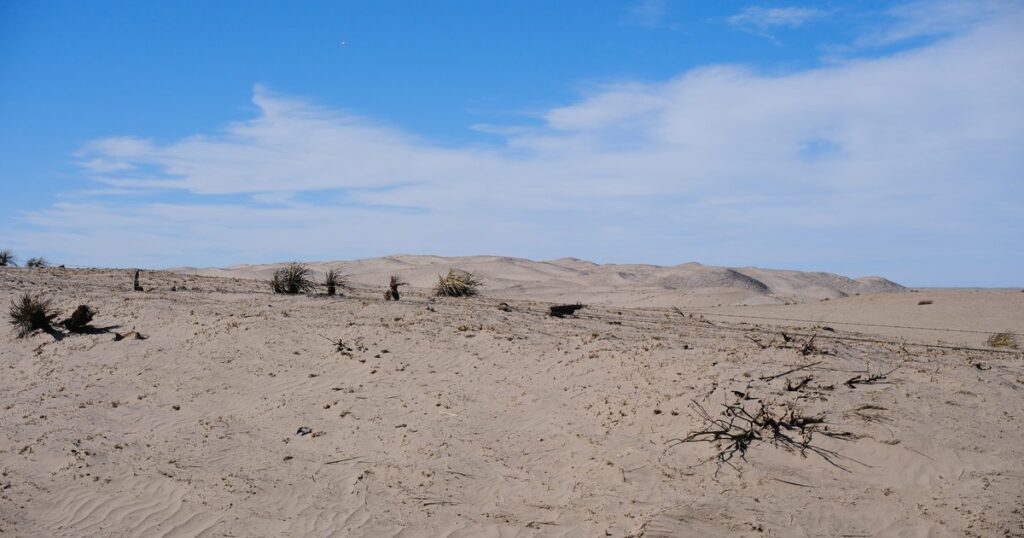
The Nebraska Sandhills, renowned for being one of the largest intact temperate grasslands globally and home to the “largest and best developed sand dunes in the Western Hemisphere” according to the National Parks Service, were left unrecognizable. The usual lush green of summer replaced by charred yucca and white sand, the dunes seemed barren. After the fire, winds lifted ash and sand, spreading it across the burnt landscape.
“It would just swirl up in the air,” Cody recounted. “It looked like everything was on fire again.”