Lincoln Electric System Faces Financial Strain Due to Severe Weather Events
In a year marked by extreme weather, the Lincoln Electric System (LES) encountered significant challenges, with over 52,500 customers experiencing outages during March and August storms. The cost of restoring service and repairing infrastructure reached nearly $4 million, surpassing LES’s budget expectations for 2025.
“We’re over budget,” stated Joel Dagerman, asset management and planning manager at LES. The utility depends on FEMA for disaster relief; however, delays in receiving funds mean LES must initially cover costs. “During that time, LES is paying the bill, and we exceeded our estimated amount for this past year, for sure,” Dagerman explained.
To address the financial shortfall, the Lincoln City Council has approved a 3% rate increase effective January 1. According to LES communications specialist Amy Svoboda, the hike is primarily due to escalating power and transmission costs. Although federal and state relief funds help alleviate some financial pressure on customers, significant weather damage often necessitates taking out loans.
Svoboda noted, “These additional debt service payments can impact customer rates,” in an email to Nebraska Public Media.
Utilities are investing heavily in resilience against extreme weather conditions. The Omaha Public Power District (OPPD) has announced a 6.3% rate increase, which will fund enhancements such as stronger infrastructure, burying distribution lines, and expanding tree-trimming efforts, according to their 2026 Final Corporate Operating Plan.
In response to severe weather, OPPD’s budget for tree trimming has surged over 56%, from $15.7 million in 2024 to $24.5 million in 2025. Though the 2026 budget is yet to be finalized, media specialist Jodi Baker confirmed further increases are expected. These changes follow a July 31, 2024, storm with hurricane-force winds that led to over 219,000 outages. An earlier storm in March caused fewer outages but resulted in a record 1,500 distribution poles being knocked down in the OPPD area.
Chris Angland, director of grid operations at OPPD, remarked, “Here in the 2020s, we are certainly seeing an increase in the number of storms and in severity. Let’s be honest, having two very significant storms that rank as the worst ‘blank’ storms in OPPD history is pretty telling, that’s for sure.”
The 2024 OPPD storm holds the record for the most outages, while the March 19, 2025, storm caused unprecedented infrastructure damage.
Despite the challenges, high winds have some benefits in Nebraska. The 2024 LES annual report indicates that wind farms contributed 35% to the utility’s energy production. Similarly, wind accounts for nearly 34% of OPPD’s energy portfolio. However, extreme winds can damage turbines, rendering them inoperable during severe storms.
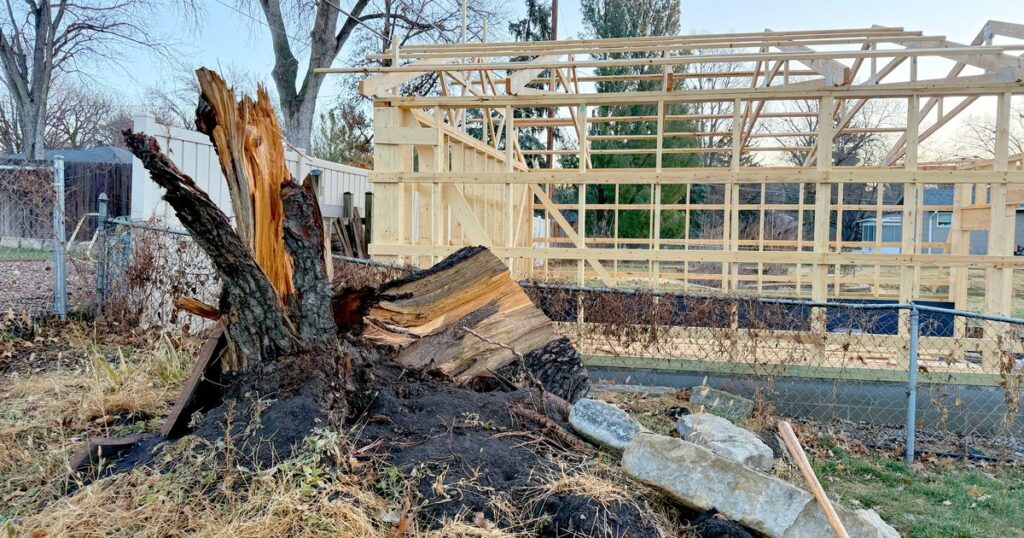
The uptick in destructive storms has also benefited businesses specializing in storm cleanup. “The last couple years have been busier,” said Jordan Klug, owner and operator of Klug Tree Service in Lincoln. “The last [storm] that came through in August, I mean, we were booked out already, probably three months.”