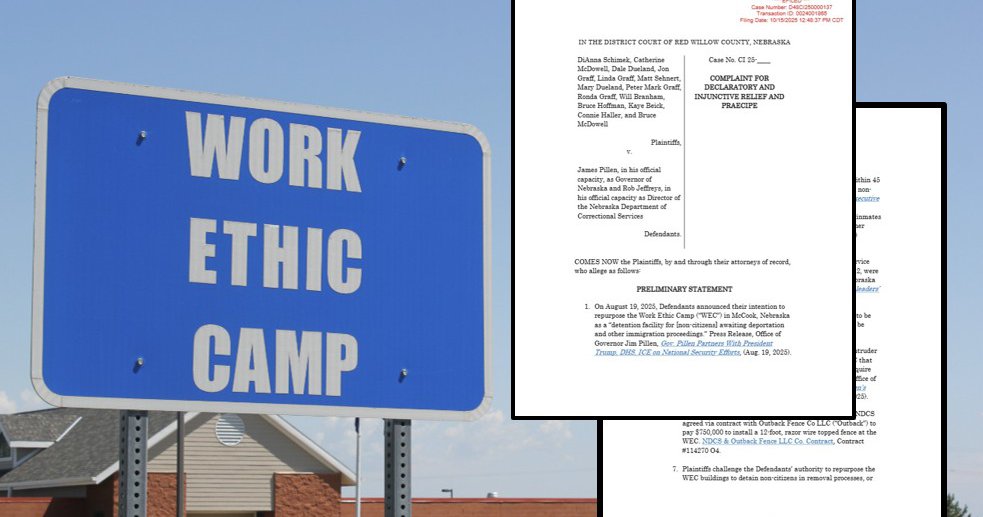
The ongoing legal battle over taxpayer funds in Nebraska has taken another turn as Judge Heng delivered his ruling on a recent case involving state expenditures. The core issue is whether taxpayers have the standing to challenge the state’s spending decisions, especially when the costs are eventually reimbursed by federal funds.
Judge Heng’s Ruling on Taxpayer Standing
Pillen and Jeffreys contended that the plaintiffs lacked taxpayer standing due to their inability to identify direct expenditures and the state’s assurance of reimbursement by the Department of Homeland Security (DHS). However, Heng dismissed this argument.
“There will clearly be State funds expended now, as evidenced with the fence contract, and in the future,” Heng stated in his order. “The fact that these funds will be reimbursed under the DHS contract and the State made whole, should not deprive the taxpayer the standing to challenge alleged unlawful actions or expenditures.”
Temporary Injunction Motion Denied
Despite recognizing taxpayer standing, Judge Heng denied the plaintiffs’ motion for a temporary injunction. An injunction requires a likelihood of success on the merits and proof of irreparable harm if not granted. Heng concluded that the plaintiffs were unlikely to win on the merits.
The judge noted that whether irreparable harm would occur hinges on the legality of the fund expenditures. Heng acknowledged concerns about the defendants’ claims that reimbursed funds and potential state benefits negate harm, describing the arguments as “concerning at best” and “Machiavellian.” Nevertheless, he determined the expenditures comply with state statutes and fall within Pillen’s authority.
“It is clear that the current situation with the Department and ICE detainees was never contemplated when the statutes were created, but the language utilized by the Legislature is broad enough to allow the Defendants to take the action they have chosen,” Heng explained.
Response from Nebraska Appleseed
Robert McEwen, legal director at Nebraska Appleseed, expressed mixed feelings about the decision. Although disappointed by the denial of the injunction, he was pleased that the case remains active.
“The case will carry forward from here, and we will continue to represent the interests of our clients in halting the activities of the defendants as they relate to the large-scale detainment camp in McCook,” McEwen stated.