Amid Iowa’s sprawling agricultural lands, efforts to reclaim and restore native prairies along roadsides are quietly taking root. This initiative not only enhances the visual appeal of these areas but also serves a crucial ecological role. Large-scale seeding projects led by the Iowa Department of Transportation (DOT) aim to reintroduce native species to stabilize the soil and provide essential habitats.
According to Harris, a leading figure in this movement, native prairie plants are particularly well-suited to Iowa’s climate and soil. With their extensive root systems, these plants efficiently anchor the soil, reducing erosion along roadsides. Harris estimates that between 500 and 750 acres have been seeded annually with native plants since 2020, as part of mandatory erosion control plans tied to road construction projects.
Across Iowa, cities and counties have embraced similar initiatives. To date, more than 50,000 acres of roadsides have been transformed with prairie grasses and wildflowers. These plantings provide critical habitats and create corridors in what is now considered one of the most biologically altered states in the U.S. Historically, tallgrass prairie blanketed 70-80% of Iowa, but today, about 85% of the land is devoted to agriculture, predominantly for corn and soybeans.
Harris emphasized the importance of these corridors for biodiversity, stating, “For biodiversity and for a lot of insects and small birds and small mammals, that connected corridor habit is so important for allowing them to travel between larger patches of habitat.”
The transformation of roadsides also offers aesthetic benefits. Although it may take some years for reconstructed prairies to fully establish, Harris notes that travelers often express their admiration for the diverse colors and textures that change with the seasons. She remarked, “That beauty is part of Iowa, and it’s part of our landscape. We’re really proud to be able to provide that for people as they travel across the state.”
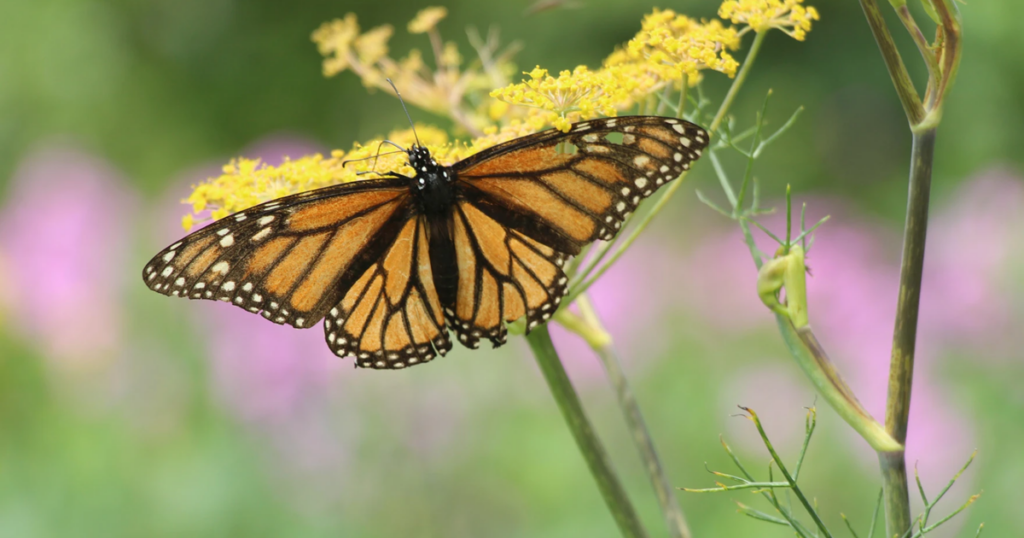
Recently, near the I-35 exit north of Ames, Harris observed an Eastern Tailed-Blue Butterfly fluttering among purple prairie clover, while bumblebees busily attended to fragrant beebalm blossoms. At that moment, a monarch butterfly gracefully passed overhead, underscoring the vibrant life these restored prairies support.
This story was produced in partnership with Harvest Public Media, a collaboration of public media newsrooms in the Midwest and Great Plains. It reports on food systems, agriculture and rural issues.