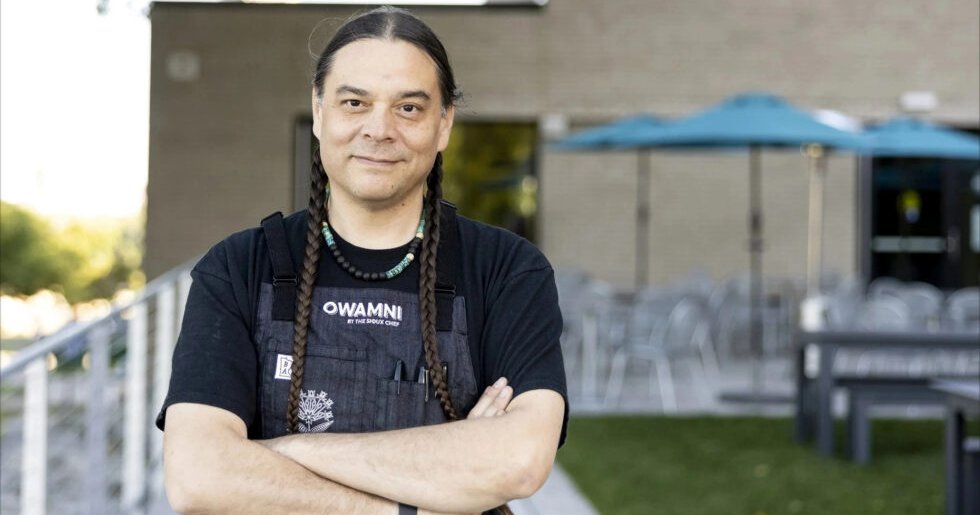
In the heart of North America, a culinary journey is underway that seeks to reconnect with the roots of Indigenous cuisine. Growing up on the Pine Ridge Reservation, renowned chef Sherman recalls the scarcity of true Lakota Indigenous food, primarily due to reliance on commodity food programs. “We had a single grocery store in Pine Ridge that serviced an area the size of Connecticut,” Sherman explains, highlighting the vast expanse and limited resources of the region.
Despite these challenges, Sherman’s early life was filled with traditional hunting activities, providing access to local game such as grouse, pheasant, deer, antelope, rabbits, and turkeys. Additionally, the gathering of wild prairie turnips, known as Thíŋpsiŋla, and choke cherries was a common practice among Lakota families.
The turning point in Sherman’s culinary career came unexpectedly during a stint in Mexico. While taking a break from the demanding chef jobs in the Twin Cities, Sherman was drawn to the Indigenous Huichol community in Nayarit. “I got to become really curious about the Indigenous community down there,” Sherman recalls, noting the similarities with the Lakota culture, such as intricate beadwork and rich mythologies.
This experience sparked a realization. “I knew very little about my own ancestry and heritage when it came to like, what were my ancestors eating,” Sherman admits. This epiphany set Sherman on a path to delve deeply into Indigenous foods, starting in the Great Plains and expanding to other regions. The culinary exploration eventually led to Minnesota, where Sherman continued researching various tribes and their traditional foods.
Through this journey, Sherman contributed to a comprehensive cookbook, exploring Indigenous foodways across North America. Reflecting on the project, Sherman states, “I just saw that commonality as Indigenous peoples to North America,” emphasizing the rich tapestry of diversity that transcends colonial boundaries.
The cookbook, aptly named “Turtle Island,” was inspired by Sherman’s time in Mexico and his desire to discover and celebrate Indigenous culinary traditions. While fry bread is a well-known staple, Sherman points out its colonial origins, as it relies on wheat flour, not native to North America. This highlights Sherman’s commitment to exploring and sharing authentic Indigenous ingredients and recipes.