Confusion and Coverage Losses as Nebraska Implements New Medicaid Work Requirements
Recent changes to Medicaid eligibility in Nebraska have left many residents uncertain about their healthcare options. As the state navigates the early months of its new Medicaid expansion program, confusion is rampant among those affected.
Chalandria James, a dedicated community healthcare worker and doula, reports that the complexity of the new regulations has deterred many of her clients from applying for Medicaid altogether. “The changes, they’ve been really confusing for everyone,” James noted.
The confusion stems from the One Big Beautiful Bill Act, which introduced new Medicaid work requirements. These changes have led to delays and frustrations, as illustrated by the experience of a pregnant woman James assisted, who waited months to determine her eligibility.
“It’s a downward spiral,” James expressed, raising concerns about the growing number of individuals who might end up without healthcare coverage.
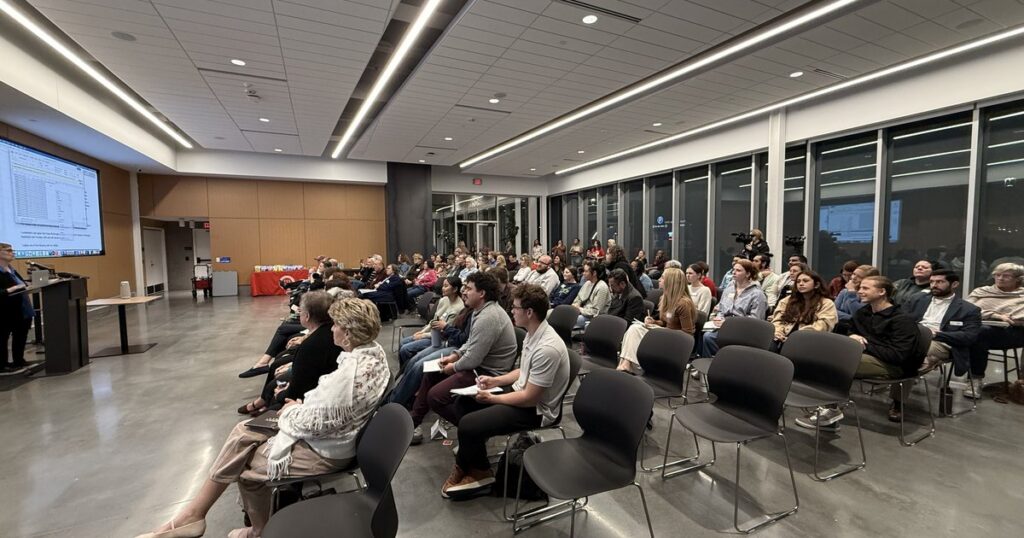
James was among the attendees at a town hall meeting in Omaha, which focused on discussing the initial impact of the Medicaid expansion program and work requirements in Nebraska. The meeting highlighted the hundreds of Nebraskans who have already lost coverage since the new requirements took effect.
Under the new rules, Medicaid enrollees between 19 and 64 must fulfill at least 80 hours monthly of employment, volunteering, or schooling to maintain their coverage. These requirements apply to those who are not pregnant, do not have disabilities, meet citizenship or immigration criteria, and earn less than 138% of the federal poverty level. For Nebraskans, this means earning below approximately $22,025 annually for individuals or $45,540 for a family of four, as per the Department of Health and Human Services.
Nebraska stands out as the first state to adopt these stringent requirements. Governor Jim Pillen introduced the new Medicaid work requirements eight months ahead of schedule, implementing them on May 1. The governor aims to reduce the program’s size and cost by opting in early.
Since the requirements took effect, James reports many Nebraskans have lost their healthcare coverage due to the confusion surrounding the regulations and insufficient support. Navigating the proof of 80 hours of monthly work has become a challenge due to limited staffing and the time-intensive nature of seeking assistance.
James recounted instances where her clients, seeking help from the Nebraska Department of Health and Human Services, faced extended wait times on phone calls and frequent disconnections before reaching a caseworker. She herself experienced long waits in the DHHS office, only to leave without resolution.
Megan Word from the American Cancer Society Cancer Action Network pointed out the uncertainty of the situation, particularly for cancer patients at risk of losing coverage as they fail to meet the exemption criteria due to their illness. “The bad news is we don’t know, really, how it’s going,” Word stated.
Nebraska Appleseed’s Healthcare Access Program Director, Sarah Maresh, shared data indicating that over 1,000 Nebraskans have been denied or lost coverage within six months of the new rules. “We know that that’s by design,” Maresh commented, highlighting the deterrent effect the regulations have on potential applicants and the potential for increased illness and disability among the population.