Lincoln’s Local Minimum Wage Proposal Faces Legal Challenges
The City of Lincoln’s recent attempt to establish its own local minimum wage has met opposition from Nebraska’s Attorney General, who declared the move beyond the city’s jurisdiction. This declaration was made public in an opinion issued on Thursday.
The opinion was requested by Sen. Jane Raybould, a notable figure in past efforts to limit minimum wage increases. Raybould emphasized the intention of the statewide minimum wage law, stating, “When the legislature enacted the minimum wage law, which the Governor signed, effective July 1, 2026, it was never intended for a patch work system but one to be enforced uniformly throughout the state.”
Sen. Raybould expressed concerns about Lincoln’s authority, noting that labor and wage laws in Nebraska are traditionally uniform, without room for municipalities to establish their own distinct rules. The proposed ordinance, if passed by the city council on Monday, would permit a minimum wage increase exceeding the previously established limit of 1.75% under LB258.
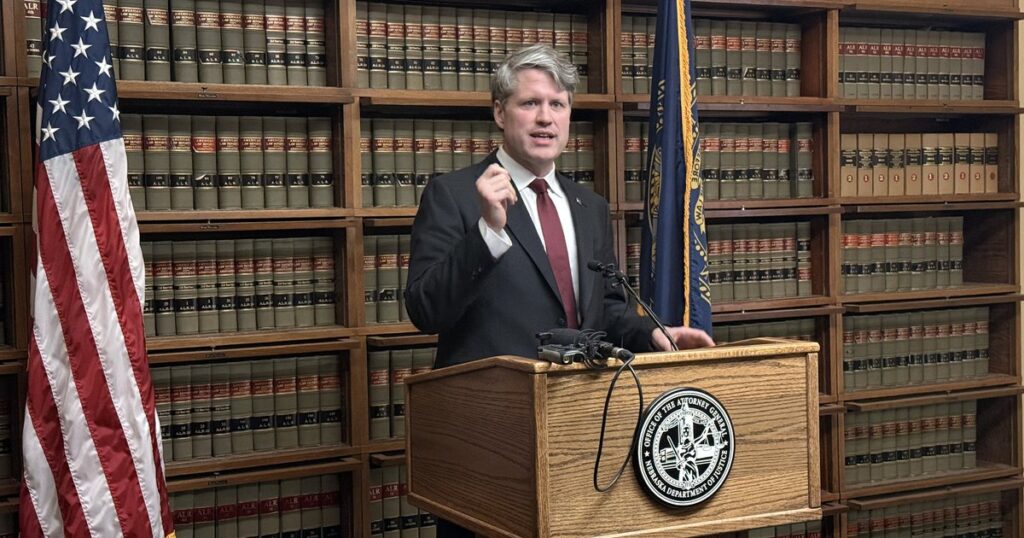
Attorney General Mike Hilgers argued that the proposal addresses a matter of statewide importance and would likely be deemed invalid, as it conflicts with state law through both field preemption and conflict preemption. Furthermore, Hilgers highlighted that the ordinance could disrupt future legislative efforts, as it would “spill beyond Lincoln’s borders.”
The opinion also mentions that Sen. Beau Ballard of Lincoln plans to introduce legislation to prevent municipalities from interfering with state-level minimum wage laws. Hilgers further stated, “The Local Wage Proposal is inconsistent with state law because the Legislature has already comprehensively regulated minimum wage under the Nebraska Wage and Hour Act.”
Despite Lincoln’s home rule charter allowing for local ordinances, Hilgers clarified that these must still comply with state laws and the Constitution. The proposal, therefore, faces significant legal obstacles in its current form.