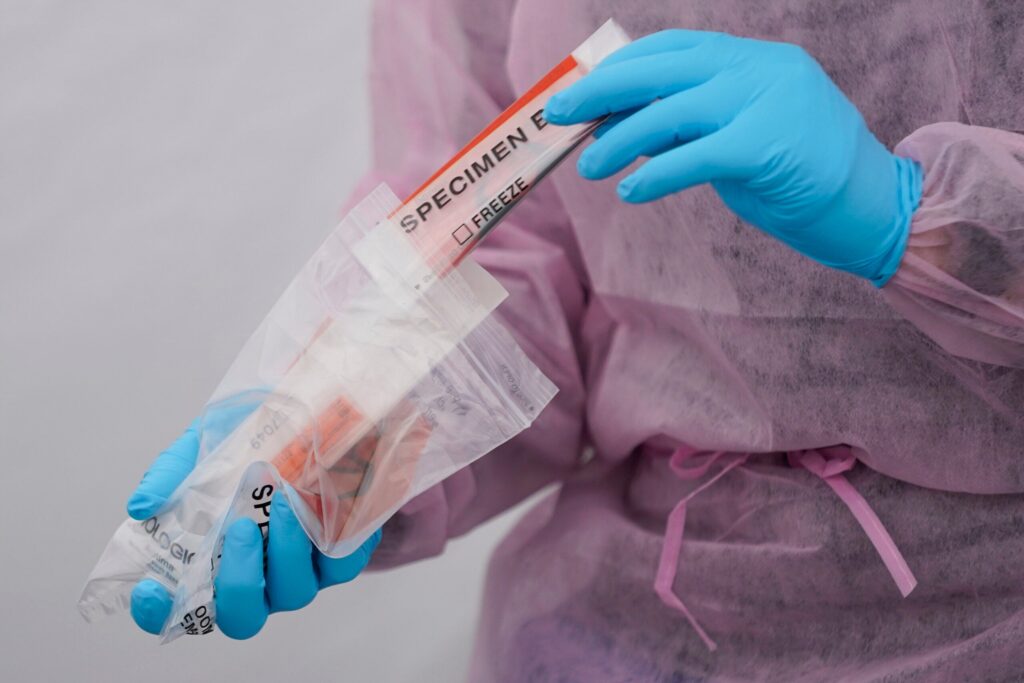
Wisconsin’s capacity to test for infectious diseases, such as rabies, remains stable despite a recent decrease in federal testing services. This assurance comes amidst concerns raised by changes at the Centers for Disease Control and Prevention (CDC).
Earlier this week, the CDC unveiled an updated list of tests that have been paused or indefinitely halted at their infectious disease laboratories. This list includes tests for prevalent illnesses like COVID-19 and influenza and also covers rarer infections, including human rabies testing, which has garnered significant attention in national news.
Allen Bateman, who leads the communicable disease division at the Wisconsin State Laboratory of Hygiene, clarified that the antemortem human rabies test is not the primary method for diagnosing rabies. “I cannot remember offhand the last time that we sent a specimen for human antemortem rabies testing to CDC,” Bateman stated. Instead, the usual protocol involves testing the suspected animal, which is frequently conducted by the state lab, examining thousands of animals like bats and dogs annually.
Bateman emphasized that should the need for human testing arise in Wisconsin, state and local health officials can still access necessary tests through the Association of Public Health Laboratories, a national network of state labs. This collaboration ensures that larger labs can specialize in specific tests, as seen with Wisconsin’s role in testing for vaccine-preventable diseases for a significant portion of the country.
This system of shared responsibilities provides a safety net if a lab cannot perform certain tests. However, Bateman acknowledged the historical importance of the CDC in conducting rare and complex tests, expressing hope for a return to stronger national lab capabilities.
Wisconsin’s Department of Health Services noted its dependence on CDC labs for diagnosing various diseases. In a statement to Wisconsin Public Radio, agency leaders said, “Eliminating any tests limits our ability to identify and investigate cases of these diseases and prevents us from being able to intervene with prevention and control measures.” They also highlighted that while partnerships with other state public health labs are possible, their testing capacities are limited and not a sustainable solution.
The CDC began reviewing its infectious disease testing portfolio, which comprises over 500 tests, at the end of 2024. A spokesperson told Medscape Medical News in December 2024 that the agency was considering discontinuing some tests due to the availability of similar services through state public health labs or commercial providers.
The CDC has faced significant staffing reductions since President Donald Trump took office, losing between a quarter and a third of its workforce in 2025, as reported by NPR. Despite these challenges, a government spokesman informed the Associated Press that federal health officials expect some tests to be reinstated in the coming weeks.