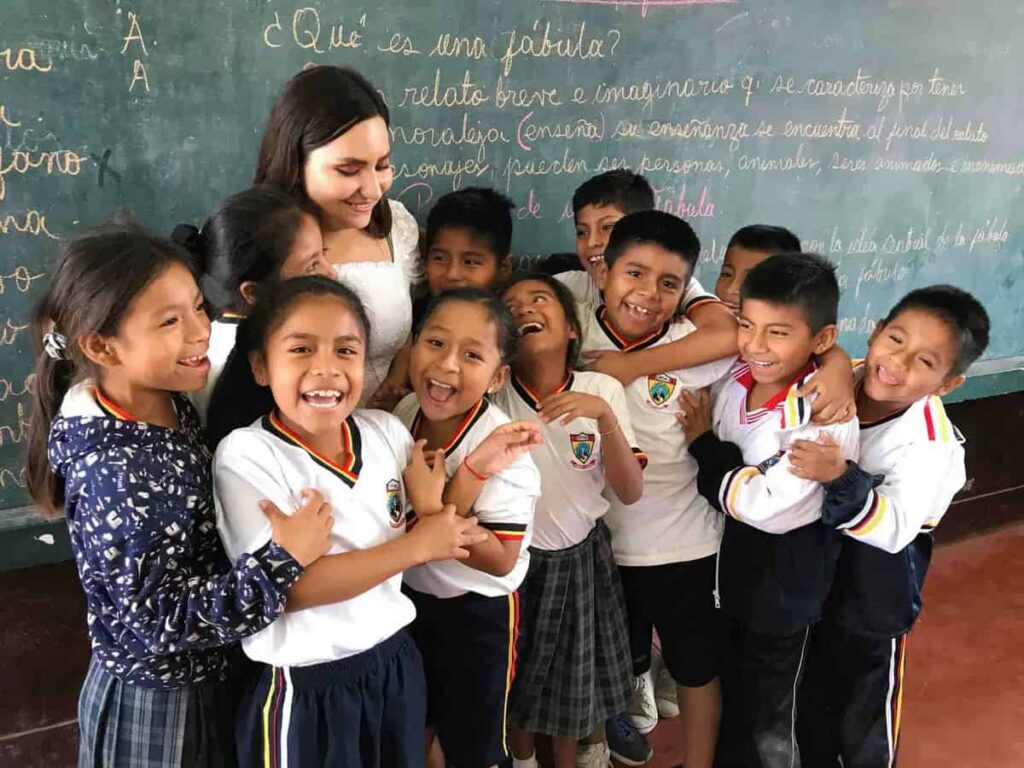
Young adults wanting to make a practical impact on global citizenship are turning to overseas volunteering. By immersing themselves in different communities and cultures, they’re bridging gaps of understanding and contributing to meaningful change worldwide.
One organization facilitating this is AIESEC, one of the world’s oldest and largest youth-run non-profit organizations. It provides young individuals with opportunities to directly engage with global issues through overseas volunteering. Founded in 1948, post the second world war, AIESEC’s aim is to foster cross-cultural understanding, an endeavor that continues to be just as relevant today.
AIESEC’s Global Volunteer programme sends young adults from the ages of 18 to 30 abroad to contribute to projects linked with the UN’s Sustainable Development Goals. These projects, which typically last between four to eight weeks, range from education, marine conservation, economic development, to initiatives challenging pre-existing biases.
According to Mary-Treesa Rozario from AIESEC’s Sydney University branch, “the core purpose of the project is to promote cross-cultural understanding and global volunteering. This allows the volunteers to truly understand and appreciate new cultures.”
However, international volunteering programmes mustn’t devolve into “worthy tourism.” It is vital that volunteers arrive with genuine intent to contribute, ready to learn, and open to having their perspectives challenged and broadened. Beyond gaining work experience and bolstering their CVs, volunteers often find their motivations evolving during their time overseas, leading to personal growth.
For example, Sarah Sepuldiva, a Global Classroom project volunteer in Vietnam, initially joined to gain experience and develop independence. Teaching English in a foreign country compelled her to reconsider the very essence of communication. This challenge led to substantial personal growth, fostering patience, and enhancing her ability to listen and adapt her communication style to support her students effectively.
Another volunteer, Harry Kwon, joined the Beyond Race project in Jakarta in 2018 and 2019. It was an opportunity to escape his everyday routine and explore the world. During his service, he taught English and conducted discussions about diversity and stereotypes, using his experiences and the diverse cultural backgrounds of his fellow volunteers as teaching resources.
“Through this experience, I realized how broad the world is and how even a single individual can make a difference,” Harry explains. He believes his volunteering stint also made him more conscious of his privileges and the disparities in global living conditions.
Post volunteering, Harry continued to work with AIESEC Australia, enabling other young people to participate in exchange programmes. He now works in education philanthropy and credits his volunteering experience for shaping his career path.
These experiences demonstrate the transformative power of overseas volunteering. While it is not a silver bullet for global issues such as inequality and cultural division, it can break down barriers, challenge preconceived ideas, and inspire young people to take action. AIESEC’s mission, though modest, is indeed compelling: Travel with purpose, work across cultural divides, and understand that the world’s problems are everyone’s responsibility.
Images: AIESEC