Agriculture plays a vital role in maintaining soil health as soil is considered the planet’s second largest carbon store next to oceans. Yet, soil degradation is a pressing issue due to various factors like deforestation, excessive farming, urbanization, and pollution. In response to such challenges, certain farming communities have launched pioneering projects showcasing the potential of organic regenerative agriculture in restoring soil health.
Regenerative agriculture techniques are being put to use to protect the rich biodiversity of soil, home to over half the planet’s biodiversity, and holding nearly 80% of the total carbon found in terrestrial ecosystems. Soil degradation is rampant with about a third of the world’s soil already depleted and predictions warning this could rise to 90% by 2050. Such degradation threatens food production, environmental health, climate change mitigation, and biodiversity, including earthworm populations.
Yeo Valley Organic, a dairy brand sourcing its milk from 100 farms across the south and west of England, is taking a proactive approach towards soil health. The brand initiated soil sampling across 162 hectares of its land in 2015 and later expanded this to 25 of their supplier farms. Today, they are leading the way in soil health research and data collection.
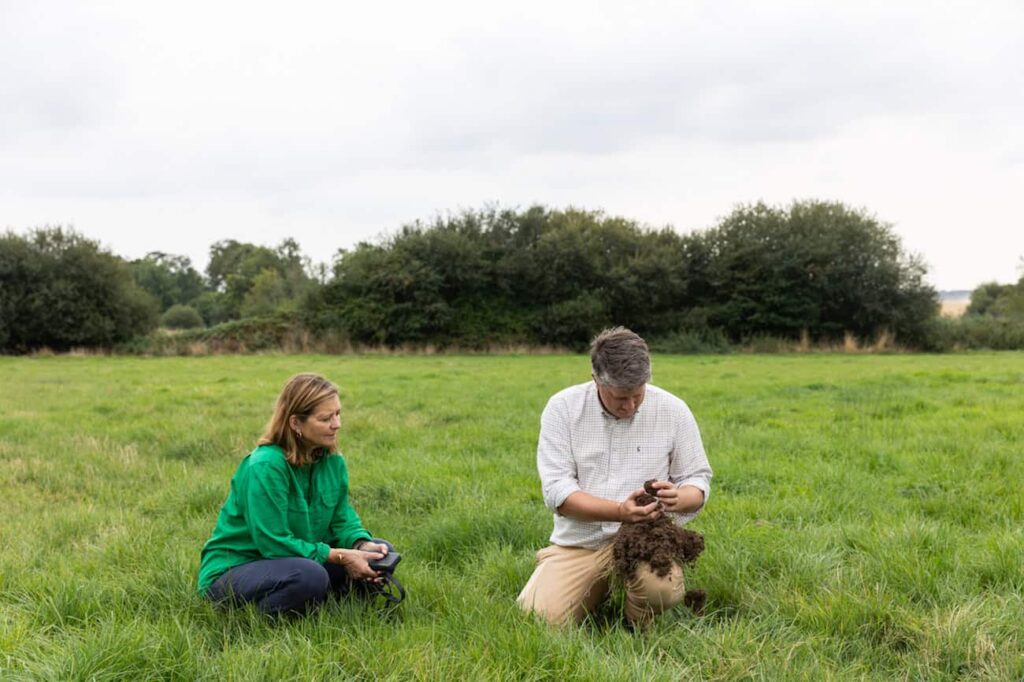
Yeo Valley Organic’s sampling procedures take into account various factors including nutrients, pH levels, organic matter, carbon content, and even the number of worms, which is seen as a key indicator of soil health. This data provides insights into different farming practices and helps inform decisions around crop rotations and grazing schedules.
Regenerative agriculture, a holistic farming method that emphasizes nature recovery, is at the core of Yeo Valley Organic’s practices. By minimizing soil disturbance, promoting the growth of diverse plant species, and using grazing animals to naturally fertilize the soil, the brand aims to bolster soil resilience. Such practices can have far-reaching benefits, including increased biodiversity, improved water quality, higher carbon sequestration rates, and flood mitigation.
Other UK farmers are also starting to see the potential benefits of regenerative agriculture. Liz Bowles, CEO of Farm Carbon Toolkit, notes that as climate change continues to intensify, it becomes increasingly vital for farmers to protect the ecosystems they rely on including soil, water, air, and habitats. This perspective resonates with Sophie Alexander, a milk supplier to Yeo Valley Organic, who sees it as a responsibility to pursue best practices in farming and soil health.
Embracing the complexity of soil health, Alexander asserts that there is no one-size-fits-all solution for every farm or every type of soil. Instead, individual strategies need to be developed and implemented, taking into account the variety and resilience of different plant species and the importance of maintaining a diverse ecosystem throughout the farm.
Yeo Valley Organic’s decade-long commitment to soil testing has yielded encouraging results, confirming that organic farming combined with regenerative principles can successfully mitigate soil degradation. Despite facing the driest spring in over a century, their farms maintained enough grazing area for the dairy cows throughout the summer, thanks to these regenerative practices. As Tom White, regenerative farming manager at Yeo Valley Organic, sums it up, “Cattle are amazing bioreactors – when it rains, microbes literally drip off their backs. Everywhere they go, they spread this life, and it’s the same life that’s in the soil.”
For anyone interested in assessing the health of their soil, experts suggest digging about 10cm into damp earth and examining its texture and smell, as well as observing the level of biodiversity it hosts. Healthy soil should have the consistency and appearance of chocolate cake, emit a rich, sweet smell, and be teeming with life from worms to ground beetles and spiders to centipedes.