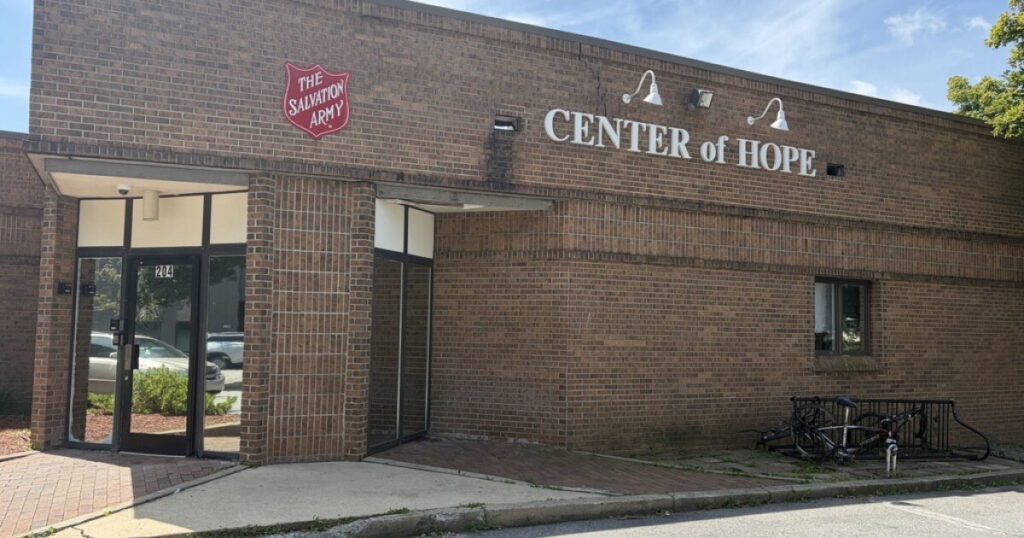
The Salvation Army’s Center of Hope, a vital refuge for Asheville’s homeless population, is now facing a temporary closure, leaving a significant gap in the city’s emergency shelter services. This development comes as Asheville grapples with a rising homelessness crisis, further challenged by financial constraints. The once-bustling center now echoes with silence as federal funding has dried up, forcing the nonprofit to pause operations until at least next spring.
Phillip Stokes, who manages the shelter operations with his wife Sherrie, explained that the depletion of funds from the American Rescue Plan Act and the Department of Housing and Urban Development led to the difficult decision. “We still have about 20 residents here,” Stokes shared, “We are still working very closely with them, but for some of them, it’s a challenge to get them placed.”
Despite repeated requests for more funding, local government officials have not allocated additional resources to the shelter. Asheville Mayor Esther Manheimer emphasized the limitations of relying on public funds, stating, “If we could afford to do that, which we can’t, that would only be a short-term solution.” The national Salvation Army also declined to cover the $1.2 million shortfall, leaving the organization to seek alternative funding solutions.
A Rising Homelessness Crisis
The timing of the Center of Hope’s closure exacerbates an already critical situation in Asheville. The 2026 Point in Time count recorded 824 individuals experiencing homelessness in the area, a 50% increase since 2020. Much of this rise is attributed to Hurricane Helene, which displaced an estimated 130 more people link.
Emily Ball, Homeless Strategy Division Manager for the Asheville-Buncombe Continuum of Care (CoC), highlighted the shelter bed shortage, noting that the city is short about 90 beds. If the Center of Hope closes permanently, that deficit will grow to 155.
Thomas Kirchgasser, Chair of the System Planning and Implementation Committee for the CoC, acknowledged the system’s limitations. “We have a large number of people that are unhoused. Not having that capacity makes more people unhoused. And so we’re going in the wrong direction,” he told BPR.
Efforts to address the crisis include a push for a new emergency shelter funded by Asheville’s $225 million Community Development Block Grant for Disaster Recovery. However, the plan remains in its early stages.
Financial Struggles and Solutions
The Center of Hope’s financial troubles trace back to 2018 when it lost federal pre-release facility payments. Since then, it has relied on reserve funds and thrift store profits, but the pandemic exacerbated its financial challenges, leading to the closure of thrift store locations.
Despite receiving nearly $2 million in American Rescue Plan Act funds from Asheville and Buncombe County over two years, the shelter has struggled to develop a sustainable funding model. A 2024 audit revealed that the organization ended the year with about $350,000 in operating reserves.
Stokes expressed frustration over the lack of funding opportunities for shelter operations. “I wish I could know why that was,” he said. “We provide a service that is vital to this community… I do wish I had an answer for why there aren’t more available funding streams, as far as grants strictly for sheltering. But it’s just not there.”
In response, the Salvation Army plans to intensify its fundraising efforts, including doubling down on its annual Christmas fundraiser, which has seen a decline in revenue since the pandemic.
While the Center of Hope continues its quest for financial sustainability, local leaders and the CoC explore plans for a new shelter. Mayor Manheimer acknowledged the complexity of the situation, considering the potential irony of building a new shelter while an existing one is at risk of closing.