As discussions over the future of healthcare in the United States intensify, U.S. Rep. Rob Bresnahan has expressed strong support for extending the enhanced tax credits under the Affordable Care Act (ACA), which are set to expire shortly. These credits have been crucial in making healthcare more affordable for many Americans, and their potential expiration is causing significant concern.
“I don’t feel proper in ripping the rug out from underneath people that are already struggling economically and from an affordability perspective. I think we need to approach it twofold. I think we need to extend the subsidies for one year the way it is, also then we need to get to work and figure out a legislative, real solution, real reform,” Bresnahan said.
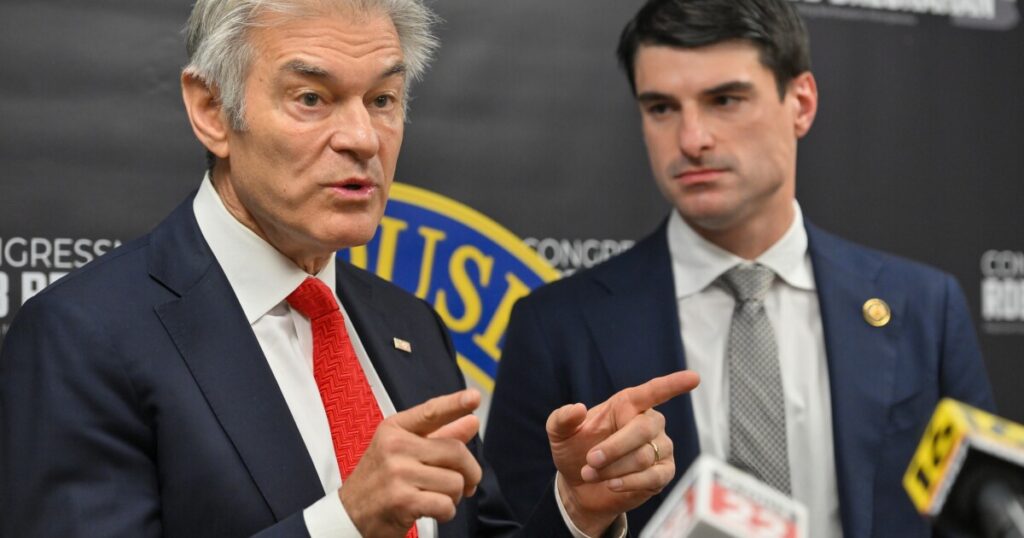
Bresnahan, alongside Mehmet Oz, the Centers for Medicare & Medicaid Services (CMS) Administrator, held a closed-door roundtable with local health leaders at Geisinger in Scranton. Their visit coincided with Sen. Dave McCormick’s tour of the Wyoming County Healthcare Center in Tunkhannock, which recently reopened under new management after previous closures.
Healthcare Affordability
The potential expiration of these tax credits could drastically increase healthcare costs. According to KFF, premiums for ACA enrollees might more than double if the credits are not extended. Despite a recent government shutdown, the credits have yet to be prolonged, raising alarms among policymakers.
“I’m one of the original co-sponsors of the bipartisan problem solvers, caucus rendition that was to extend for one year with the current parameters,” Bresnahan noted, emphasizing the urgency of finding a legislative solution. Meanwhile, Senate Democrats are preparing to push for a three-year extension of the credits.
Rural Health Transformation Fund
The future of rural healthcare also took center stage, as Dr. Oz and Bresnahan discussed the Rural Health Transformation Fund. This initiative aims to inject $50 billion into rural health systems over five years, beginning in 2026, with the hope of revitalizing healthcare access in underserved areas. States were expected to apply by November, with funding decisions set to be announced by the end of December.
The CMS intends to allocate half of the funds equally among states, while the remainder will be distributed based on specific criteria outlined in state applications. The overarching goals include sustainable access and technological innovation.
“We didn’t want to just give the money out and hope it works. We purposely put strings attached,” Oz explained, highlighting the program’s accountability measures.
The Future of NEPA’s Healthcare Landscape
Dr. Linda Thomas-Hemak, CEO of The Wright Center, was among the participants in the discussion, expressing the need for unprecedented collaboration to tackle the complexities of American healthcare. She noted the critical nature of proximity between federal oversight and local healthcare needs.
“Real change is challenging, and that in order to fix these complex problems, we’re going to need to have really hard conversations,” she said, emphasizing the role of federal and local cooperation in driving change.
Political Implications
As the healthcare debate continues, it is becoming a focal point in upcoming elections. Scranton Mayor Paige Cognetti, a Democratic contender for Bresnahan’s congressional seat, criticized his support for the One Big Beautiful Bill Act, which included significant Medicaid cuts. “Bresnahan voted for the biggest Medicaid cuts in our lifetime — and Oz is the guy swinging the axe,” Cognetti stated in a social media post.
McCormick’s Visit to Tunkhannock
Meanwhile, Sen. Dave McCormick visited Wyoming County Healthcare Center, emphasizing the importance of the Rural Health Fund in revitalizing local healthcare services. He noted the significant challenge of providing adequate medical care in rural areas and stressed the need for federal support to enhance healthcare infrastructure.
Healthcare professionals in the region are hopeful that continued funding and policy support can help transform facilities like the Wyoming County Healthcare Center into comprehensive healthcare hubs.
As McCormick noted, “The death of a community is started with the death of the [community’s] healthcare,” underscoring the critical nature of maintaining robust healthcare services in rural areas.