Ensuring that students have access to necessary hygiene products can significantly impact their education and well-being. This is the message from Pennsylvania officials as they roll out a program providing free period products to schools across the state. The initiative aims to remove barriers and promote equity in education.
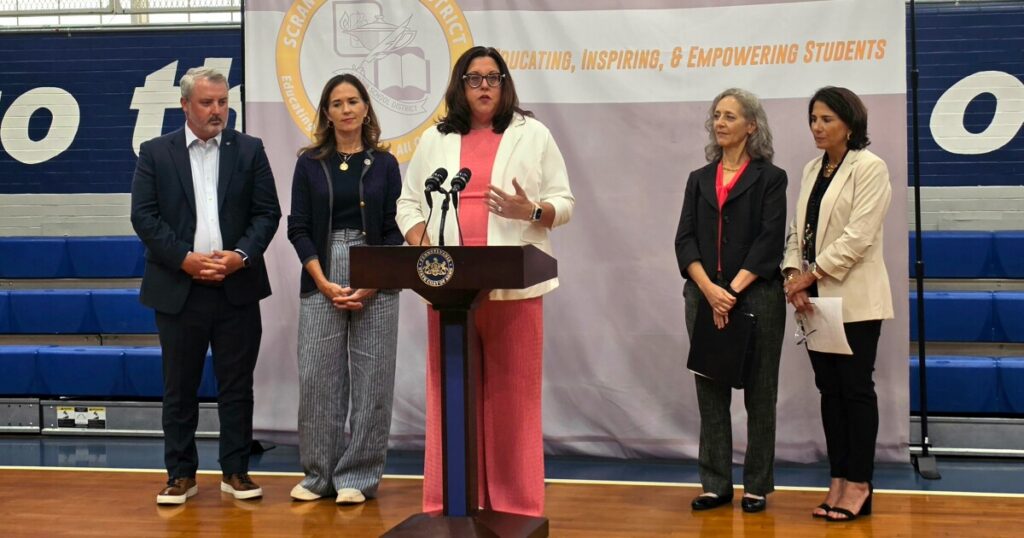
During a visit to West Scranton High School, Pennsylvania Secretary of Health Dr. Debra Bogen emphasized the importance of this initiative. Over the course of three years, Governor Josh Shapiro has secured $9 million in the state budget for the provision of free period products, with $3 million allocated for the 2026-27 academic year.
Sarah Hofius Hall
/
WVIA News
“Period products are school supplies, period,” stated Dr. Bogen. She highlighted that access to these products can directly affect students’ attendance and classroom experience. Statistics indicate that one in four students struggles to afford period products, sometimes resulting in missed classes.
Addressing Inequities
Superintendent Erin Keating shared the common experience of being caught off guard by a menstrual cycle, describing it as uncomfortable and challenging. She emphasized the importance of consistent access to period products to prevent disruptions in education.
With nearly 80% of Scranton School District students identified as economically disadvantaged, Keating noted the financial strain some families face in purchasing these products. “This initiative is about equity, compassion, and common sense,” she said, emphasizing the message it sends to female students about their value and health.
Enhancing Student Dignity
In preparation for the new school year, West Scranton High School is stocked with boxes of pads and tampons, thanks to nearly $17,000 in funding. A comprehensive list of district allocations can be found here.

Sarah Hofius Hall
/
WVIA News
Carol Rothenberger, the district’s chief nurse, explained that these products are placed in easily accessible areas to ensure student privacy. She remarked, “What may seem like a small resource can make a meaningful difference in a student’s day,” pointing out the positive effects on learning, family stress, and student dignity.