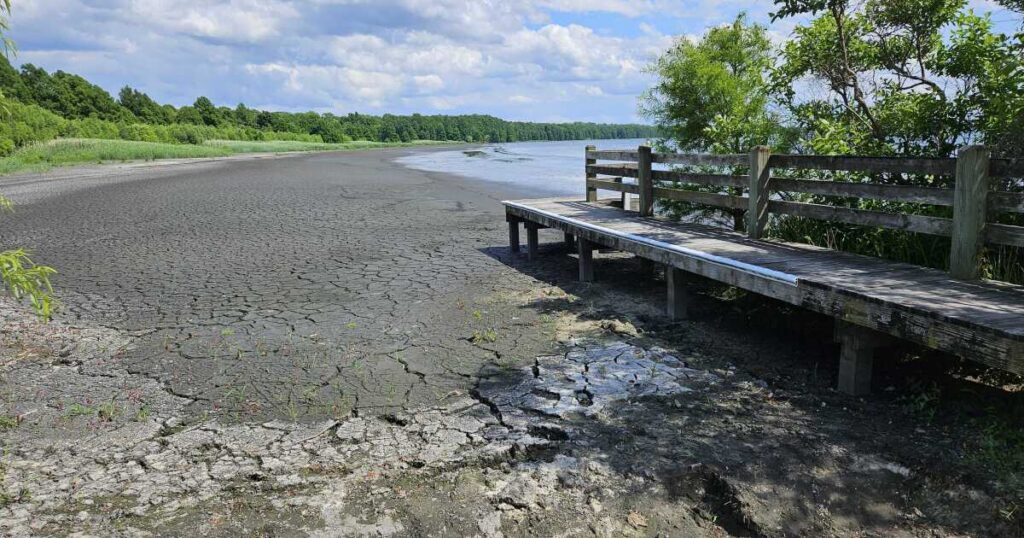
North Carolina is grappling with persistent drought conditions exacerbated by extreme heat and scarce rainfall. Despite recent showers, the state continues to face severe water shortages with little immediate relief anticipated.
Rainfall over the past few days has provided some hope, though its impact remains uncertain. According to Barrett Smith, a Senior Service Hydrologist at the National Oceanic and Atmospheric Administration’s National Weather Service, much of the rain will initially be absorbed into the soil, limiting runoff into rivers and reservoirs. “I would suspect that the most notable benefit will be to lawns and plants,” Smith explained, emphasizing the importance of any rainfall, “But it’s great to get the rain and we have to start somewhere.”
This Week’s Drought Map
Currently, most of Durham, Orange, and Alamance counties are experiencing exceptional drought, the most severe classification. In response, Durham has implemented Stage 2 water restrictions, and streamflows on the Neuse River have reached record lows.
Previous Weeks
By June 2, extreme drought conditions had already spread across northern parts of the Triangle. A recent forecast suggests that remnants of Tropical Storm Arthur might bring an inch of rain this weekend; however, the Drought Management Advisory Council warns it won’t be sufficient to counteract the prolonged dry spell.

Additionally, the combination of lightning strikes and low humidity has resulted in increased wildfires in the Piedmont and Coastal Plain regions. The agricultural sector is also suffering, with crops across the state wilting or stunted due to inadequate rainfall.

The North Carolina Drought Management Advisory Council, similar to the U.S. Drought Monitor, uses a five-tier classification system to describe drought conditions: D0 (abnormally dry), D1 (moderate drought), D2 (severe drought), D3 (extreme drought), and D4 (exceptional drought). This system helps the council to monitor and assess conditions, issuing advisories as necessary.
- D0: Browning of lawns and mild crop stress.
- D1: Reduced streamflow and hay production.
- D2: Closing swimming areas and boat ramps.
- D3: Outdoor burn bans.
- D4: Affect on daily life for all citizens, officials begin to count the number of remaining days of water supply.

To learn more about the impacts in specific counties and the classifications they fall under, visit the North Carolina Drought Management Advisory Council website. This page also provides valuable information about water conservation and drought preparedness.

In comparison to early May of the current year, here’s how North Carolina’s drought status appeared around the same time last year:
May 2025

For the latest updates on water use restrictions, residents are advised to contact their local water supply systems. The Department of Environmental Quality suggests checking their resources for tips on water conservation and staying informed about drought conditions statewide. Further information can be found here.