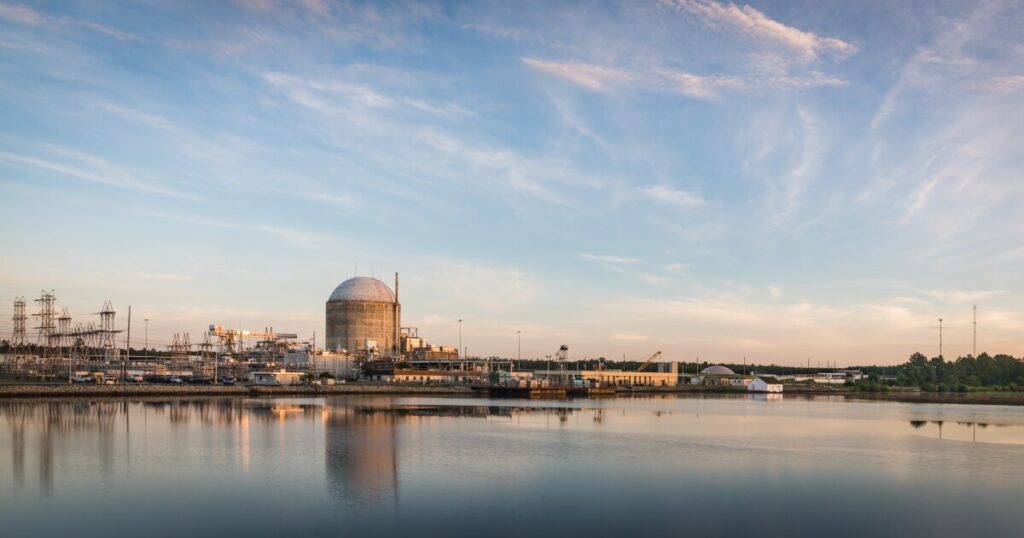
North Carolina’s Nuclear Ambitions: A New Path to Energy
The Energy Policy Commission of North Carolina’s General Assembly reconvened after a nearly two-year hiatus to evaluate past nuclear projects and deliberate on future strategies. This meeting underlines a renewed focus on nuclear energy, seen as crucial to satisfying the increasing power needs of AI-driven data centers.
State officials and Duke Energy, the region’s largest utility, are turning towards nuclear power in response to the growing energy demand. Senator Tim Moffit expressed concerns over past energy policies, stating, “Since Three Mile Island […] our energy policy as a nation has been based on fear.” He emphasized transitioning from fear-driven to courage-driven policies, whether they pertain to climate change or the reliability of fossil fuels.
The reliance on coal and natural gas, both fossil fuels, contributes significantly to carbon emissions, exacerbating global warming. Data from the National Oceanic and Atmospheric Administration notes a 2.63°F increase in Earth’s climate since the Industrial Revolution.
An Evolving Energy Strategy
Duke Energy’s latest proposal excludes offshore wind in favor of nuclear energy as part of its strategy to eliminate coal power. The company plans to decommission the last coal facility at Belews Creek by 2040, though legislators may consider extending this timeline. Moffit advocated for a cautious approach, suggesting, “I would like to hit the pause button […] on those retirements as we navigate the next 10, 15, 20 years.”
North Carolina’s Shearon Harris Nuclear Plant was the nation’s last reactor until Georgia’s Vogtle Units 3 and 4 were completed. Duke Energy is preparing a site near Belews Creek for Small Modular Reactors (SMRs), which produce up to 300 megawatts. An early site permit application was filed in December, featuring four SMR designs.
Duke Energy also holds licenses for the Lee nuclear reactors in South Carolina, where larger reactors could be developed. The federal government supports these costly projects through the 48E Investment Tax Credit and the Energy Dominance Financing Program (EDF), which offers low-interest loans for various energy sources, including nuclear.
These incentives, covering up to half the project costs and overruns, are crucial. Julie Kozeracki from the U.S. Department of Energy explained, “The investment tax credit is the federal government committing to paying 30 to 50 cents of every overrun dollar.”
Vogtle Units 3 and 4 serve as financial cautionary tales, plagued by delays and budget excess. Kozeracki noted that structural cost underestimation was a major factor, stating, “A huge amount of Vogtle’s cost was structural cost underestimation, not cost overrun.”
SMRs face similar challenges, but the U.S. Energy Department’s Reactor Pilot Program aims to address these through pilot projects. James Krellenstein of Alva Energy highlighted cost concerns, noting SMRs could be “50 to 60% more expensive” than larger reactors. Despite this, he emphasized the advantages of larger reactors, stating, “You never actually get over that intrinsic lack of economies of scale that you see in the larger reactors.”