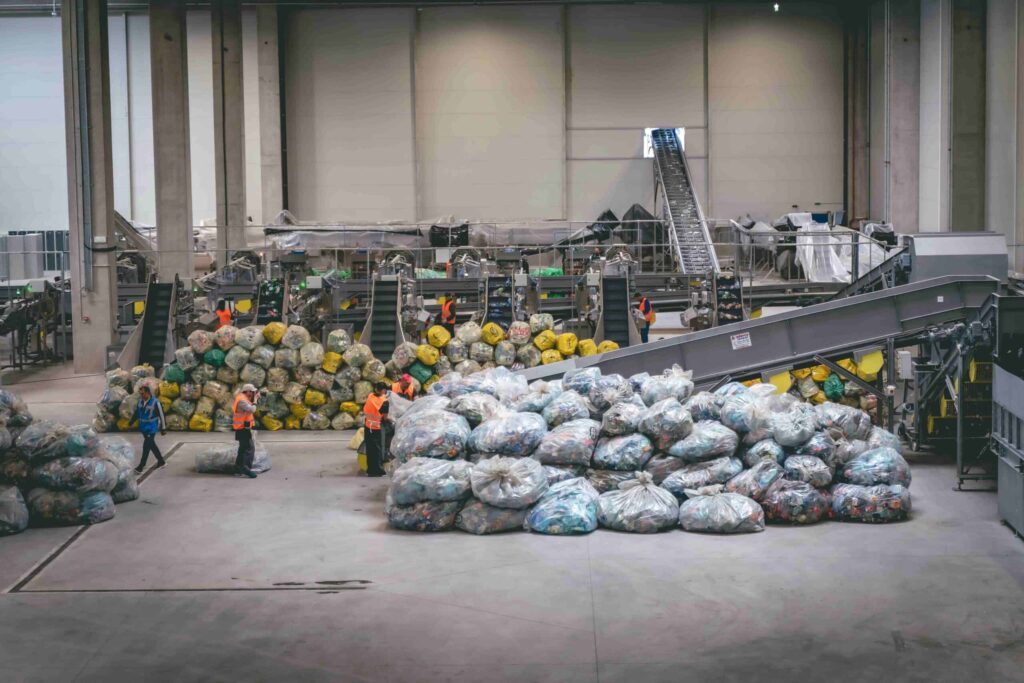
In a significant step towards circular economy, Romania has successfully implemented a deposit return scheme for beverage bottles and cans, making remarkable strides in waste management. This innovative recycling initiative, touted as the globe’s most extensive centralised deposit return scheme (DRS), has been spearheaded by RetuRO, a public-private partnership company.
In the past, Romania lagged in European recycling and sustainability rankings, with a paltry 1.3% of production materials sourced from recycling. However, this scenario is rapidly changing, thanks to the groundbreaking DRS initiative. “The impossible has been achieved. You won’t find a discarded bottle anywhere in Romania now,” says RetuRO’s CEO, Gemma Webb, reflecting on the success of the scheme.
The non-profit partnership, launched in 2023, includes retailers, producers of soft drinks, brewers, and the Romanian Department of Environment as shareholders. The DRS operates on a straightforward principle. Consumers pay a deposit of 0.50 Romanian leu (approx. £0.09) per bottle or can, which is refunded when they return the containers to in-store reverse vending machines.
Additionally, recycling is incorporated into home deliveries by supermarkets who credit customer accounts for returned containers. These recyclables are then sorted and sold to recycling firms, which in turn sell the materials back to manufacturers, including leading companies like Pepsi and Heineken.
The recycling industry has been criticized for waste exportation leading to illegal dumping in the past. Nonetheless, Webb asserts that full traceability, a feature of Romania’s DRS, bolsters consumer confidence. “We ensure that every sold tonne to recyclers is actually recycled. We provide a certificate for this and conduct audits for verification. Our goal is a complete circular economy, with each bottle and can recycled,” she explains.
Despite the higher transportation costs associated with glass, Romania’s DRS includes it. Surveys indicate that the public is enthusiastically embracing the scheme, with 90% of Romanians participating at least once, and 60% routinely returning their empty containers. This initiative has collected over 8 billion containers so far, including 4.5 billion plastic bottles, providing over half a million tonnes of superior recycled materials for production.
Although beverage containers constitute only 5% of Romania’s total waste, the impact of this DRS on overall recycling rates is anticipated to be significant. Other nations, including Poland, Turkey, and Bulgaria, are reportedly considering adopting similar schemes. The UK is also preparing to launch its own DRS next year. Webb suggests that the UK could even outpace Romania’s achievements and establish the world’s largest centralised recycling system, drawing valuable lessons from RetuRO’s successful initiative.