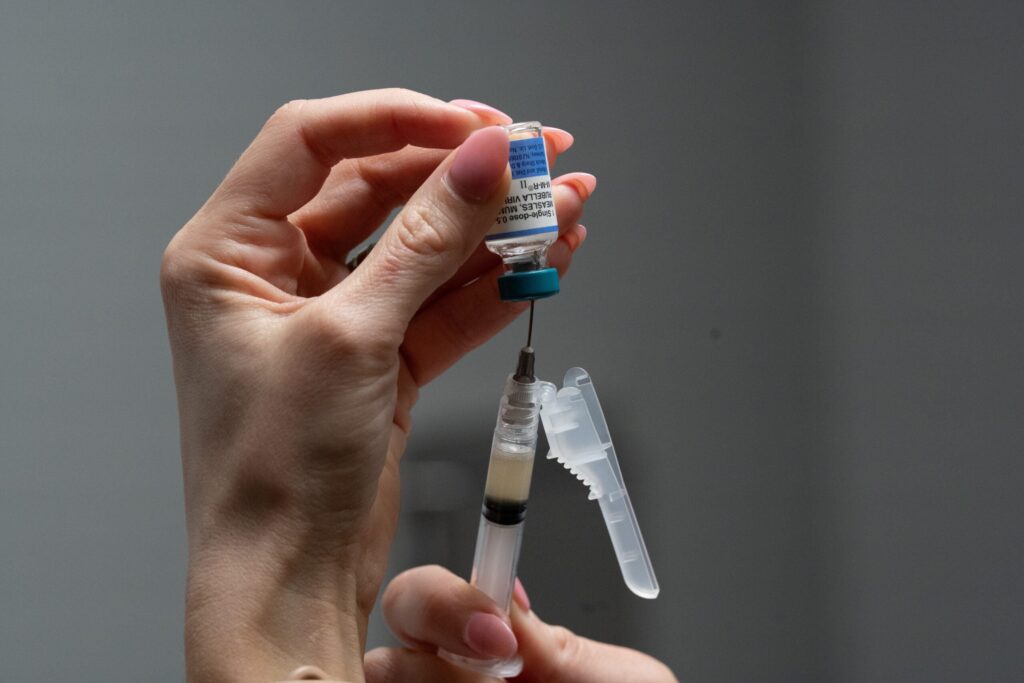
A New Hope in Skin Cancer Treatment: Vaccine Shows Promise in Melanoma Trials
In a groundbreaking development, pharmaceutical giants Moderna and Merck have revealed promising results from a late-stage trial involving a skin cancer vaccine. This trial, conducted on over 1,000 participants with high-risk melanoma, indicates that the vaccine, when used alongside an immunotherapy drug, could significantly reduce the chances of cancer recurrence or metastasis.
The findings from this trial offer a potential new treatment avenue for melanoma, a particularly lethal form of skin cancer. “Over the past several decades, a lot of really smart scientists have tried to develop cancer vaccines, and we haven’t really seen as much success until this breakthrough trial,” Dr. Vincent Ma, an associate professor at UW-Madison’s School of Medicine and Public Health, remarked during an interview on WPR’s “Wisconsin Today.”
Dr. Ma, who specializes in medical oncology and hematology, expressed optimism about the potential for this vaccine technology to extend beyond melanoma, potentially addressing various other cancer types in the future. The University of Wisconsin-Madison Carbone Cancer Center, a hub for cancer research with over 300 faculty members and more than 250 concurrent clinical trials, is at the forefront of such innovations.
Mechanism and Impact of the Melanoma Vaccine
Dr. Ma explained the vaccine’s mechanism, highlighting its role in preventing cancer recurrence rather than infection. The vaccine is developed from the patient’s surgically removed tumor, creating a personalized mRNA vaccine tailored to their cancer. Administered every three weeks for a total of nine doses, it works synergistically with immunotherapy to bolster the immune system’s ability to detect and eliminate cancer cells throughout the body.
Melanoma in Wisconsin: A Common Threat
Melanoma ranks as the fifth most common cancer in the United States, with Wisconsin reporting nearly 2,000 new cases annually. Dr. Ma noted that the state’s significant agricultural workforce, frequently exposed to sunlight, faces a heightened risk. This underscores the importance of effective treatments like the new melanoma vaccine.
Research Beyond Melanoma at UW-Madison
Beyond melanoma, UW-Madison is engaged in diverse cancer research initiatives. Dr. Mahua Dey is pioneering personalized vaccine studies for brain cancer, while Dr. Douglas McNeel is exploring vaccines targeting prostate cancer. The university is also one of the few in the U.S. conducting trials on DNA vaccines for breast cancer.
New Virus Therapy for Aggressive Melanoma
Recently approved by the FDA, a new virus therapy offers hope for melanoma patients who do not respond to standard treatments. This therapy involves injecting an engineered virus directly into the tumor to enhance the immune response. Like the vaccine, it must be combined with immunotherapy, which remains central to melanoma treatment. Dr. Ma noted that this virus therapy shows effectiveness in about a third of cases, surpassing other available options when standard treatments fail.