Michigan’s decision to implement tax incentives for data centers has sparked a significant debate among state legislators. As a bipartisan effort to repeal these incentives gains momentum, questions arise about the balance between economic development and community impact.
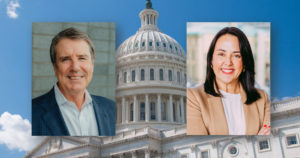
State Rep. Dylan Wegela, a Democrat, alongside Republican State Sen. James DeSana, is leading the charge to overturn these incentives. Wegela noted a shift in perspective among lawmakers due to increased local opposition. “As people especially have started to see the bipartisan local pushback, a lot of legislators have changed their mind on this,” he stated.
Despite the controversy, Michigan Gov. Gretchen Whitmer remains an advocate for data centers, emphasizing the need for strategic planning. At an April forum, she stressed the importance of safeguarding consumer interests and natural resources, particularly water, when considering new data center locations.
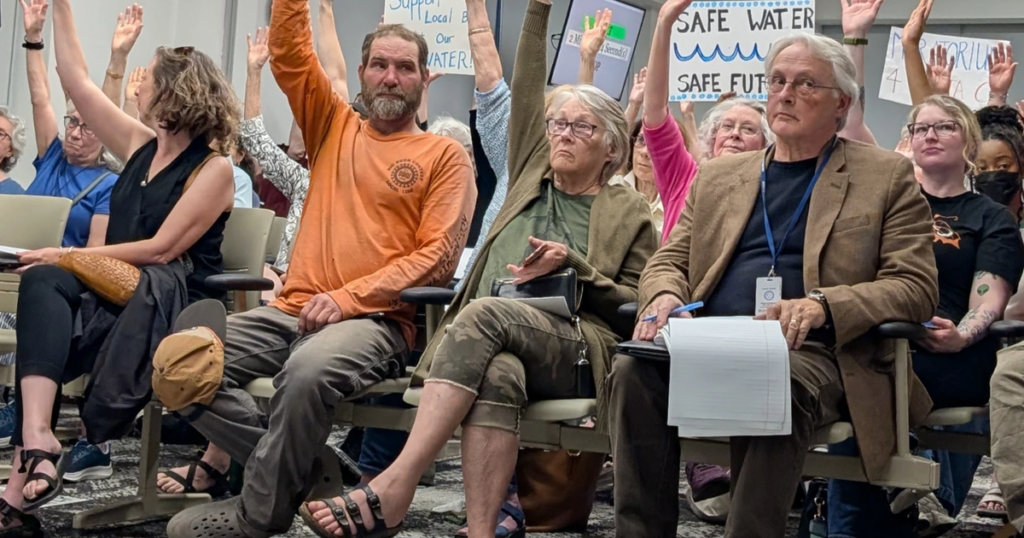
Wegela expressed concerns about the adequacy of current regulations for data centers in Michigan. Although he doubts his repeal bill will succeed, he hopes it will inspire local governments to enact stricter controls. “I hope that the bills that we’ve introduced can convince as many local communities as possible to pass moratoriums and put in strong regulations and obstacles that these companies have to get around,” he said.
Local vs. Federal Oversight
Decisions on data center developments pose significant challenges for local communities, as highlighted by Jonathan Coppess, director of the Gardner Agriculture Policy Program at the University of Illinois Urbana-Champaign. He argues that it is unfair to burden county boards with these decisions, advocating for federal involvement instead. “This isn’t fair to put on a county board,” Coppess remarked.
Coppess acknowledged the difficulties states face in managing these issues, given the transboundary nature of resources like water and electricity. “I do think it’s a really difficult thing even for states,” he explained, noting the interstate flow of essential resources.
Local lawmakers share these concerns. Champaign County board member Stephanie Fortado pointed out the potential impacts from neighboring counties during a recent moratorium hearing. “The counties around us are not doing the same work that we’re doing, and they could easily put this on the border of our county,” she said. “And it impacts our water. It impacts our utility rates.”
Challenges also arise when local leaders attempt to regulate data center developments, as evidenced by Kate Stoll from the American Association for the Advancement of Science. She recounted instances where developers bypassed local restrictions by moving to adjacent counties, leaving communities with negative consequences without reaping economic benefits.
Efforts to pause data center development at the federal level have been made, with legislation introduced by Independent Sen. Bernie Sanders and Democratic Rep. Alexandria Ocasio-Cortez. However, given the Republican-controlled Congress, the bill is unlikely to pass, leaving the matter largely in the hands of state and local governments.
This scenario suggests a fragmented regulatory landscape across the nation, with varying approaches to handling water, energy, and large-scale development projects.
This story was produced in partnership with Harvest Public Media, a collaboration of public media newsrooms in the Midwest and Great Plains. It reports on food systems, agriculture and rural issues.