Wisconsin is taking significant steps to tackle PFAS contamination with a new $133 million initiative. This funding comes as a result of recent legislative action and aims to address the widespread issue of these harmful chemicals across the state.
Governor Tony Evers signed into law two bills that were passed by the Senate in March. These bills, crafted by GOP lawmakers, represent a compromise after extensive negotiations over the allocation of PFAS funds initially reserved in the 2023-25 state budget. Read more about the Senate passage here.
This legislative package introduces protections for farmers, certain businesses, and other “innocent landowners” from being held accountable for PFAS pollution they did not cause. Moreover, it dedicates $80 million to community grants aimed at testing and remediation efforts.
Additionally, $35 million is earmarked for broadening a state grant program designed to repair or replace contaminated private wells. This expansion will now include more homeowners, renters, schools, and child care facilities.
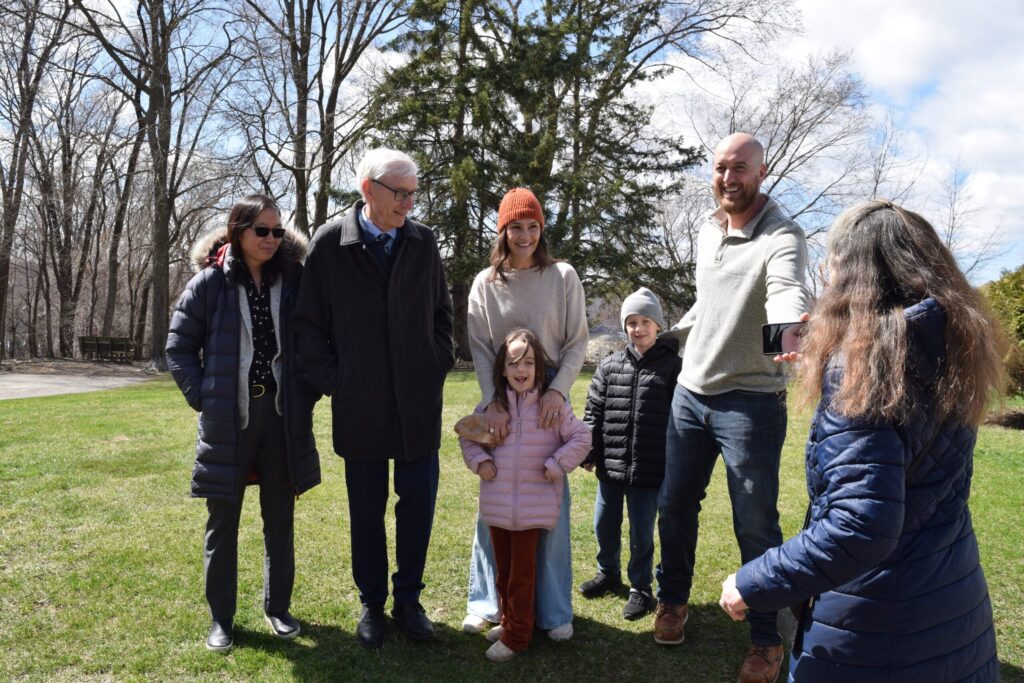
Governor Evers marked this legislative milestone by visiting the residents of Campbell in La Crosse County. These residents have relied on state-funded bottled water for five years due to severe PFAS contamination in their private wells.
During his visit, Evers emphasized the bipartisan nature of the legislation, noting, “Anybody that says that that was a failure, talk to these people,” referring to the Campbell residents. “They’re the ones that have been taking it on the chin for five years. So I just think it’s a good political learning lesson. But it’s mostly important for the people here to get water so that they can drink it.”
Previously, Evers had vetoed a similar bill over concerns that it might shield polluters and curtail the authority of the state Department of Natural Resources. The current legislation seeks to balance these worries with necessary landowner protections.
State Sen. Eric Wimberger, R-Gillett, who co-authored the bills, praised the law, stating it will “protect innocent victims of PFAS across Wisconsin from unfair state action.”
Lee Donahue, from the Campbell Board of Supervisors, expressed optimism about the $133 million funding’s potential impact. She described it as a “substantial” boost for communities grappling with PFAS issues and a foundational step for future state-level efforts.
“It’s a first step,” Donahue remarked. “There’s a lot more work to do. But I think the fact that we have seen success today means that we can be successful in the future on the rest of the steps that need to be taken to really, really secure safe water for every Wisconsin resident, no matter where they live.”
She also advocated for the establishment of a statewide groundwater PFAS standard and a ban on “nonessential PFAS” in manufacturing, akin to recent Minnesota legislation. Learn more about Minnesota’s law here.
‘It makes the big problem we face a little bit smaller’
During Evers’ visit on Monday, Peter Davison, a Campbell resident, shared his family’s experience with PFAS contamination. His 6-year-old twins played in their yard, a stone’s throw from Lake Onalaska, as he recounted their journey.
After Davison and his wife Audra discovered their private well was contaminated in 2020, shortly after their twins’ premature birth, they ceased using tap water for drinking or cooking.
“We have pictures of the kids when they’re little, 1 year old, sitting on top of the Culligan jug in the kitchen, because that’s just a part of our daily life,” Davison shared.
Having grown up in the same home, Davison expressed concerns about long-term health impacts due to PFAS exposure, which is linked to cancer and fertility issues.
The new $80 million grant program could assist Campbell in funding a new municipal water system, already under construction. Davison appreciated the funding, saying, “It makes the big problem we face a little bit smaller and a bit more manageable.”
The state Department of Natural Resources is actively working to implement these funds. DNR Secretary Karen Hyun mentioned in March that they are preparing to begin water sampling and biosolid analysis, alongside hiring 10 new roles authorized by the legislation. Read more about the DNR’s plans here.