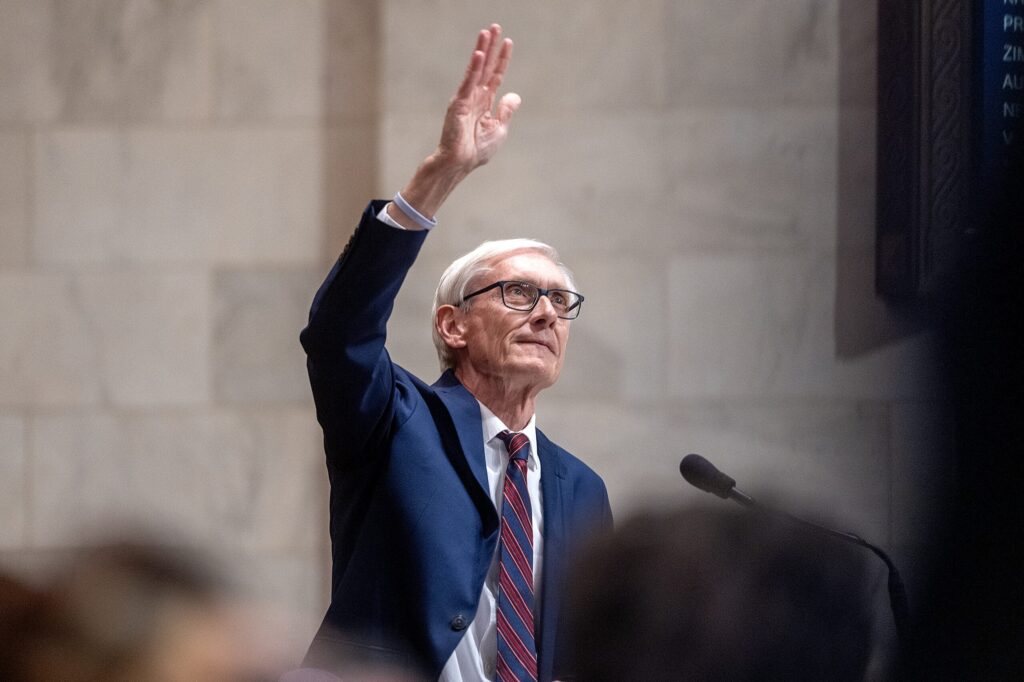
The atmosphere was charged at the Wisconsin State Capitol as Governor Tony Evers delivered his final State of the State address. Speaking to an audience eager for updates on key state issues, Evers laid out a vision for the future while critiquing the opposition’s handling of school funding and tax policies.
Governor Evers criticized Republican lawmakers for what he described as a pattern of underfunding Wisconsin schools, which he argues has resulted in increased property taxes. His comments came amidst stalled negotiations over a proposed tax cut package, a point of contention between the governor and the legislature.
Following his speech, Republican Assembly Speaker Robin Vos expressed hope for continued negotiations, stating that he remains “optimistic” about reaching a tax and spending agreement.
Plan for Education and Tax Relief
During his address, Evers highlighted his administration’s achievements, including signing 800 bills, reducing state debt, and implementing $2 billion in tax cuts. However, he emphasized the need for continued progress, especially in education funding and property tax relief.
The governor rebuffed a recent $2.3 billion package proposed by Republicans, which included a tax rebate plan. Evers insisted that local property taxes rise when the state fails to fulfill its educational funding obligations. “Local property taxes go up when the state fails to do its part to meet its obligation,” he said, advocating for a more balanced approach to school funding and tax relief.
Push for Nonpartisan Redistricting
Evers also announced his intention to call a special legislative session to address partisan gerrymandering. This comes two years after a new voting map law was signed, aimed at increasing Democratic representation. “Politics should stay out of redistricting from start to finish,” Evers stated, highlighting the ongoing need for a nonpartisan redistricting process to ensure fair representation for Wisconsinites in future elections.
However, past attempts by Evers to convene special sessions have seen Republicans swiftly dismissing them without action, a pattern he hopes to change despite an upcoming election year.

Negotiations on Tax and School Funding
The governor’s address followed a period of negotiations with Republicans over property taxes, which have seen Evers’ partial veto extending school district revenue capabilities for 400 years, a move Republicans blame for high property taxes. Evers countered by pointing to a history of Republican budget decisions that neglected educational investment.
Possible agreements discussed include trading tax relief for increased school funding, with recent Republican proposals offering tax rebates and increased special education funding. Vos noted a willingness to discuss these proposals, albeit expressing skepticism over Evers’ approach.

Federal Policy and Immigration Concerns
Governor Evers addressed federal policies without directly naming President Donald Trump, expressing concerns over immigration enforcement’s impact on Wisconsin communities. He highlighted the fears faced by immigrant families and the vital role immigrants play in the state’s economy, particularly in the dairy industry.
Evers also announced Wisconsin’s decision to join the WHO’s Global Response Network, following the U.S. withdrawal under the Trump administration, aligning with other Democratic-led states to enhance public health initiatives.

Republican Response to Evers’ Address
Republicans, in turn, claimed that Evers was taking credit for their legislative successes. Senate Majority Leader Devin LeMahieu remarked that Wisconsin’s strength is due to the legislature’s efforts, not the governor’s. Meanwhile, Vos criticized the partisan tone of Evers’ speech and expressed doubt over his intentions regarding gerrymandering reforms.

Wisconsin Public Radio, © Copyright 2026, Board of Regents of the University of Wisconsin System and Wisconsin Educational Communications Board.