Millions of Americans are on the journey to recover from addiction, yet funding for treatment often falls short. Nonprofit organizations, especially those led by volunteers, are stepping in to bridge the gap.
In a piece for WPR’s “Wisconsin Life,” Producer Morgan D. Stewart delves into the role of SMART Recovery and its Wisconsin roots in addressing addiction recovery.
==
News with a little more humanity
WPR’s “Wisconsin Today” newsletter keeps you connected to the state you love without feeling overwhelmed. No paywall. No agenda. No corporate filter.
Back in 2014, when I began seeking help for substance use disorder, I often heard discouraging words from therapists and counselors:
“I can’t really help you until you get sober.”
“Therapy won’t start to work, Morgan, until you are sober.”
“I’m sorry, but you can’t join our group therapy sessions about addiction unless you’re sober.”
For a decade, I was stuck in a cycle of frustration and exclusion, wanting to quit but unable to find a supportive environment. That changed when I discovered SMART Recovery, a non-religious mutual help organization. I found acceptance in peer support meetings, even when I wasn’t ready to quit. Now, as a SMART facilitator, I share the wisdom I gained from the program.
Wisconsin and SMART Recovery
SMART, an acronym for Self-Management and Recovery Training, was established in 1994. The organization was founded by psychologists with expertise in cognitive behavioral therapy, rational emotive behavior therapy, and motivational interviewing.
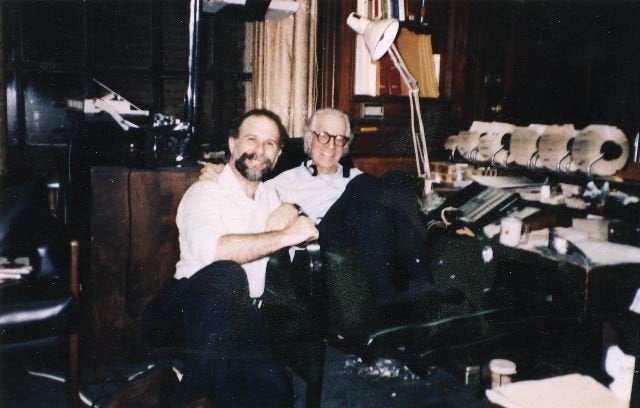
Dr. Henry Steinberger, a founding member of SMART Recovery and a psychologist in Madison, highlights the program’s effectiveness. He explains, “If you’re using alcohol or heroin, you’re trying to regulate your emotions. Rational emotive behavior therapy teaches you that your emotions and behaviors are related to your beliefs.” He adds, “We learn to look at the activating event as not the cause of our behavior but our beliefs about the activating event…So, in essence, ‘change your beliefs, change your life.’”
SMART Recovery’s tools revolve around four main points. The first is building and maintaining motivation to change; the second focuses on managing urges and cravings; the third involves managing thoughts, feelings, and behaviors; and the fourth emphasizes living a balanced life, humorously summed up by Steinberger as “getting a life!”
“Just being sober ain’t enough to make life so interesting. Recovery requires some creativity,” Steinberger notes. This fourth point underscores the need for creativity in finding new ways to interact with the world, aligning with personal values and deterring relapse into harmful behaviors.
‘No matter what mood I’m in … I leave feeling better’
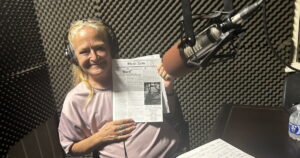
Teresa Susmaras, a licensed therapist and SMART Recovery facilitator, leads a women’s and gender-expansive affinity group. Originally based in Eau Claire, Susmaras has since moved to Madison, but her meetings continue online, reaching participants worldwide.
“We started in person and then, with the pandemic, moved to Zoom. I missed a little bit of the in-person connection,” she said. “But at the same time, it was also really nice to have people from all over the country, and all over the world be able to join.”
Initially, Jamie Schaefer joined Susmaras’ SMART Recovery meeting after facing relationship challenges following a car accident and DUI. Now a regular attendee, Schaefer shares, “I love that…no matter what mood I’m in, when I go into it, I leave feeling better. It doesn’t matter what we talk about, just the fact that it’s people that are, you know, kind of like-minded there. They’ve got the same goals. And I think the second thing is that it normalizes and helps me get rid of a lot of shame.”
“I can talk to people that I have some relation to. It’s not just a bunch of people in my life judging me right now,” she said. “It’s awesome.”
SMART Recovery’s approach emphasizes self-management and evidence-based strategies, contrasting with the religious or abstinence-focused models of groups like Alcoholics Anonymous (AA). Both Susmaras and Schaefer have found value in attending both SMART and 12-step meetings.
A 2023 study suggests that participants who engage in both SMART and AA can leverage the strengths of each approach.
“I’m a scientist. It’s not that I don’t get anything out of AA or NA (Narcotics Anonymous). There are a lot of things about AA that I really loved and still do,” Susmaras said. “I also needed something evidence-based. I needed to know there was science behind the program — that there was some objective data to say this kind of stuff works to help you change your behavior.”
Over time, the dedication and support from SMART Recovery facilitators and participants have been a source of inspiration for me. As a facilitator of Madison’s newest SMART Recovery meeting, I aim to spark creativity in participants every Monday from 5:30 to 7:00 PM, using a creative twist on SMART tools at uHuman’s Creative Recovery Lab.
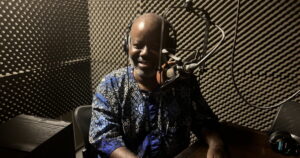
Editor’s note: The full conversations with Morgan D. Stewart, Dr. Henry Steinberger, and Teresa Susmaras can be found on uHuman’s Creative Recovery podcast. Audio engineering support for this story was provided by Luke Tschosik, uHuman co-founder and a music producer living in Madison, Wisconsin.
“Wisconsin Life” is a co-production of Wisconsin Public Radio and PBS Wisconsin. The project celebrates what makes the state unique through the diverse stories of its people, places, history, and culture.