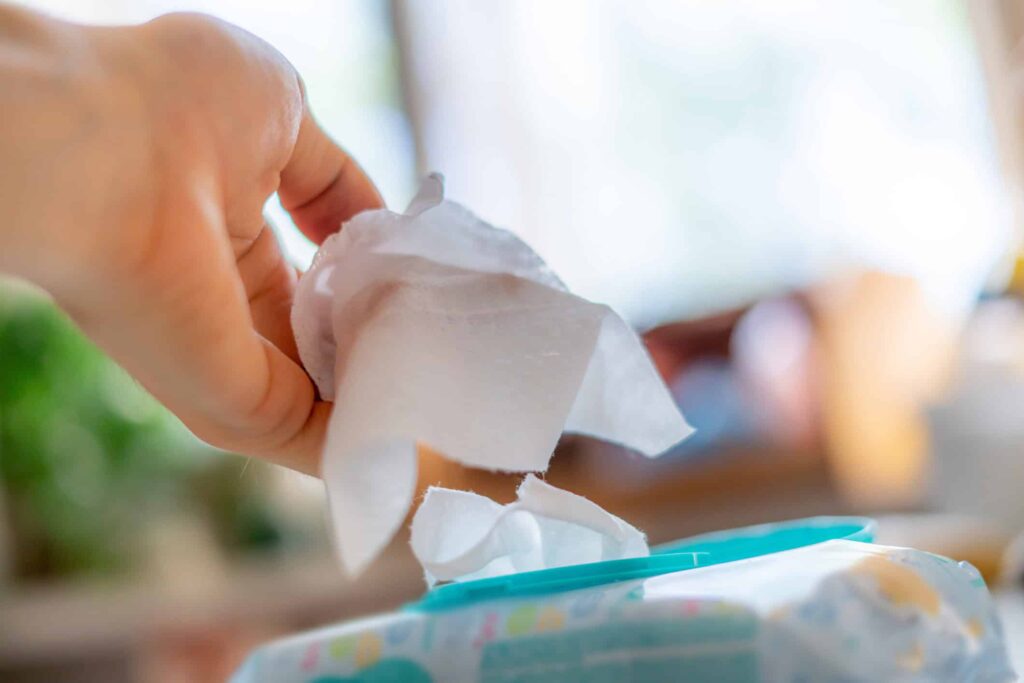
England is taking progressive steps to curtail plastic pollution, with a new ban on the sale and supply of plastic-containing wet wipes. This legislative action aims to protect our water bodies and significantly reduce the number of microplastics entering the environment.
Wet wipes littering beaches and waterways have become an all-too-common sight. From 2015 to 2020, beach surveys by Defra showed an alarming average of 20 wet wipes per 100 meters of beach. The plastics within these flushed wipes disintegrate into microplastics, causing harm to wildlife and entering the food chain.
Environment secretary Emma Reynolds stated, “This ban will eradicate plastic wet wipes, which are choking our sewers, polluting our beaches and endangering wildlife.” A government consultation revealed strong public support for the ban, with 95% of respondents in favor of it. Leading retailers, such as Boots, have already stopped selling wipes containing plastic.
The official deadline for businesses in England to comply with this law is spring 2027, while in Wales, the ban will take effect in December 2026. Meanwhile, Spain is working on legislation to ban the flushing of all wet wipes. In the US, there isn’t a national ban on plastic wet wipes yet, but the WIPPES Act, recently passed by the US House, mandates clear labeling of non-flushable products with “Do Not Flush.”
Wet wipes contribute significantly to an environmental and infrastructural problem in England, forming the major bulk of ‘fatbergs’ that block UK sewers. According to research from UK Water Industry Research, wet wipes cause up to 94% of sewer blockages. Clearing these blockages comes at a hefty annual cost of around £200m to water companies, a cost that is eventually borne by households. A recent Unblocktober campaign indicates that this problem is behavioral too, with 63% of people knowing that flushing wet wipes causes blockages, yet 35% continue to do so.
Stephanie Cawley, the director of customer operations at Severn Trent, highlighted the importance of the ban, saying that plastics make wet wipes stronger and harder to break down, causing even more issues when flushed. She advised that only the three P’s – pee, poo and paper, should be flushed and that discarding any kind of wet wipes in the bin would make a massive difference.
Environmental groups have also hailed the ban as a long-overdue step in the right direction. Chris Coode, CEO at environmental charity Thames21, praised volunteers who have removed thousands of wet wipes from the River Thames’ shores. Coode also pressed for more systemic changes to prevent plastic entering the environment.
Some campaigners argue that the ban should be implemented sooner than 2027, given the wide availability of plastic-free alternatives. Others caution that focusing only on plastic-containing wipes may confuse consumers and miss an opportunity to decrease the overall environmental impact of disposable wipes. The new rules only prohibit the sale of wet wipes with plastics, implying brands still need to enhance labeling to provide clear disposal instructions.
Water Minister Emma Hardy has written to manufacturers, urging them to improve on-pack guidance so people know that all wet wipes should be binned and not flushed, even when labeled as flushable. Retailers view the law as a positive step towards a level playing field. Boots executive Steve Ager said the company had already stopped selling plastic wipes because “healthy communities need a healthy planet”. He added that a national ban would have a larger impact than individual retailers acting alone.