Established in 1926, Lake Ivanhoe was envisioned as a Black-owned haven near Lake Geneva. As it approaches its 100th anniversary, the Lake Ivanhoe Property Owners Association will host a celebration on July 24 and 25 to honor its storied past.
This article, originally published in 2022, delves into the rich history and recognition of Lake Ivanhoe.
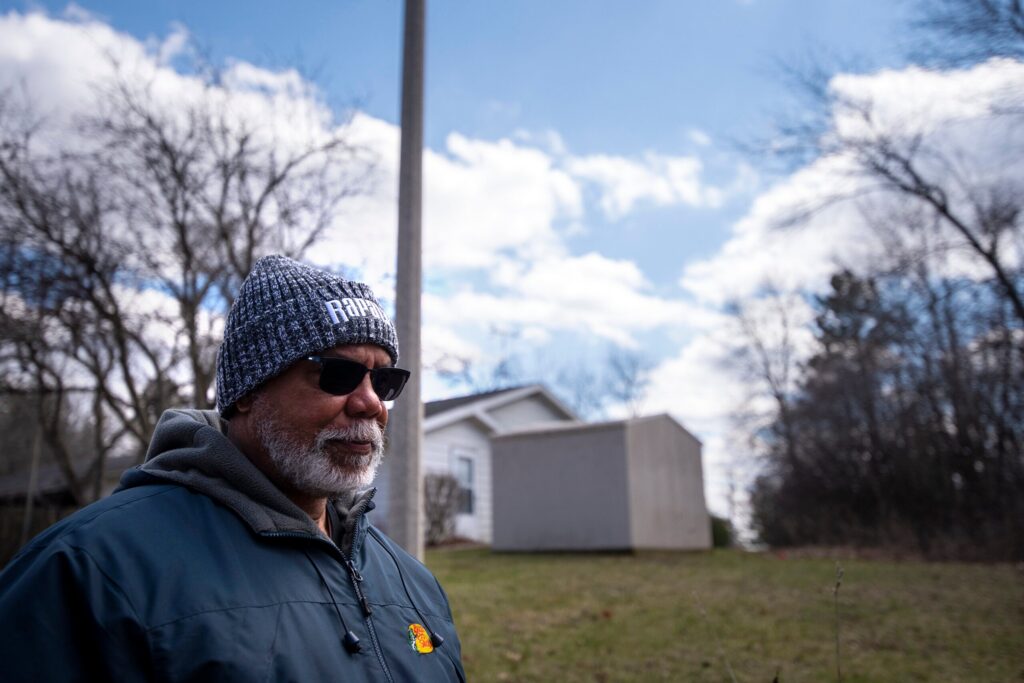
Peter Baker fondly recalls his inaugural trip to Lake Ivanhoe in 1966 at the age of nine. Brought from Chicago by a friend for a fishing expedition, the trip yielded a bountiful catch of bluegills and crappies.
“We went home and I ran in the house with all these fish and I showed my mother, ‘We were up there at Lake Ivanhoe, and it was all Black!’” Baker, now 66, recounted. “And the first thing she said is, to my father, ‘Ernest, we’re going up there next week.’”
Lake Ivanhoe, a quaint subdivision just six miles east of Lake Geneva, became home to the Baker family, who relocated from Chicago. Peter’s youth was filled with fishing, swimming, and exploring the forested landscape.
During a time when sundown towns were prevalent, Lake Ivanhoe offered African Americans a sanctuary. “This was about as safe as life could get up here, because we literally could sit in the middle of the roads at night time and watch the stars and talk and play,” Baker said. “The freedom was unbelievable.”
Decades later, Baker discovered that this sense of security was the founders’ original intention. Today, local residents strive to preserve the community’s legacy, which nearly faded into obscurity.
The nation has been reevaluating whose histories are immortalized in monuments, with only seven of Wisconsin’s 600 historical markers dedicated to Black history. The Wisconsin Historical Society aims to rectify this through partnerships and grants from the William G. Pomeroy Foundation, planning nearly 40 new markers, including one for Lake Ivanhoe.
The Vision Behind Lake Ivanhoe
Lake Ivanhoe emerged from the aspirations of three esteemed Black men from Chicago: Jeremiah Brumfield, Frank Anglin, and Bradford Watson. They sought a safe retreat for their families amidst the racial tensions of the Great Migration and subsequent societal challenges.
In the wake of the 1919 Chicago riots, Brumfield, Anglin, and Watson envisioned a resort closer than Idlewild, Michigan. They acquired an 83-acre farm on Ryan Lake, with the assistance of white real estate agent Ivan Bell, for whom the lake was renamed.
Opening in 1927 with a performance by jazz legend Cab Calloway, the resort quickly flourished as Black families flocked to purchase lots and partake in various recreational activities.
The Great Depression halted sales, leading to the pavilion’s dismantling and unsold properties entering foreclosure. By 1934, Edward Sternaman, a white Chicago Bears player, bought the remaining lots, intending to convert them into a white resort. A legal battle ensued, resulting in a ruling that preserved the lake’s communal spaces for all residents.
Post-World War II and during the Civil Rights Movement, families like the Bakers revitalized Lake Ivanhoe, transforming it into a year-round community.
‘An Overlooked Story’
Baker, who still resides in Lake Ivanhoe, now leads the Lake Ivanhoe Homeowners Association. Despite demographic shifts reflected in the 2020 U.S. Census, with African Americans constituting only 9% of the population, he remains committed to preserving the community’s heritage.
Collaborating with Katie Green, who discovered Lake Ivanhoe through family ties to nearby Lake Geneva, Baker has been advocating for a historical marker. Green, astonished by the community’s history, emphasized its significance, stating, “It just feels like kind of an overlooked story that needs to be out there in the world.’”
Efforts to document Lake Ivanhoe’s history continue, with Baker and Green delving into archives and engaging with former residents. Their research uncovered stories like that of Janet Alexander Davis, who fondly remembers fishing trips to Lake Ivanhoe in the 1950s.
“I remember one time I caught what they call a dogfish. That was the ugliest fish I’ve ever seen — ugly and big! But I was so proud of that fish,” she recalled. Alexander Davis is enthusiastic about the forthcoming marker, viewing it as recognition of the challenges and triumphs experienced by Black families.
‘There’s Nowhere Else I’d Like to Be’
This summer, a two-sided historical marker will be erected at the property owners association clubhouse, marking where the original pavilion once stood. Baker envisions future generations visiting to learn about Lake Ivanhoe’s rich history.
Plans for a dedication ceremony are underway, including a pig roast and big band music, reminiscent of the community’s early days. Baker believes acknowledging the past is crucial for Lake Ivanhoe’s future. “I plan on being here for a long time, hopefully for the rest of my life. And I just hope it’s always a place that African Americans can feel safe in,” he said. “I literally am at peace here. There’s nowhere else I’d like to be.”
“Wisconsin Life” is a co-production of Wisconsin Public Radio and PBS Wisconsin. The project celebrates what makes the state unique through the diverse stories of its people, places, history and culture.