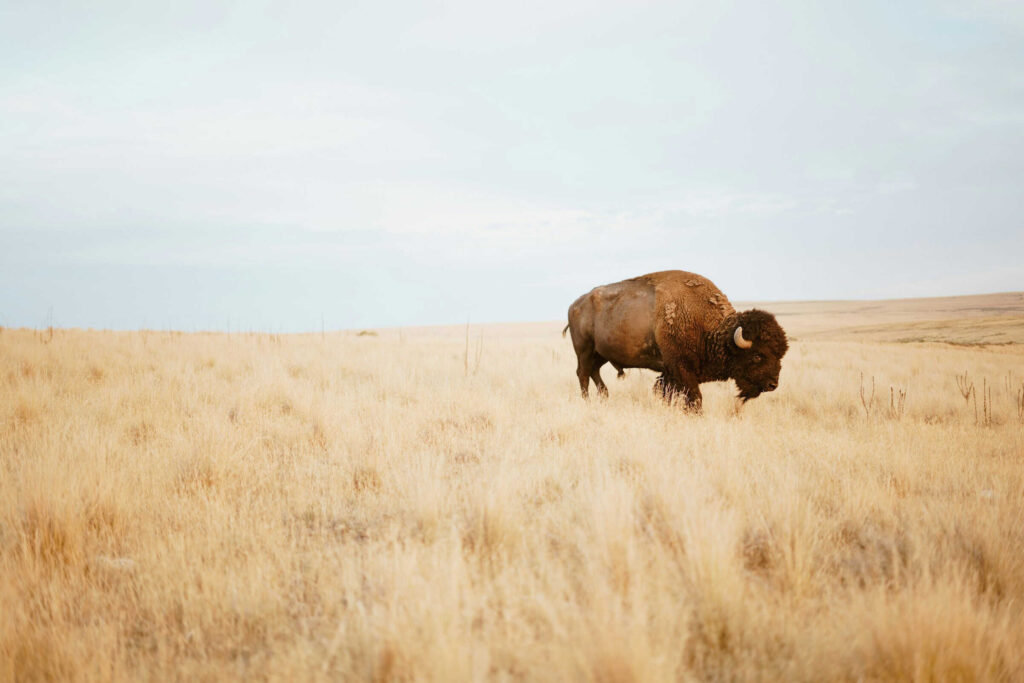
Yellowstone National Park is experiencing a remarkable ecological restoration, fueled by the reintroduction of one of America’s most emblematic species. A study published in Science in August demonstrates how the movement of approximately 5,000 bison across the park’s grasslands is reviving old patterns and transforming the landscape from the ground up.
The park’s bison offer researchers a unique glimpse into the impact of large herbivores on ecosystems. By grazing, trampling and fertilising the land, they create an array of habitats that cater to a larger variety of flora and fauna, from insects to predators.
These bison, offspring of the last surviving wild herd, now wander almost 1,000 miles annually along a 50-mile corridor, producing a mixture of grazed and ungrazed areas.
Headed by Bill Hamilton, an ecologist at Washington and Lee University, the research team compared the vegetation and soil chemistry of grazed and fenced plots. The findings revealed that, despite heavy grazing, plants flourished just as vigorously as in untouched areas and were 150% more protein-rich.
“This is truly a revival of what existed in the past,” commented Hamilton, motivating readers to contemplate how drastically landscapes have evolved from their original state. He stated that Yellowstone grasslands are now “functioning better than in their absence”, providing “a glimpse of what was lost” when bison were nearly eradicated in the 19th century.
This resurgence is the outcome of years of conservation, habitat protection, and a multi-agency management scheme aimed at reconciling ecological restoration with disease control and agricultural concerns.
While Yellowstone’s bison population varies between 2,400 and 5,500, policymakers are contemplating ways to augment their range with assistance from tribal trusts.
The objective is to bolster genetic robustness by letting herds from diverse regions intermingle and to allow bison to move more freely across a larger, interconnected network of landscapes, rather than being restricted within Yellowstone’s boundaries. Such corridors would reunite fragmented habitats, decrease the risks of inbreeding, and help ensure that bison populations remain healthy and adaptable.
However, there are still obstacles. Herd mobility is restricted by borders, disease transmission fears, and human-wildlife conflict. These issues restrict the potential of large-scale rewilding, even as the environmental benefits of natural grazing become increasingly evident.