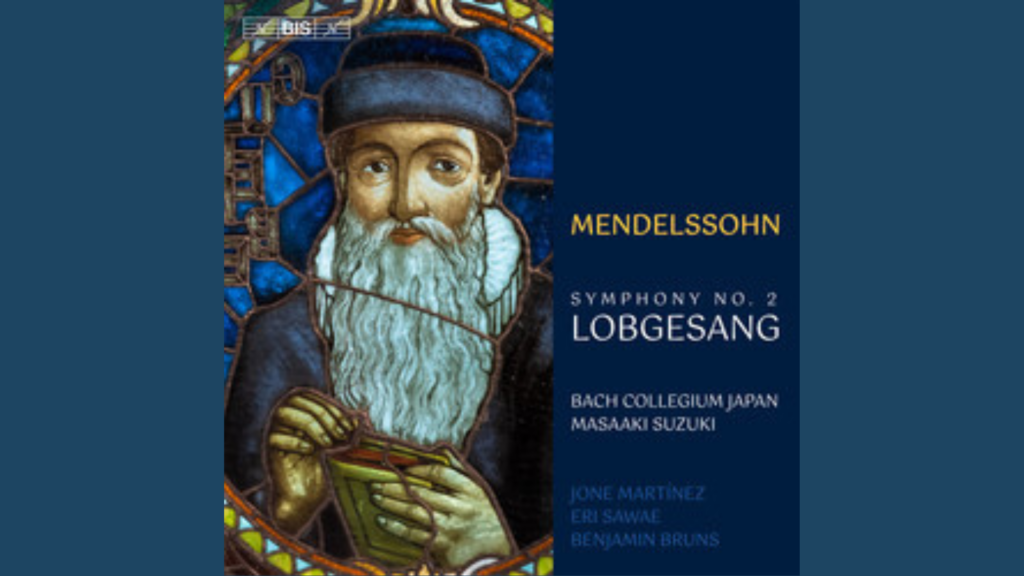
As the season of reflection and renewal approaches with Passover and Easter, a noteworthy musical release is capturing the essence of these celebrations: Felix Mendelssohn’s “Lobgesang,” or “Hymn of Praise.” This piece, also recognized as Symphony No. 2 in B-Flat Major, Op. 52, has been newly recorded by the Bach Collegium Japan under the guidance of founder Masaaki Suzuki on the BIS label.
A Fusion of Symphony and Sacred Cantata
The composition opens with a three-movement symphony, setting the stage for the subsequent sacred cantata. The cantata consists of nine movements, with texts largely sourced from the Bible, including the Psalms and Isaiah from the Old Testament, along with passages from the New Testament.
This work, lasting over 70 minutes, followed closely after the premiere of Beethoven’s choral Symphony No. 9, which served as an inspiration for Mendelssohn. Commissioned for the 400th anniversary of the printing press and the Gutenberg Bible, “Lobgesang” is a musical allegory that symbolizes a journey from darkness to light.
Symbolic Texts and Themes
The text of the cantata mirrors the Exodus events celebrated during Passover, alongside themes associated with Easter: sorrow, fear, liberation, divine protection, and joy. The cantata section begins and ends with the words from Psalm 150, “Let everything that has breath praise the Lord,” encapsulating the piece’s spiritual essence.
Mendelssohn intricately wove a rich soundscape in “Lobgesang,” integrating an organ with the orchestra, a chorus, and three soloists, including two sopranos and a tenor. The composition also features the well-known Lutheran chorale, “Nun Danket alle Gott” (Now Praise We all our God), familiar to audiences of the time.
The Bach Collegium Japan’s Interpretation
The Bach Collegium Japan’s recording is a relatively intimate undertaking for such a grand piece. Utilizing period instruments and gut strings, the ensemble, consisting of just over 20 singers, delivers a performance characterized by clarity and power.
Mendelssohn’s Personal Journey
Felix Mendelssohn’s background was rooted in a prominent German-Jewish family. However, anti-Semitic sentiments in the 19th century led to his baptism as a Lutheran at the age of seven. He received a Christian upbringing, which influenced his assimilation.
Scholar Jeffrey S. Sposato notes that Mendelssohn did “… eventually find a way to balance his Jewish heritage and his Christian faith,” as detailed in his book “The Price of Assimilation: Felix Mendelssohn and the Nineteenth-Century Anti-Semitic Tradition.” Whether Mendelssohn’s personal reconciliation of faiths is reflected in “Lobgesang” remains speculative, but the composition undeniably celebrates the triumph of light over darkness.