In a move that could significantly impact local policy on federal immigration enforcement, Asheville City Councilmember Kim Roney has introduced a resolution aimed at restricting the use of city properties for such purposes. This development comes in the wake of a recent incident where U.S. Customs and Border Protection (CBP) detained over 130 individuals in Charlotte, raising concerns that Asheville might also be under scrutiny by federal agents.
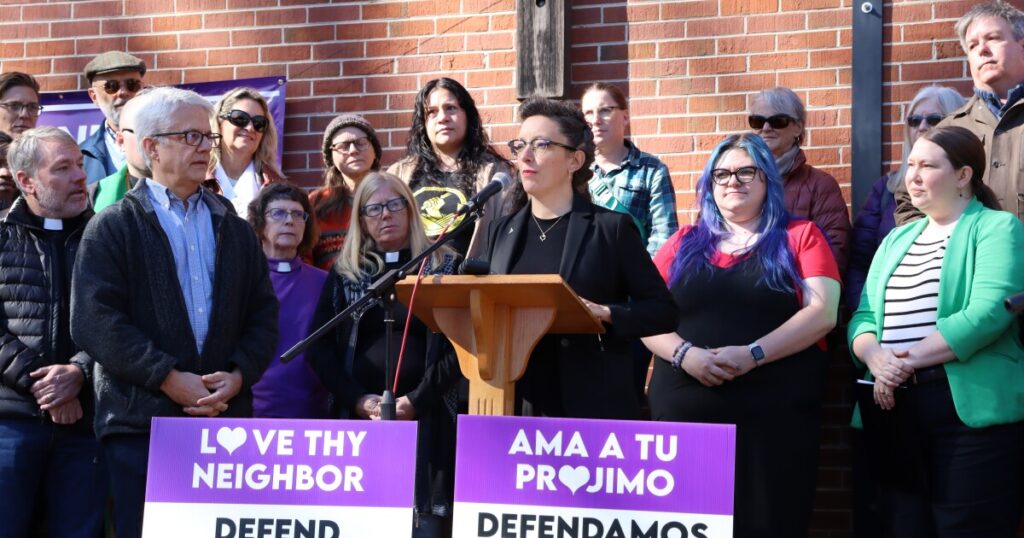
Announcing her proposal at the Land of the Sky United Church of Christ, Roney was accompanied by a group of faith leaders, union representatives, and nonprofit organizations advocating for immigrant communities. She urged community members and local officials to rally behind the resolution, stating, “Gross federal overreach threatens our Hurricane Helene recovery efforts, our budget priorities, our community values, our small and locally owned businesses, and the trust of our local government required to provide true safety for the people who live, work in and visit our mountain home.”
The resolution seeks to prevent CBP from utilizing any city-owned facilities, lots, or parks as operational bases for civil immigration enforcement. Key components of the proposal include:
- Mandating city departments to label city properties to avoid unauthorized use for immigration enforcement.
- Instructing the city manager’s office to develop standard signage for private property owners wishing to restrict such activities.
- Providing “know your rights” resources to city employees, tenants, and security personnel.
Roney’s initiative was formulated with input from immigrant communities and lessons from other municipalities facing similar challenges from federal agencies.
Buncombe County Commissioner Martin Moore was expected to join the press conference but was unable to attend due to scheduling conflicts. Efforts to reach Moore for comments on a possible county-level proposal were unsuccessful at the time of writing.
Although Roney, who is also running for Mayor, extended invitations to all council members for the announcement, only she appeared at the event. Council member Bo Hess, the council’s sole Latino representative, challenged this claim, stating on X that he had not been invited and learned about the event from a county official.
In an interview with BPR on Nov. 17, Hess expressed his commitment to ensuring community safety and indicated he had reached out to the Department of Homeland Security to discuss concerns over potential CBP actions in Asheville. He emphasized, “My commitment is to real action that keeps people safe as we continue to have conversations regarding the use of city property and local cooperation with federal enforcement.” However, he stated he would not back Roney’s proposal, citing, “I am not willing to support anything that uses the trauma and anxiety of Black and brown people for political points and performative political theater.”
Hess intends to collaborate with fellow council members on more effective and responsible solutions. Other council members were contacted for their views but did not respond in time for publication.
Whether Roney’s proposal will be included in the City Council’s agenda for the Nov. 18 meeting remains uncertain. The city manager and mayor hold authority over agenda items, although council members can push for inclusion with a written request signed by at least three members, according to previous reports by BPR.